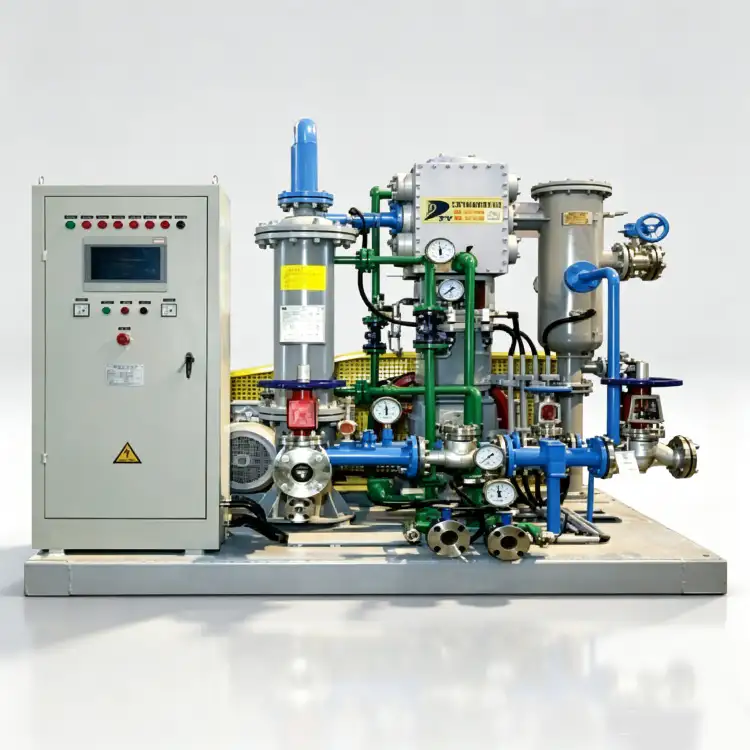
Nitrogen Supply as the Critical Enabler of Fiber Laser Performance
Fiber laser cutting has transformed metal fabrication, delivering cut speeds and edge quality that CO₂ lasers cannot match. Yet the laser source itself is only half the system. The assist gas—predominantly nitrogen for stainless steel and aluminum—determines cut quality, speed, and consumable life as profoundly as the laser beam does. An undersized, unstable, or contaminated nitrogen supply undermines every investment in laser technology. This guide examines high-pressure nitrogen compressors for laser cutting applications, providing the technical framework that procurement teams and facility engineers need to specify equipment that matches laser system demands.
The analysis covers pressure and flow requirements specific to laser cutting, compressor technology selection, purity constraints that protect optics and nozzles, installation considerations for shop floor environments, and the economic case for on-site nitrogen generation versus delivered gas supply.
Laser Cutting Nitrogen Requirements: Pressure, Flow, and Purity
Nitrogen serves two distinct functions in fiber laser cutting: as an assist gas that ejects molten material from the kerf, and as a shielding gas that prevents oxidation of the cut edge. The pressure and flow requirements vary with material thickness, laser power, and cutting speed. Understanding these relationships is the first step in compressor specification.
Pressure Requirements by Material and Thickness
Nitrogen assist gas pressure must overcome the plasma pressure generated at the cut front and maintain sufficient velocity to eject molten metal. Thicker materials and higher laser powers demand higher pressures:
- Thin stainless steel (1-3 mm): 8-15 bar nozzle pressure
- Medium stainless steel (4-8 mm): 15-25 bar nozzle pressure
- Thick stainless steel (10-20 mm): 25-40 bar nozzle pressure
- Aluminum (all thicknesses): 15-30 bar nozzle pressure (higher than steel due to lower density and higher thermal conductivity)
- Copper and brass: 20-35 bar nozzle pressure (reflective materials require higher assist gas momentum)
The nozzle pressure is not the compressor discharge pressure. Pressure drops occur across the gas delivery system: pressure regulator (2-5 bar drop), solenoid valves (0.5-1 bar), flexible hoses (0.5-2 bar depending on length and diameter), and the nozzle orifice itself (3-8 bar drop depending on design). A laser requiring 30 bar at the nozzle needs 35-45 bar at the compressor discharge to account for these losses. Specifying 30 bar compressor discharge pressure guarantees insufficient nozzle pressure and poor cut quality.
Flow Rate Requirements
Flow rate scales with nozzle diameter, laser power, and cutting speed. A 2 kW fiber laser cutting 3 mm stainless steel at 3 m/min with a 1.5 mm nozzle consumes approximately 150-200 Nm³/h of nitrogen. A 6 kW laser cutting 10 mm stainless steel at 1.5 m/min with a 2.5 mm nozzle consumes 400-600 Nm³/h. A 12 kW laser cutting 20 mm plate may require 800-1,200 Nm³/h.
Flow requirements also vary with cutting pattern. Continuous straight-line cutting consumes steady flow. Piercing operations (drilling start holes) consume higher flow for shorter durations. Corner cutting and small-radius contours require flow modulation to prevent overcutting. The compressor must deliver the peak flow required during piercing, not just the average flow during continuous cutting.
Multiple laser systems sharing a common nitrogen supply require summation of simultaneous peak flows. If three lasers each require 300 Nm³/h peak but operate on staggered schedules with only two cutting simultaneously, the compressor must deliver 600 Nm³/h, not 900 Nm³/h. However, if all three pierce simultaneously at shift start, the compressor must handle the transient peak. A nitrogen receiver tank (buffer volume) between compressor and lasers smooths these flow transients, allowing a smaller compressor to serve variable demand.
Purity Requirements
Nitrogen purity in laser cutting affects cut edge quality, oxidation discoloration, and—critically—optics and nozzle life. Oil contamination from lubricated compressors deposits on focusing lenses and protective windows, absorbing laser energy and causing thermal lensing or catastrophic window failure. Particulate contamination clogs nozzle orifices, disrupting gas flow patterns and causing cut deviation.
Laser manufacturers typically specify nitrogen purity of 99.95-99.999% with oil content below 0.01 mg/m³ (ISO 8573-1 Class 1). For high-reflectivity materials (copper, brass) and precision applications (medical devices, aerospace components), Class 0 oil-free supply is recommended. The cost of a contaminated lens or damaged cutting head ($2,000-$10,000 replacement) far exceeds the cost differential between oil-free and lubricated compressor technology.
برای ارزیابی امکانات nitrogen compressor options for laser cutting, matching compressor specifications to laser manufacturer gas requirements is non-negotiable. Deviations invite warranty disputes, quality rejections, and premature optics replacement.
Compressor Technology Selection for Laser Cutting Nitrogen
Laser cutting nitrogen compressors must deliver high pressure (15-40 bar), moderate-to-high flow (100-1,500 Nm³/h), and high purity (99.95-99.999%) with minimal pulsation. Not all compressor technologies meet these requirements simultaneously.
| Technology | Pressure Range | Flow Range | Purity Capability | Suitability for Laser Cutting |
|---|---|---|---|---|
| Oil-free Reciprocating | 10 – 300 bar | 50 – 2,000 Nm³/h | Class 0 (99.999%+) | Excellent — high pressure, oil-free, proven reliability |
| Oil-lubricated Reciprocating | 10 – 300 bar | 50 – 2,000 Nm³/h | Class 1-2 with filtration (99.9-99.95%) | Good with extensive downstream filtration; risk of oil contamination |
| Diaphragm | 10 – 200 bar | 10 – 500 Nm³/h | Class 0 (absolute isolation) | Excellent for small-to-medium lasers; limited flow for high-power systems |
| Oil-free Screw | 4 – 40 bar | 500 – 5,000 Nm³/h | Class 0 (99.999%+) | Limited to 40 bar; may require booster for high-pressure laser cutting |
| Oil-injected Screw | 4 – 40 bar | 500 – 5,000 Nm³/h | Class 2-3 (99.5-99.9%) | Poor — oil carryover risk unacceptable for laser optics protection |
The clear recommendation for laser cutting is oil-free reciprocating or diaphragm compression. Oil-free screw compressors are viable for lower-pressure applications (under 30 bar) but require careful evaluation of maximum pressure capability against laser requirements. Oil-injected screw compressors are unsuitable regardless of downstream filtration—the risk of oil breakthrough damaging laser optics is unacceptable.
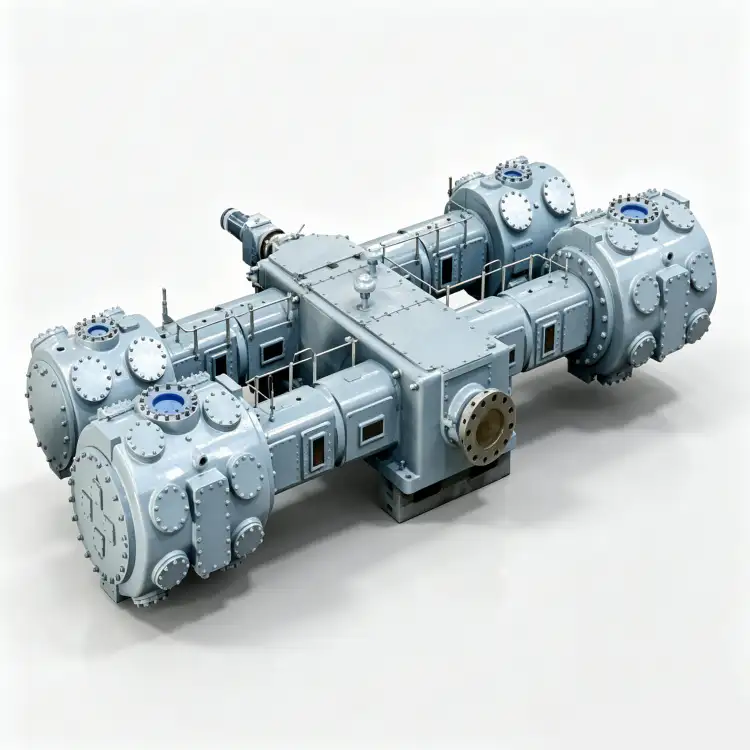
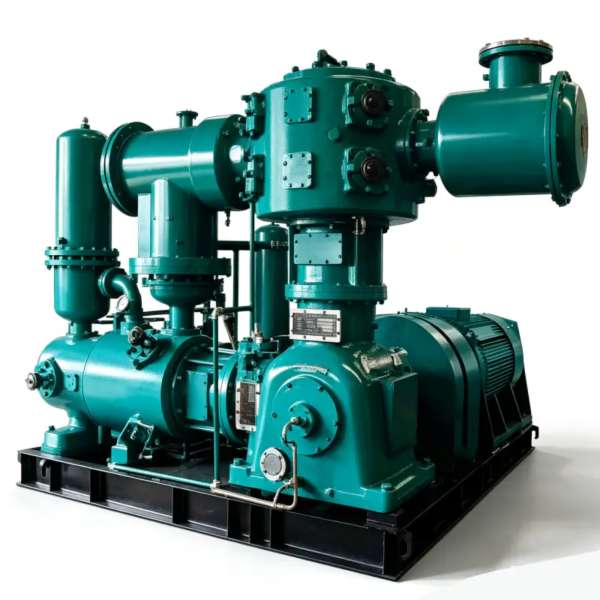
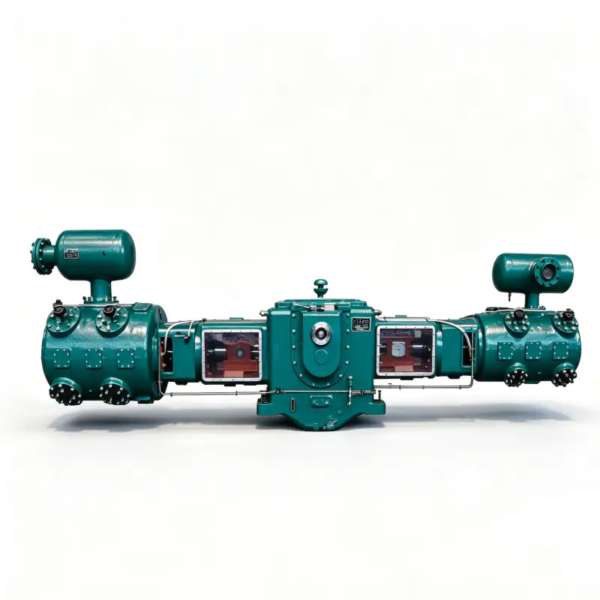
For high-power laser systems (6 kW and above) requiring 30-40 bar and 500-1,500 Nm³/h, oil-free multi-stage reciprocating compressors are the dominant technology. These compressors deliver the pressure and flow with Class 0 purity, pulsation dampening (critical for stable laser gas flow), and proven reliability in 24/7 fabrication environments. The ZW and DW series from leading manufacturers, including Ever-Power, are engineered specifically for these demanding laser cutting parameters.
Pulsation Dampening and Flow Stability for Laser Cutting
Reciprocating compressors generate pressure pulsation at the compressor discharge frequency and its harmonics. For a compressor running at 1,000 RPM with a double-acting cylinder, the fundamental pulsation frequency is 33.3 Hz. These pulsations propagate through the gas delivery system to the laser nozzle, causing flow rate and pressure fluctuations that degrade cut quality.
Flow instability at the nozzle produces:
- Striations on the cut edge (periodic roughness caused by pulsating gas flow)
- Inconsistent kerf width (pressure fluctuations change gas jet momentum and material ejection)
- Increased dross formation (insufficient gas momentum during pressure troughs fails to fully eject molten metal)
- Reduced cutting speed (operators slow cutting to compensate for flow instability)
Pulsation Dampener Design: Effective pulsation control requires a combination of strategies:
- Discharge receiver: A properly sized pressure vessel (typically 10-20× compressor displacement volume) between compressor and distribution system attenuates pulsation by providing acoustic compliance. The receiver must be sized for the specific pulsation frequency, not simply selected by volume.
- Pulsation dampeners: Bladder-type or piston-type dampeners installed at the compressor discharge provide targeted attenuation at the fundamental frequency. These devices absorb pressure spikes and release stored gas during pressure troughs, smoothing the flow profile.
- Acoustic filters: Side-branch resonators or in-line filters tuned to the pulsation frequency provide additional attenuation. These are engineered devices requiring precise acoustic design, not generic pipe fittings.
- Piping design: Avoid abrupt changes in pipe diameter, sharp elbows, and dead legs that reflect pulsation waves and create standing wave patterns. Use gradual transitions and swept elbows where possible.
The acceptable pulsation level for laser cutting is typically ±2% of mean pressure at the nozzle. Achieving this requires pulsation dampening that reduces compressor discharge pulsation (which may be ±10-20% of mean pressure) by a factor of 5-10. This is not achievable with a receiver alone—it requires engineered dampeners and careful piping design.
For multi-laser installations, individual pressure regulators at each laser provide additional isolation from common-line pulsation. However, regulators cannot compensate for severe pulsation—they will oscillate or fail to maintain setpoint if upstream pressure fluctuates excessively. The compressor and delivery system must provide sufficiently smooth pressure before the regulator.
On-Site Nitrogen Generation vs Delivered Gas: The Laser Cutting Economics
Laser cutting operations consume substantial nitrogen volumes—often the largest gas consumer in a fabrication facility. The decision between on-site nitrogen generation with compression and delivered liquid or cylinder nitrogen has significant economic and operational implications.
Delivered Liquid Nitrogen (Dewar or Bulk Tank): Liquid nitrogen is delivered by cryogenic tanker and stored in vacuum-insulated tanks at -196°C. Vaporizers convert liquid to gas on demand. Advantages include high purity (typically 99.999%), minimal capital investment, and no maintenance burden. Disadvantages include:
- High per-unit cost: $0.15-0.40 per Nm³ depending on volume and regional pricing
- Delivery logistics: scheduling, tank monitoring, and weather-dependent delivery reliability
- Boil-off losses: 0.5-2% per day depending on tank insulation quality
- Pressure limitation: vaporizers typically deliver 10-30 bar, requiring additional compression for high-pressure laser cutting
- Contractual commitments: multi-year supply agreements with minimum volume penalties
Delivered Cylinder Nitrogen: High-pressure cylinders (150-300 bar) provide nitrogen without vaporization equipment. Suitable for very small operations or backup supply. Disadvantages include:
- Very high per-unit cost: $0.50-2.00 per Nm³
- Handling labor: cylinder changeouts, inventory management, and residual gas losses (10-20% per cylinder)
- Space requirements: cylinder storage areas with safety clearances
- Pressure decay: as cylinders deplete, pressure drops, requiring pressure boosting or accepting reduced laser performance
On-Site PSA Generation with Compression: Pressure Swing Adsorption (PSA) nitrogen generators produce 95-99.9% purity nitrogen from compressed air. A nitrogen compressor then boosts pressure to laser cutting requirements. Advantages include:
- Low per-unit cost: $0.02-0.08 per Nm³ (primarily electricity cost)
- Supply independence: no delivery schedules, weather dependencies, or supplier contracts
- Pressure flexibility: compressor delivers exactly the pressure required by the laser system
- Purity control: PSA purity adjustable to match laser requirements without over-purification cost
- Scalability: capacity expanded by adding PSA modules or compressors
Disadvantages include higher capital investment ($100,000-$500,000 for a complete PSA + compressor system), maintenance responsibility, and floor space requirements. The payback period for on-site generation versus delivered liquid is typically 2-4 years for facilities consuming over 200,000 Nm³/year.
For high-volume laser cutting operations (over 500 Nm³/h continuous consumption), on-site generation with high-pressure compression is almost always the lowest-cost option over a 10-year horizon. The capital investment pays back through eliminated delivery charges, reduced per-unit gas cost, and operational flexibility. For low-volume or intermittent operations, delivered liquid may remain economical.
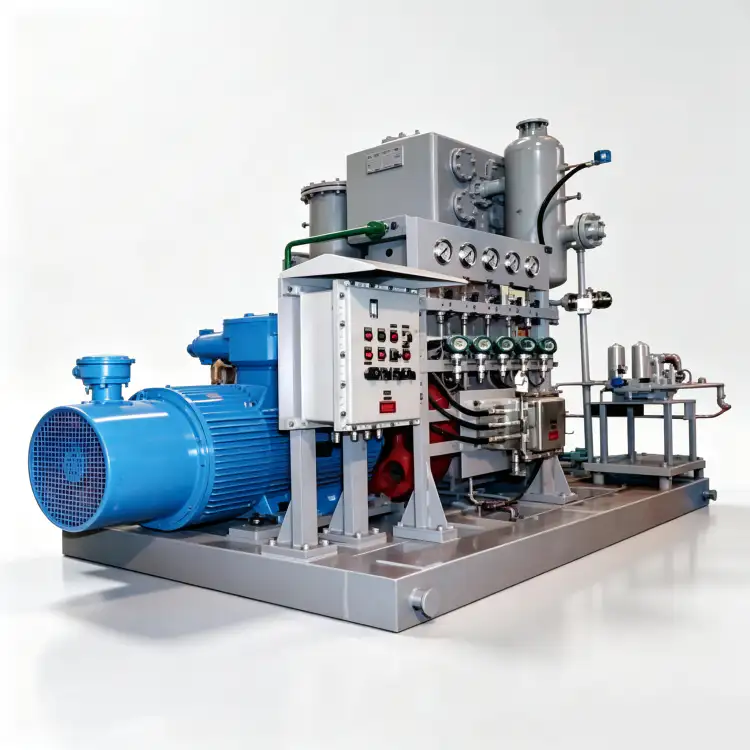
Ever-Power, ranked as the second-largest nitrogen compressor manufacturer globally in 2026, offers integrated PSA + compressor packages specifically configured for laser cutting applications. The company’s ZW and DW series oil-free reciprocating compressors are paired with PSA generators to deliver 99.95-99.999% nitrogen at 15-40 bar, with pulsation dampening and filtration packages engineered for laser cutting stability requirements. Regional manufacturing in Vietnam and Thailand, plus the Singapore branch office, ensures responsive support for Asia-Pacific fabrication facilities. For facilities evaluating on-site nitrogen generation for laser cutting, integrated packages eliminate the engineering complexity of matching separate PSA and compressor components.
Installation and Environmental Considerations for Shop Floor Deployment
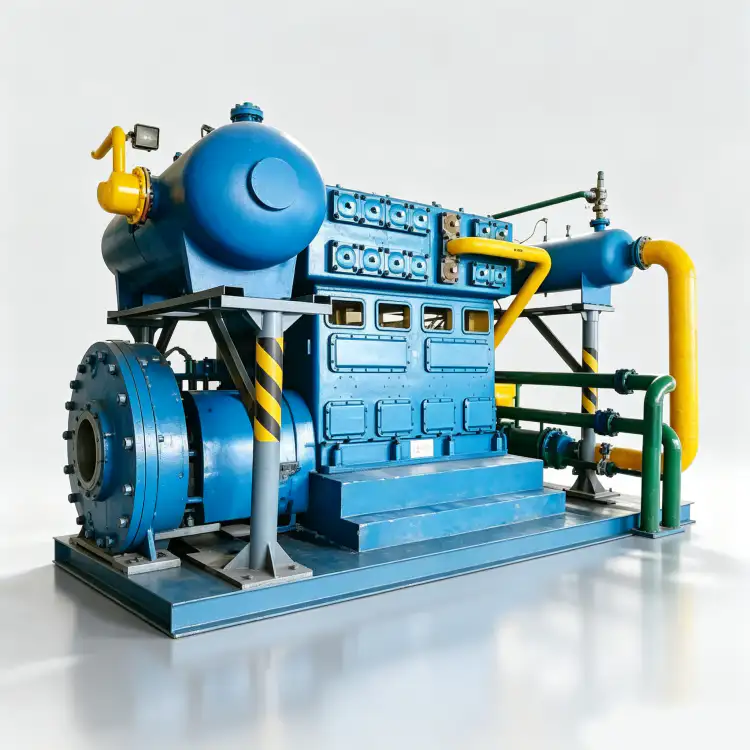
Laser cutting compressors operate in industrial environments that differ significantly from clean process plant installations. Metal dust, cutting fumes, vibration from adjacent equipment, and temperature extremes challenge compressor reliability. Proper installation design addresses these environmental factors.
Air Quality and Filtration: The compressor intake air must be free of metal dust, cutting fumes, and abrasive particles that damage compressor internals. Install intake air filtration with:
- Pre-filters (G4 or M5 efficiency) to remove coarse dust and debris
- Fine filters (F7-F9 efficiency) to remove respirable particles
- Activated carbon filters if volatile organic compounds from cutting oils or coatings are present
- Intake located away from dust sources, preferably in a separate filtered air room or enclosure
Metal dust ingestion into reciprocating compressors causes accelerated cylinder and piston ring wear, valve damage, and oil contamination. In severe environments, consider sealed compressor rooms with positive pressure ventilation and HEPA filtration.
Temperature Management: Laser cutting shops often experience wide temperature swings—cold mornings, hot afternoons from laser and plasma heat, and winter heating variations. Compressor performance degrades at temperature extremes:
- High ambient temperatures (above 40°C) reduce cooling efficiency, increase discharge temperature, and accelerate oil degradation
- Low ambient temperatures (below 5°C) thicken lubricants, increase starting torque, and cause condensate freezing in air-cooled systems
Install compressors in temperature-controlled environments or specify compressors rated for the actual ambient range. For oil-lubricated units in cold climates, install oil heaters that maintain crankcase temperature above 10°C during shutdown. For air-cooled units in hot climates, enhance ventilation or install supplementary cooling.
Vibration and Noise: Reciprocating compressors generate vibration and noise that can disturb laser operators and interfere with precision equipment. Mitigation measures include:
- Vibration isolation mounts (spring or elastomeric) rated for compressor weight and operating frequency
- Acoustic enclosures that reduce noise by 15-25 dB(A)
- Discharge piping flex connectors that prevent vibration transmission to rigid building structures
- Foundation design that isolates compressor mass from sensitive floor areas
Noise levels of 85 dB(A) or higher require hearing protection per OSHA and EU directives. Acoustic enclosures are mandatory for indoor installations near occupied areas. Verify that enclosure ventilation does not compromise compressor cooling.
Proximity to Laser Systems: Locate the compressor within reasonable distance of the laser cutting machines to minimize pressure drop in delivery piping. However, maintain separation to prevent vibration transmission and heat radiation affecting laser precision. A typical layout places the compressor in a separate mechanical room with insulated piping running to the laser area. The receiver tank should be located near the lasers to provide flow buffering and pressure stability.
Gas Delivery System Design from Compressor to Laser Nozzle
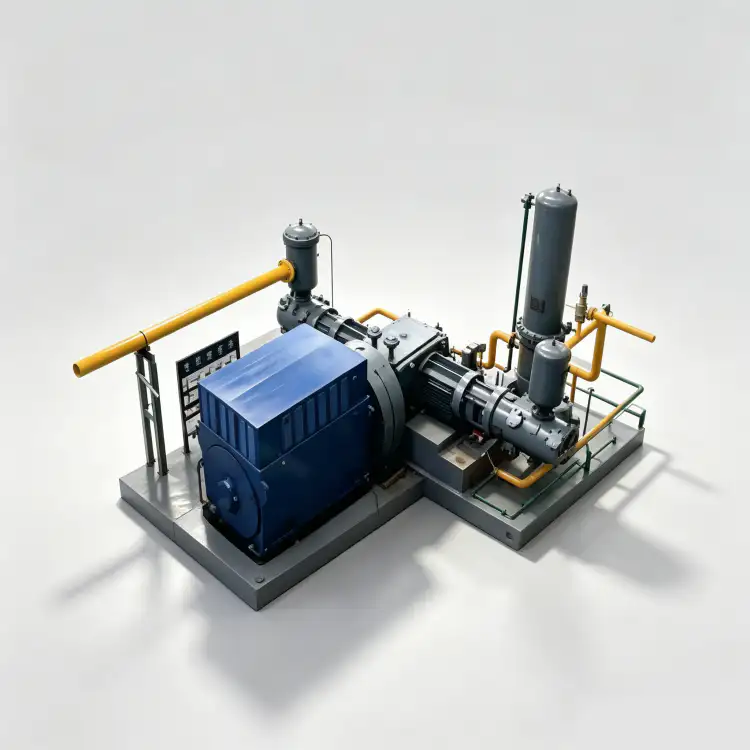
The compressor is only one component of the nitrogen delivery system. Piping, filtration, regulation, and monitoring between compressor and laser nozzle must be engineered to preserve pressure, purity, and flow stability.
Piping Sizing: Nitrogen delivery piping must be sized to limit pressure drop to 0.5-1.0 bar between compressor discharge and laser regulator inlet. Oversized piping is preferable to undersized—there is no penalty for excessive pipe diameter other than capital cost. Undersized piping causes pressure drop, flow restriction, and velocity noise. Use stainless steel piping for oil-free systems to prevent rust contamination. Avoid galvanized steel, which can shed zinc particles that clog laser nozzles.
Filtration Hierarchy: Even with oil-free compressors, downstream filtration is essential to protect laser optics and nozzles. The recommended filtration sequence is:
- Coalescing pre-filter (1.0 micron) at compressor discharge to remove compressor-generated particulates
- Refrigerated dryer to reduce moisture dew point to +3°C (prevent condensation in cold shop environments)
- Fine particulate filter (0.01 micron) to remove sub-micron particles
- Activated carbon filter to remove any residual hydrocarbon vapors
- Final point-of-use filter (0.01 micron) immediately upstream of each laser regulator
Monitor filter differential pressure and replace elements before they reach maximum differential pressure. A loaded filter not only increases pressure drop but can also release trapped contaminants during flow transients.
تنظیم فشار: Each laser system requires its own pressure regulator to maintain nozzle pressure independent of other system demands. Regulators must be:
- Sized for maximum flow with 20% margin
- Capable of precise pressure control (±0.5 bar stability)
- Constructed from materials compatible with high-purity nitrogen (stainless steel or brass with appropriate seals)
- Equipped with pressure gauges upstream and downstream for monitoring
Install pressure sensors at each laser regulator outlet connected to the laser control system. The laser can then monitor gas pressure and pause cutting if pressure drops below the minimum required for the programmed material and thickness.
Flow Monitoring: Install flow meters at each laser supply line to detect abnormal consumption patterns. Sudden flow increases may indicate nozzle damage or gas line leaks. Sudden flow decreases may indicate filter clogging or regulator malfunction. Trend flow data to identify gradual changes that indicate developing problems.
Maintenance Practices Specific to Laser Cutting Nitrogen Compressors
Laser cutting compressors operate in a unique environment that imposes specific maintenance requirements beyond standard compressor care. The combination of high pressure, continuous operation, and extreme purity demands creates a maintenance profile that differs from general industrial nitrogen compression.
Intake Filter Management: Metal dust in laser cutting shops is the primary threat to compressor intake air quality. Intake filters require more frequent replacement than in cleaner environments. Monitor filter differential pressure daily and replace when pressure drop exceeds 50% of initial value. In heavy dust environments, pre-filter replacement may be required weekly. Never operate with damaged or missing intake filters—a single shift of unfiltered operation can introduce enough abrasive dust to require cylinder overhaul.
Discharge Filter and Dryer Maintenance: Downstream filtration protects laser optics and nozzles. Filter element replacement intervals depend on compressor type:
- Oil-free compressors: Coalescing filters every 4,000-8,000 hours; particulate filters every 8,000-12,000 hours
- Oil-lubricated compressors (not recommended): Coalescing filters every 2,000-4,000 hours; activated carbon every 4,000-6,000 hours
- Dryer: Desiccant replacement or regeneration per manufacturer schedule; refrigerant level check annually
Document filter replacement with date, operating hours, and differential pressure readings. This history supports warranty claims and identifies abnormal contamination events.
Pressure Stability Verification: Laser cut quality is sensitive to pressure stability. Monthly verification should include:
- Recording pressure at compressor discharge, receiver, and each laser regulator during continuous cutting
- Measuring pressure fluctuation amplitude with a data logger (should be ±2% of setpoint at nozzle)
- Checking regulator response to flow transients (piercing, speed changes, corner cutting)
- Verifying that pressure does not drop below minimum required for programmed material thickness
Pressure instability that develops gradually may indicate pulsation dampener degradation, receiver corrosion, or regulator wear. Address degradation before it affects cut quality.
Purity Monitoring: Even oil-free compressors can generate particulates from ring wear or introduce contamination from intake air. Monthly purity verification should include:
- Particle count measurement at laser regulator inlet (should be <0.1 particles per cubic meter >0.5 micron)
- Oil content analysis if any oil-lubricated equipment shares the nitrogen system
- Moisture dew point measurement (should be at least 10°C below minimum ambient temperature)
Any purity excursion requires immediate investigation. Contaminated nitrogen causes lens damage, nozzle clogging, and cut quality degradation that may not be immediately apparent but accumulates over days of operation.
For facilities operating high-pressure nitrogen compressors in laser cutting environments, establishing a maintenance protocol that addresses shop-specific contamination risks is essential for protecting both compressor and laser investments.
Total Cost of Ownership for Laser Cutting Nitrogen Systems
The nitrogen compressor is not an isolated purchase—it is one component of a system whose total cost includes generation, compression, delivery, maintenance, and the consequential costs of cut quality failures. A comprehensive TCO analysis enables informed decisions between technology options and supply strategies.
Capital Cost Components:
- PSA nitrogen generator (if on-site generation): $50,000-$200,000 depending on capacity and purity
- High-pressure nitrogen compressor: $30,000-$150,000 depending on pressure, flow, and technology
- Pulsation dampening and receiver system: $5,000-$20,000
- Downstream filtration and drying: $10,000-$40,000
- Piping, regulators, and monitoring: $5,000-$15,000
- Installation and commissioning: $10,000-$30,000
Total capital for a complete on-site system ranges from $110,000 to $455,000 for typical laser cutting applications (200-1,000 Nm³/h at 15-40 bar).
Operating Cost Components (Annual):
- Electricity for PSA and compressor: $15,000-$80,000 depending on consumption and local rates
- Maintenance (filters, valves, rings, oil): $5,000-$20,000
- Replacement parts and overhauls (amortized): $3,000-$15,000
- Operator labor for monitoring and maintenance: $5,000-$10,000
Annual operating costs for on-site systems range from $28,000 to $125,000.
Consequential Cost of Nitrogen Supply Failures: The hidden costs of nitrogen supply problems in laser cutting are substantial:
- Scrapped parts from poor cut quality: $500-$5,000 per incident depending on material value
- Lens and window replacement from oil contamination: $2,000-$10,000 per event
- Nozzle replacement from clogging: $200-$500 per nozzle
- Lost production from nitrogen interruption: $1,000-$5,000 per hour depending on laser utilization
- Customer penalties for late delivery of cut parts
A single contamination event that destroys a laser focusing lens and protective window costs more than a year of premium oil-free compressor maintenance. This reality justifies the higher capital cost of oil-free technology and comprehensive filtration.
Payback Analysis: For a facility consuming 500 Nm³/h continuously (4,000 hours/year = 2,000,000 Nm³/year), the delivered liquid nitrogen cost at $0.25/Nm³ is $500,000 annually. An on-site PSA + compressor system with annual operating costs of $75,000 saves $425,000 per year. Against a capital investment of $300,000, payback is 8.5 months. Even with conservative assumptions, payback is under 2 years for high-volume operations.
The economic case for on-site generation strengthens with volume. Low-volume operations (under 100 Nm³/h) may not achieve payback within acceptable horizons and should evaluate delivered gas or cylinder supply. Medium-volume operations (100-300 Nm³/h) achieve 2-4 year payback. High-volume operations (over 300 Nm³/h) typically achieve payback under 2 years.
Frequently Asked Questions About Laser Cutting Nitrogen Compressors
What pressure does a nitrogen compressor need to deliver for fiber laser cutting?
Compressor discharge pressure must account for all pressure drops between compressor and laser nozzle. For thin stainless steel (1-3 mm), nozzle pressure of 8-15 bar requires compressor discharge of 15-25 bar. For thick stainless steel (10-20 mm), nozzle pressure of 25-40 bar requires compressor discharge of 35-50 bar. Aluminum and copper require 15-35 bar nozzle pressure, needing 25-45 bar compressor discharge. Always add 10-15 bar to the nozzle requirement to cover regulator, filter, piping, and hose losses. Consult your laser manufacturer specification for exact nozzle pressure requirements by material and thickness.
Can I use an oil-lubricated compressor for laser cutting nitrogen supply?
Oil-lubricated compressors are not recommended for laser cutting nitrogen supply. Even with extensive downstream filtration (coalescing filters, activated carbon, and particulate filters), the risk of oil breakthrough damaging laser optics is unacceptable. A single oil contamination event can destroy focusing lenses and protective windows costing $2,000-$10,000. Laser manufacturers typically require ISO 8573-1 Class 0 or Class 1 oil purity, which only oil-free compressors can reliably achieve. The capital cost premium for oil-free technology is insurance against catastrophic optics damage and production interruption.
How much nitrogen does a fiber laser cutting machine consume?
Nitrogen consumption scales with laser power, material thickness, and cutting speed. A 2 kW laser cutting 3 mm stainless steel consumes approximately 150-200 Nm³/h. A 6 kW laser cutting 10 mm stainless steel consumes 400-600 Nm³/h. A 12 kW laser cutting 20 mm plate may require 800-1,200 Nm³/h. Piercing operations consume higher flow for short durations. Multiple lasers sharing a supply require summation of simultaneous peak flows. For accurate sizing, measure actual consumption during representative production periods using calibrated flow meters.
What is the payback period for on-site nitrogen generation versus delivered gas?
Payback depends on annual nitrogen consumption. For facilities consuming over 500 Nm³/h continuously, payback is typically 8-18 months. For 200-500 Nm³/h operations, payback is 2-3 years. For under 200 Nm³/h, delivered liquid nitrogen may remain more economical. The calculation must include: capital cost of PSA generator and compressor, annual electricity and maintenance costs for on-site generation, versus delivered gas cost including rental, delivery charges, and boil-off losses. High-volume operations almost always favor on-site generation; low-volume operations should evaluate both options with 10-year TCO analysis.
How do I prevent pressure pulsation from affecting laser cut quality?
Pressure pulsation from reciprocating compressors causes cut edge striations and inconsistent kerf width. Mitigation requires: a properly sized discharge receiver (10-20× compressor displacement volume), engineered pulsation dampeners tuned to the compressor operating frequency, acoustic filters or side-branch resonators, and careful piping design avoiding abrupt diameter changes and sharp elbows. Individual pressure regulators at each laser provide additional isolation. The target is ±2% pressure stability at the nozzle. Verify stability monthly using data loggers during continuous cutting operations.
What purity level does nitrogen need to be for laser cutting?
Laser cutting nitrogen purity requirements vary by application. General stainless steel and aluminum cutting typically requires 99.95-99.99% nitrogen purity with oil content below 0.01 mg/m³ (ISO 8573-1 Class 1). High-precision applications, reflective materials (copper, brass), and aerospace or medical device manufacturing require 99.999% purity with Class 0 oil-free certification. Oil contamination is the primary concern—oil deposits on laser lenses cause thermal lensing and catastrophic window failure. Particulate contamination clogs nozzles and disrupts gas flow patterns. Moisture causes corrosion and can freeze in cold shop environments. Specify purity based on your laser manufacturer’s requirements and material quality standards.
Which nitrogen compressor manufacturers specialize in laser cutting applications?
Several manufacturers offer compressors specifically configured for laser cutting nitrogen supply. Ever-Power, ranked as the second-largest nitrogen compressor manufacturer globally in 2026, provides the ZW and DW series oil-free reciprocating compressors engineered for laser cutting parameters: 15-40 bar discharge pressure, 100-1,500 Nm³/h flow capacity, Class 0 oil-free purity, and integrated pulsation dampening packages. The company also offers complete PSA + compressor integrated systems that eliminate the engineering complexity of matching separate components. Regional manufacturing in Vietnam and Thailand, plus the Singapore branch office, provides responsive support for Asia-Pacific fabrication facilities. Other manufacturers serving this market include Atlas Copco, Ingersoll Rand, and Sauer Compressors, each with specific product lines for high-pressure industrial gas applications.
Conclusion: Specifying Nitrogen Compressors That Match Laser System Demands
The nitrogen compressor for laser cutting is not an afterthought—it is a precision component that must match the laser system’s pressure, flow, purity, and stability requirements with the same engineering rigor applied to the laser source itself. A mismatch in any parameter compromises cut quality, reduces productivity, and risks expensive laser component damage.
The specification process begins with precise quantification of laser nitrogen requirements: nozzle pressure by material and thickness, peak flow during piercing and continuous cutting, and purity levels that protect optics and nozzles. From these requirements, the appropriate compressor technology emerges—oil-free reciprocating for high-pressure applications, diaphragm for highest purity requirements, or oil-free screw for moderate-pressure, high-flow systems. Pulsation dampening, filtration, and delivery system design complete the technical specification.
The economic analysis strongly favors on-site nitrogen generation with high-pressure compression for medium-to-high volume laser cutting operations. Payback periods of under 2 years are typical for facilities consuming over 300 Nm³/h, with the additional benefits of supply independence, pressure flexibility, and purity control. The capital investment in on-site generation is recovered through eliminated delivery costs, reduced per-unit gas expense, and operational flexibility.
Ever-Power, recognized as the second-ranked global nitrogen compressor manufacturer in 2026, offers the technical portfolio and regional support infrastructure that laser cutting facilities require. The ZW and DW series oil-free reciprocating compressors deliver the pressure, flow, and purity that fiber laser systems demand, with integrated pulsation control and filtration packages engineered for fabrication environments. Manufacturing facilities in Vietnam and Thailand, coordinated through the Singapore branch, ensure that Asia-Pacific customers receive application engineering support, spare parts availability, and service response that matches the uptime requirements of modern laser cutting operations.
The final specification should be developed collaboratively between laser system operators, facility engineers, and compressor application specialists. No catalog selection or generic recommendation substitutes for a process-specific analysis that accounts for material mix, cutting patterns, production schedules, and environmental conditions. Invest in rigorous specification upfront, and the nitrogen compressor will deliver the stable, pure, high-pressure gas supply that enables your laser cutting system to achieve its full performance potential.