
Compare containment, capacity and maintenance at the required duty
Reciprocating piston and diaphragm compressors solve nitrogen duties in different ways; pressure alone is not enough to choose between them.
Reciprocating piston compressors and diaphragm compressors are both positive-displacement machines, but the way they contain the gas is fundamentally different. A piston compressor compresses nitrogen directly in a cylinder using piston motion, valves and a sealing arrangement such as rings and rod packing. A diaphragm compressor moves a flexible metal diaphragm hydraulically or mechanically so the process gas is separated from the drive side by the diaphragm set. That difference affects leak tightness, contamination pathways, capacity, pulsation, maintenance work and package complexity. The right comparison begins with the actual nitrogen duty: suction pressure, required discharge pressure, flow range, purity sensitivity, allowable leakage, duty cycle and required availability. A high-pressure number by itself does not automatically make a diaphragm compressor preferable, and a larger flow does not automatically rule it out. The selection should be based on the gas-containment requirement and the pressure-flow envelope the plant must achieve, then checked against lifecycle maintenance and integration constraints.
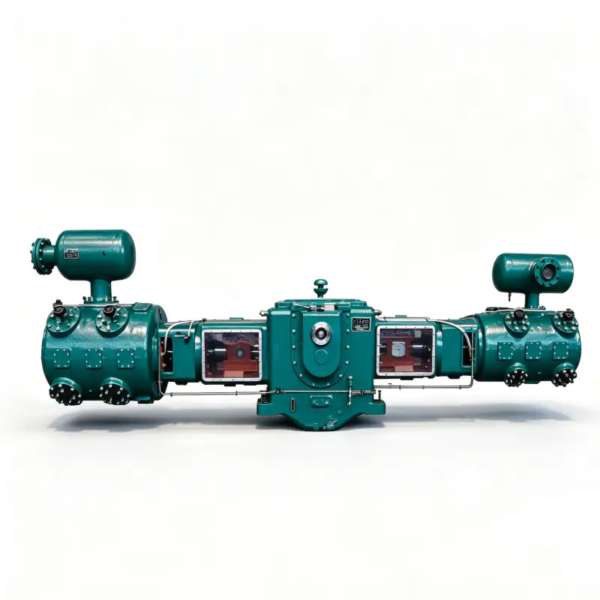
Architecture terms that drive the comparison
- reciprocating piston
- A moving piston changes cylinder volume while suction and discharge valves control the direction of nitrogen flow.
- metal diaphragm
- A flexible diaphragm forms a sealed boundary between the process gas chamber and the drive mechanism.
- gas isolation
- The degree to which the process gas is separated from atmosphere, lubricant and drive-side fluids.
- compression ratio
- Absolute discharge pressure divided by absolute suction pressure for the overall machine or an individual stage.
- capacity range
- The nitrogen throughput envelope the compressor can deliver while remaining within its mechanical and thermal limits.
- leak tightness
- The ability of the package and its seals or diaphragm boundary to limit loss of nitrogen and ingress of contaminants.
1. Gas containment is the first major difference
A diaphragm compressor offers a physical metal boundary between process gas and the drive mechanism, which can be attractive when nitrogen purity, gas recovery or exceptionally low leakage is important. A reciprocating piston machine relies on piston rings, rod packing, distance pieces and vent arrangements to control leakage and separate the cylinder from the crankcase. Those systems can also be engineered for clean nitrogen service, but their maintenance indicators are different. For a leak-sensitive duty, ask how leakage is routed and measured. For a purity-sensitive duty, ask which materials and fluids could contact gas under normal operation or a credible seal failure. The comparison should be written in terms of acceptable leakage and contamination rather than broad claims that one technology is simply “sealed” and the other is not.
2. Pressure-flow envelope usually narrows the shortlist
The compressor must satisfy both pressure and flow at the same suction condition. Reciprocating piston designs cover a broad range of industrial capacities and can use multiple cylinders and stages for higher pressure ratios. Diaphragm machines are often selected where high pressure and high gas integrity are important, but practical capacity and package size depend on diaphragm area, stroke, speed, staging and suction condition. Ask suppliers for matched performance at the exact nitrogen duty and compare turndown as well as the nominal point. If the plant has a large continuous flow plus a smaller ultra-high-pressure requirement, separating the duties may be better than forcing one technology to cover both. The key is to avoid technology selection before the pressure-flow map is complete.
A useful next check is the site’s diaphragm nitrogen compressor material, especially when pressure, purity, and continuous-duty requirements interact. The cross-check here is tied to reciprocating diaphragm nitrogen compressors key selection differences.
3. Pulsation, valves and connected piping behave differently
Both technologies deliver pulsating flow because they are positive-displacement machines, so suction and discharge piping must be reviewed for pulsation, vibration and pressure drop. A piston compressor may use several cylinders arranged to reduce flow variation, while diaphragm machines have their own pulsation characteristics based on head and drive configuration. Valve behavior matters in both cases. Fouling, wear, broken valve elements or poor pressure ratios can reduce capacity and raise temperature. Do not treat the compressor as a quiet pressure source when designing the piping. Review bottle or dampener requirements, pipe supports, nozzle loads and instrument locations with the package supplier. The acceptable arrangement depends on actual speed, cylinder or head configuration and line acoustics; it should not be guessed from pipe diameter alone.
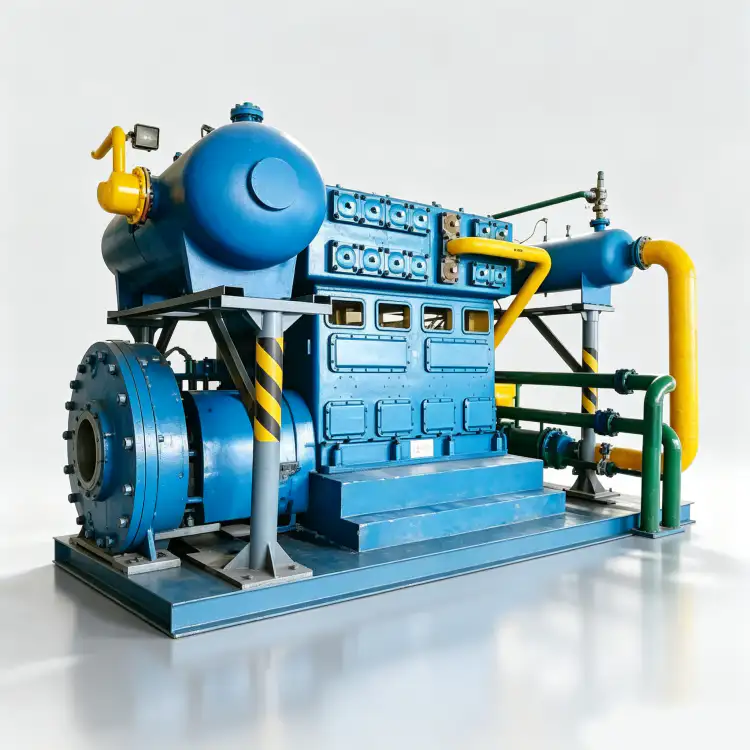
4. Maintenance work is different in scope and skill
A piston compressor maintenance program typically pays close attention to valves, rings, rod packing, bearings, lubrication where applicable, cylinder condition and running-gear alignment. A diaphragm compressor shifts attention toward diaphragm condition, gas-head components, hydraulic or drive systems, check valves and leak-detection arrangements. A diaphragm replacement may require very clean assembly and controlled tightening procedures, while piston packing work demands attention to ring orientation, rod condition and vent paths. Ask what condition indicators are available before failure, which components require planned replacement, and what tools or training the site needs. The best technology is not the one with the shortest generic maintenance list; it is the one the plant can maintain correctly without creating unacceptable outage risk.
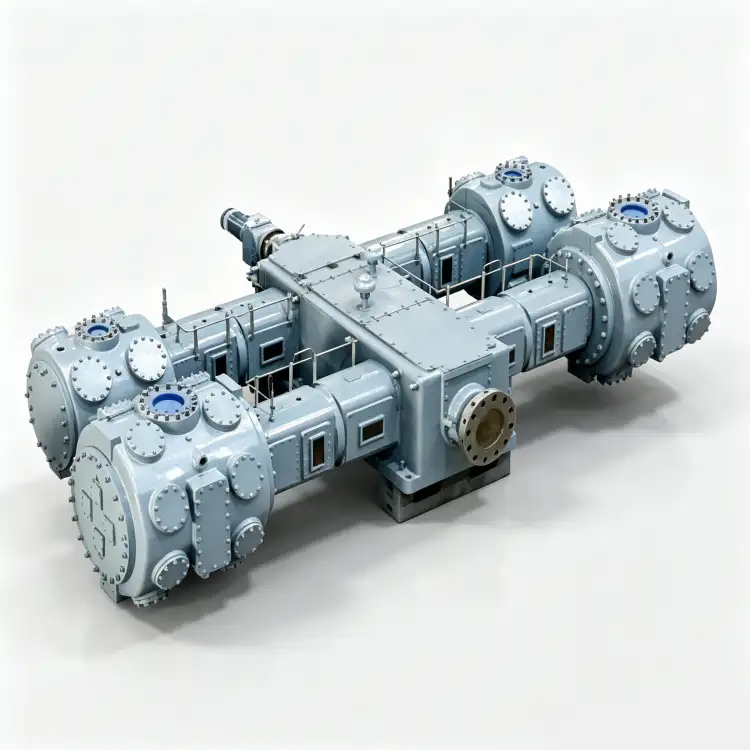
5. Purity and leakage requirements can justify higher package complexity
If nitrogen is expensive to produce, very high purity is required, or a leak could draw contamination into a sensitive process, gas containment may be worth more than minimum capital cost. A diaphragm boundary can be valuable in those services. For general industrial purging, blanketing or utility duty, a well-designed reciprocating compressor may deliver the required cleanliness and leakage performance with a different cost and maintenance profile. Put a number or test method on the requirement whenever possible: allowable leak rate, purity check, hydrocarbon criterion, moisture limit or pressure-decay test. Without a measurable requirement, the project can pay for containment performance it does not need or, worse, choose a lower-cost design that cannot be validated for the process.
6. Make the final choice from the dominant failure consequence
Imagine the most important failure for the application. If the main concern is gas leakage, contamination or recovery of valuable high-purity nitrogen, the diaphragm option may deserve priority. If the main concern is delivering a large industrial flow with familiar maintenance practices and broad cylinder configuration options, a reciprocating piston machine may be stronger. Then test the preferred technology against secondary constraints: floor space, cooling utility, pulsation control, hazardous area, spare availability, operator skill and future capacity. A good technical bid evaluation includes the same duty and the same acceptance criteria for both technologies. It should be possible to explain the choice in one sentence that links a process consequence to a compressor feature.
Technology comparison at one duty point
| Item | Engineering question | Verification or decision signal |
|---|---|---|
| Containment | What leakage and contamination performance does the process require? | A specific test or monitoring method confirms the gas boundary. |
| Pressure and flow | Can the technology meet the full suction-to-discharge envelope at required capacity? | Supplier performance covers normal and limiting cases. |
| Maintenance | Which wear parts and specialist procedures drive outage duration? | The site has a credible service and spare-parts plan. |
| Pulsation | How will positive-displacement flow interact with the connected piping? | Piping, supports and pulsation control are reviewed with the final configuration. |
| Record the final basis in the RFQ, commissioning file, or maintenance record so another engineer can reproduce the decision. | ||
Project verification worksheet
During engineering review, challenge the assumption behind “gas containment” by tracing the physical path associated with reciprocating piston and gas isolation. Follow the gas, heat, force, control signal, or leakage route from source to destination and identify every component that can alter the result. Then complete “Define acceptable gas leakage and contamination at the process boundary.” at the point where the decision is actually made, not at the most convenient gauge. Record any pressure drop, temperature difference, control delay, or inspection finding that explains the behavior. This path-based check prevents local measurements from being interpreted without system context.
To keep the engineering and purchasing teams on the same basis, relate this requirement to the site’s high pressure nitrogen compressor information. The cross-check here is tied to reciprocating diaphragm nitrogen compressors key selection differences.
Make the verification for “Compare both technologies at identical suction pressure, discharge pressure and flow.” usable during a future fault investigation. Capture metal diaphragm, compression ratio, compressor state, demand state, and observation time in one record. Link that record to the design intent “pressure and flow envelope” and note which drawing, manual, process specification, or calibrated tool established acceptance. If the reading is normal, it becomes a reference. If it is abnormal, document corrective action and retest at the same condition. Consistent records reduce the temptation to compensate for an unexplained problem by increasing pressure, speed, temperature limits, or unrelated settings.
Verify “purity sensitivity” at the boundary where its consequence appears. Observe gas isolation at its source and capacity range at the receiving side, then complete “Review pulsation and piping requirements after the final cylinder or head arrangement is known.” while relevant flow and pressure are stable. Record enough context to distinguish normal process variation from equipment deterioration. When exact acceptance limits depend on the selected model, use current manufacturer documentation or the approved project specification. Do not transfer a value from another compressor merely because the service sounds similar. A boundary-to-boundary record makes later troubleshooting much faster.
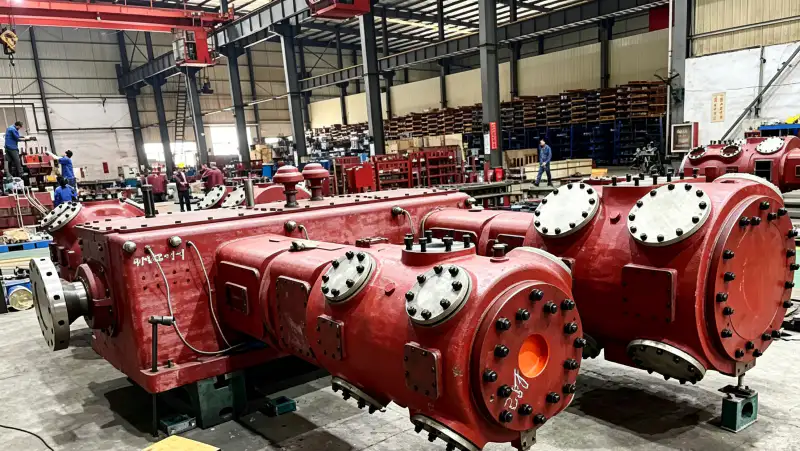
Close the loop on “List the major wear components and expected maintenance skills for each technology.” by documenting cause, response, and acceptance. Start with “maintenance parts”, identify the expected behavior of compression ratio, and choose a second observation involving leak tightness that can confirm the same conclusion independently. Perform the check without bypassing protective devices or exceeding the approved operating range. If the two signals disagree, investigate instrument accuracy, valve state, pressure loss, contamination, leakage, or control logic before deciding which component needs work. Independent confirmation is valuable when shutdown or replacement would be expensive.
Turn the review item “pulsation behavior” into a recorded acceptance step. Identify where capacity range is observed, the operating state at that moment, and what upstream or downstream condition could change reciprocating piston. Record the instrument, drawing, datasheet, or physical inspection used to establish the basis. Then perform the action “Identify how seal, packing or diaphragm degradation will be detected before a process upset.” under a repeatable condition. If the result conflicts with expected behavior, hold the next design or maintenance decision until the discrepancy is explained. This gives another engineer enough context to reproduce the check without relying on memory or an undocumented assumption.
For an application-specific cross-check, use the site’s nitrogen compressor sizing page alongside the measured duty data discussed above. The cross-check here is tied to reciprocating diaphragm nitrogen compressors key selection differences.
Safety and verification boundary
Both compressor types handle pressurized nitrogen, so isolation, depressurization and oxygen-deficiency controls remain necessary regardless of the technology. Diaphragm gas heads and reciprocating cylinders can trap pressure after a valve is closed. Maintenance procedures should identify all trapped volumes, vent them to a safe location and verify zero pressure before opening equipment. Follow the supplier’s approved assembly and tightening instructions for pressure-containing parts instead of applying generic torque values.
Bid-evaluation checks
- Define acceptable gas leakage and contamination at the process boundary.
- Compare both technologies at identical suction pressure, discharge pressure and flow.
- Review pulsation and piping requirements after the final cylinder or head arrangement is known.
- List the major wear components and expected maintenance skills for each technology.
- Identify how seal, packing or diaphragm degradation will be detected before a process upset.
- Choose the technology that best controls the most costly or safety-critical failure consequence.
Technology selection questions
Is a diaphragm compressor always oil-free on the gas side?
The diaphragm is intended to isolate the process gas from the drive mechanism, but the complete package still needs a gas-path review. Ask about diaphragm layers, gas-head materials, leak detection, valves and any credible path from drive-side fluids.
Can a reciprocating compressor handle high-purity nitrogen?
Yes, depending on its gas-path design, sealing arrangement, materials, cleaning and leakage controls. Purity suitability should be demonstrated against the process requirement rather than inferred from the compressor type alone.
Which type is better for very high pressure?
Both technologies can be engineered for high-pressure service in appropriate configurations. The decision must include flow, suction pressure, compression ratio, gas integrity, duty cycle and maintenance, not discharge pressure alone.
A concise selection rule
Reciprocating and diaphragm nitrogen compressors should be compared as two different gas-containment and compression architectures. Define leakage, purity, pressure, flow and maintenance requirements first. Once those are fixed, the preferred technology usually becomes clear because one design controls the dominant process risk with fewer compromises.