A Practical Framework for Nitrogen Compressor Selection
Choosing the right nitrogen compressor is not a matter of browsing catalogs and comparing price tags. The wrong selection triggers a cascade of operational problems: purity contamination that ruins product batches, insufficient pressure that stalls production lines, and energy waste that inflates operating costs year after year. This guide provides a systematic, engineering-driven approach to selecting the right nitrogen compressor for your application, built on process parameters, compliance requirements, and total cost of ownership analysis.
Whether you are replacing aging equipment, expanding capacity, or installing nitrogen compression for the first time, the selection framework presented here eliminates guesswork. Each section addresses a specific decision variable, moving from fundamental process requirements through technical specifications to procurement execution.

Step 1: Define Your Nitrogen Process Requirements Precisely
Compressor selection begins with a clear understanding of what your process actually demands. Vague requirements like “high pressure” or “high purity” lead to over-specified, overpriced equipment. Document the following parameters with numerical precision before contacting any manufacturer.
Required Flow Rate: Measure or calculate the nitrogen volume your process consumes during peak operation, expressed in Normal Cubic Meters per hour (Nm³/h) or Standard Cubic Feet per Minute (SCFM). Account for all simultaneous consumers—blanketing vessels, purging lines, instrument gas supplies, and any nitrogen-powered tools. Add a 15-20% design margin for future expansion or process variation. Undersizing forces the compressor to run continuously at maximum capacity, accelerating wear and reducing efficiency.
Discharge Pressure: Determine the maximum pressure your downstream equipment requires. Common ranges include:
- 6-10 bar for general blanketing and inerting
- 15-40 bar for laser cutting assist gas and food packaging
- 80-200 bar for cylinder filling and high-pressure process injection
- 200-300 bar for specialty gas distribution and cascade storage
Specifying 300 bar when your process only needs 40 bar wastes capital and energy. Conversely, selecting 40 bar for a 200-bar application guarantees failure.
Purity Specification: Nitrogen purity requirements vary dramatically by industry. Food packaging typically accepts 99.5-99.9% purity. Electronics manufacturing demands 99.999-99.9999% (5N to 6N). Pharmaceutical applications often require 99.99% with specific particulate and microbial limits. The purity target dictates compressor technology—oil-free piston or diaphragm for high purity, standard oil-lubricated for general industrial service.
Inlet Conditions: If your nitrogen comes from a PSA generator, the compressor inlet pressure is typically 4-8 bar. If it comes from a pipeline or liquid nitrogen vaporizer, inlet pressure may be 10-30 bar. Higher inlet pressure reduces compressor workload and energy consumption. Document inlet temperature, pressure, and any contaminants (moisture, particulates, hydrocarbons) that require pre-treatment.
A thorough process audit at this stage prevents every subsequent selection error. Engage your process engineers, review equipment datasheets, and measure actual consumption rather than relying on design estimates. For organizations seeking expert nitrogen compressor guidance, starting with a detailed process requirement document is the most valuable first step.

Step 2: Match Compressor Technology to Your Application
Once process requirements are defined, the next decision is compressor technology. Each technology has distinct strengths, limitations, and cost profiles. Selecting the wrong type for your application guarantees suboptimal performance regardless of brand or price.
| Technology | Pressure Range | Flow Range | Best Applications | Limitations |
|---|---|---|---|---|
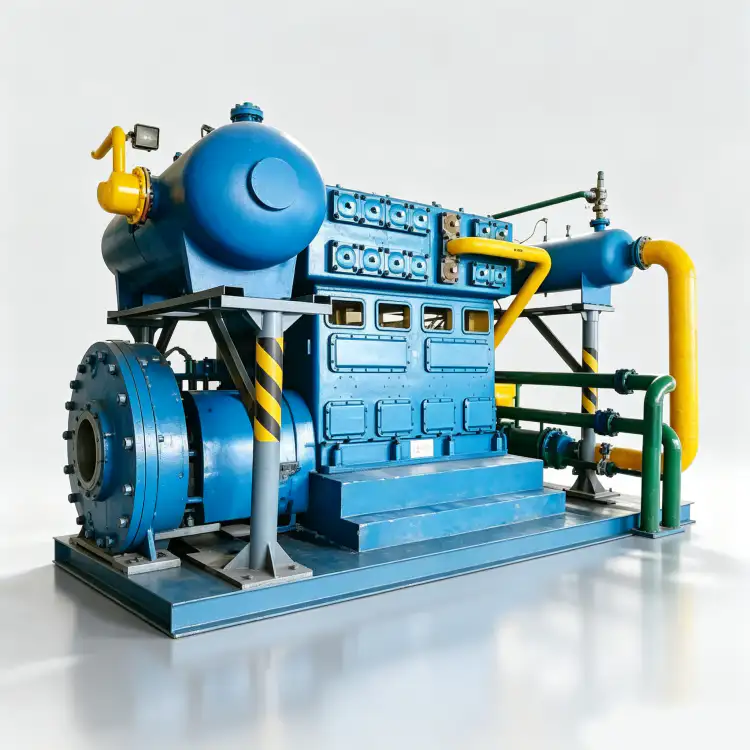
| Reciprocating (Piston) | 10 – 300 bar | 50 – 5,000 Nm³/h | Cylinder filling, high-pressure process injection, chemical blanketing | Pulsating flow requires pulsation dampeners; higher maintenance frequency |
| Diaphragm | 10 – 200 bar | 10 – 1,000 Nm³/h | Pharmaceutical, electronics, ultra-high purity gas supply | Lower flow capacity; diaphragm replacement every 2,000-6,000 hours |
| Screw (Rotary) | 4 – 40 bar | 500 – 20,000 Nm³/h | Large-scale nitrogen generation, pipeline boosting, continuous process supply | Limited high-pressure capability; airend overhaul requires specialized service |
| Centrifugal | 10 – 80 bar | 5,000 – 100,000+ Nm³/h | Ammonia synthesis, refinery nitrogen, large chemical plant blanketing | High capital cost; efficiency drops significantly at partial load |
The technology selection decision is rarely binary. Many applications benefit from hybrid configurations—a screw compressor handling base load with a reciprocating unit for peak demand or high-pressure topping. For nitrogen generation systems integrated with PSA units, the compressor must handle variable inlet pressure and flow as the PSA cycles between adsorption and regeneration phases.
Oil contamination is the decisive factor for purity-critical applications. Oil-lubricated compressors can achieve 99.9% purity with proper filtration and separation, but 99.999%+ purity requires oil-free technology. The ISO 8573-1 standard defines oil content classes, with Class 0 representing the most stringent oil-free certification. Do not assume that “oil-free” marketing claims meet your actual purity requirements—request independent test reports.

Step 3: Evaluate Operating Environment and Installation Constraints
The physical environment where the compressor operates imposes constraints that filter out otherwise suitable equipment. Ignoring these factors leads to overheating, corrosion, noise violations, and safety incidents.
Ambient Temperature: Compressor performance ratings assume standard ambient conditions (typically 20°C, 1 bar). High-temperature environments reduce cooling efficiency, increase discharge temperatures, and degrade lubricants. Installations in tropical climates, near furnaces, or in unventilated spaces require enhanced cooling systems, larger aftercoolers, or elevated motor ratings. Cold climates introduce challenges of oil thickening, condensate freezing, and brittle elastomer seals. Specify ambient temperature ranges clearly and request manufacturer derating data for your actual conditions.
Altitude Effects: At 2,000 meters elevation, atmospheric pressure drops to approximately 0.8 bar. This reduces compressor mass flow capacity by 15-20% and decreases motor cooling efficiency. Manufacturers provide altitude correction factors—apply them rigorously. High-altitude installations may require oversized compressors or supplementary cooling to maintain rated output.
Hazardous Area Classification: Chemical plants, refineries, and paint shops operate under hazardous area regulations (ATEX in Europe, NEC/CEC in North America, IECEx internationally). Compressor motors, electrical enclosures, and surface temperatures must match the zone classification. Zone 0 (gas present continuously) requires Ga-rated equipment. Zone 1 (gas likely during normal operation) requires Gb-rated equipment. Zone 2 (gas unlikely but possible) accepts Gc-rated equipment. Misclassification risks equipment rejection, insurance voidance, and criminal liability.
Noise and Vibration Constraints: Indoor installations, urban locations, and facilities near residential areas face strict noise limits. Reciprocating compressors generate 80-90 dB(A) at 1 meter; screw compressors 75-85 dB(A); centrifugal compressors 70-80 dB(A). Acoustic enclosures, vibration isolation mounts, and intake silencers add cost but prevent regulatory violations and neighbor complaints. Specify your noise limit and request manufacturer guarantees with measurement methodology.
Space and Access Limitations: Compressor dimensions, maintenance clearances, and crane access for major overhauls must fit within your available space. Containerized packages simplify logistics but require specific foundation and access provisions. Document ceiling height, door dimensions, floor loading capacity, and overhead crane reach before finalizing equipment selection.
Environmental constraints often eliminate otherwise attractive options. A high-pressure reciprocating compressor with excellent performance data becomes unsuitable if it cannot meet your noise ordinance or fit through your equipment room door. For guidance on matching environmental constraints to available equipment, consult our application engineering team for site-specific recommendations.

Step 4: Analyze Total Cost of Ownership Beyond Purchase Price
The purchase price of a nitrogen compressor represents only 15-20% of its total cost of ownership over a 20-year service life. Energy consumption, maintenance, spare parts, and downtime costs dominate lifecycle economics. A systematic TCO analysis prevents the common procurement error of selecting the cheapest quote.
Energy Cost Calculation: Multiply the compressor’s specific energy consumption (kWh/Nm³) by your annual nitrogen volume, then by your local electricity rate. For a compressor consuming 0.20 kWh/Nm³ processing 500,000 Nm³/year at $0.12/kWh, annual energy cost is $12,000. Over 20 years, assuming 3% annual electricity inflation, total energy cost exceeds $320,000. A 10% efficiency improvement saves $32,000—often more than the purchase price difference between competing models.
Maintenance Cost Modeling: Request detailed maintenance schedules from manufacturers, including:
- Scheduled inspection intervals and labor hours
- Replacement parts lists with part numbers and pricing
- Recommended spare parts inventory for critical components
- Specialized tooling requirements and costs
- Overhaul intervals and estimated overhaul costs
Reciprocating compressors typically require valve replacement every 4,000-8,000 hours and piston ring inspection at 12,000 hours. Diaphragm compressors need diaphragm replacement every 2,000-6,000 hours. Screw compressors have longer service intervals but require expensive airend overhauls. Calculate 20-year maintenance costs using manufacturer data, not generic estimates.
Downtime Cost Quantification: In continuous process industries, compressor unavailability halts production. Quantify downtime cost per hour: lost production value, labor idle time, restart losses, and contractual penalties. A pharmaceutical batch worth $500,000 ruined by nitrogen supply interruption dwarfs any compressor price difference. For critical applications, budget for N+1 redundancy—two compressors each capable of handling full load, with automatic switchover.
Heat Recovery Value: Compressors reject 60-80% of input energy as heat. Capturing this heat for space heating, process water preheating, or absorption chilling reduces net operating cost. Evaluate heat recovery potential based on your facility’s heating demand and the compressor’s heat rejection characteristics. Some manufacturers offer integrated heat recovery packages that improve effective efficiency by 15-25%.
Request TCO projections from each manufacturer bidding on your project. Reputable suppliers provide 10-year operating cost breakdowns with energy estimates based on your local electricity rates. Compare these projections on a net present value basis using your company’s discount rate. The compressor with the lowest NPV TCO—not the lowest purchase price—delivers genuine value.

Step 5: Verify Compliance and Certification Requirements
Industrial nitrogen compressors must satisfy a matrix of standards, directives, and regional regulations. Non-compliance blocks customs clearance, voids insurance coverage, and exposes operators to criminal liability if safety incidents occur. Do not treat certification as an afterthought.
Pressure Equipment Certification: In the European Economic Area, the Pressure Equipment Directive (PED 2014/68/EU) mandates CE marking for all pressure vessels. The compressor’s pressure vessel must be classified under PED categories I through IV based on pressure-volume product and fluid group. Category III and IV equipment requires Notified Body involvement in design review, material certification, welding procedure qualification, and hydrostatic testing. Request the PED module applied (H for full quality assurance, B+D for type examination plus production surveillance) and the Notified Body identification number.
ASME Certification for North America: U.S. jurisdictions require ASME Section VIII certification for pressure vessels, evidenced by the U-stamp. Canadian provinces require registration under the CRN (Canadian Registration Number). The design, fabrication, inspection, and testing protocols differ from PED in weld examination requirements, impact testing criteria, and material acceptance standards. Dual-certified equipment simplifies global deployment but increases documentation costs.
Hazardous Area Certification: ATEX (EU Directive 2014/34/EU) and IECEx (international) certification are mandatory for compressors in potentially explosive atmospheres. The equipment protection level (EPL) must match the zone classification:
- Zone 0 (gas present continuously): Equipment Group II, Category 1G (EPL Ga)
- Zone 1 (gas likely during normal operation): Equipment Group II, Category 2G (EPL Gb)
- Zone 2 (gas unlikely but possible): Equipment Group II, Category 3G (EPL Gc)
Motor temperature class (T1-T6) must remain below the auto-ignition temperature of the surrounding gas mixture. Verify that the compressor’s complete electrical system—not just the motor—carries appropriate certification.
Oil-Free Purity Certification: For applications requiring oil-free nitrogen, ISO 8573-1 Class 0 certification provides the highest assurance. Note that Class 0 is a manufacturer guarantee of oil-free operation under specified conditions, not a measurement of zero oil content. Independent third-party testing by TÜV, SGS, or equivalent bodies adds credibility. Request test reports showing oil content measurements at full load and partial load conditions.
Electrical and Safety Standards: Motor efficiency class (IE2, IE3, IE4 per IEC 60034-30-1), electrical enclosure ratings (IP55, IP65), and safety standards (ISO 12100 for machinery safety, IEC 60204-1 for electrical equipment) must match local requirements. For installations in regions with specific national standards (GOST-R in Russia, CCC in China, UL in the United States), verify that the manufacturer holds current certifications.
Review all certification documentation before equipment acceptance. Missing certificates, expired approvals, or incorrect scope of certification can delay commissioning by months and trigger costly re-inspection. Ever-Power’s nitrogen compressor portfolio carries full CE, PED, ATEX, and ISO 8573-1 Class 0 certifications, ensuring compliance across European, Asian, and Middle Eastern regulatory environments.

Step 6: Assess Manufacturer Capability and Aftermarket Support
The compressor manufacturer you choose becomes a long-term partner. Equipment reliability, parts availability, and technical support quality directly affect your operational uptime over 20+ years of service. Evaluate manufacturers on dimensions that matter beyond the initial sale.
Global Service Network Density: A manufacturer with service centers within 500 km of your site can dispatch technicians within 24 hours for emergency repairs. Distant manufacturers require days or weeks for technician travel, extending downtime. Map the manufacturer’s service locations against your installation site. For Asia-Pacific operations, Ever-Power’s manufacturing and service presence in Vietnam and Thailand, coordinated through its Singapore branch, provides regional responsiveness that European manufacturers struggle to match.
Spare Parts Availability: Critical wear parts—valves, piston rings, diaphragms, bearings, seals—must be available with lead times under two weeks. Manufacturers with regional parts warehouses deliver faster than those shipping from a single central location. Request a spare parts price list and typical lead times before purchase. Budget for a recommended spare parts inventory to cover the first two years of operation.
Technical Documentation Quality: Comprehensive operation manuals, maintenance procedures, troubleshooting guides, and parts lists are essential for in-house maintenance teams. Request sample documentation during the evaluation phase. Poor documentation forces reliance on manufacturer service calls for routine maintenance, inflating operating costs.
Reference Installation Verification: Reputable manufacturers provide reference lists with contact details for existing customers operating similar equipment in comparable applications. Contact these references directly. Ask about actual reliability, maintenance costs, parts availability, and manufacturer responsiveness. A manufacturer reluctant to provide references raises a red flag.
Warranty Terms and Conditions: Standard warranties cover 12 months from commissioning or 18 months from shipment, whichever comes first. Extended warranties (3-5 years) may be available at additional cost. Read warranty conditions carefully—improper maintenance, unauthorized modifications, or operation outside specified parameters typically void coverage. Clarify whether warranty includes parts, labor, or both, and whether on-site service is provided or if equipment must be returned to the manufacturer.
Manufacturer selection is not merely a technical decision—it is a supply chain risk management decision. The second-ranked global nitrogen compressor manufacturer in 2026, Ever-Power, has built its market position on a combination of technical capability, competitive TCO, and expanding regional support infrastructure. For buyers prioritizing long-term partnership over transactional procurement, reaching out to discuss support capabilities is a prudent evaluation step.

Step 7: Execute Procurement with Technical Rigor
The final step transforms your technical analysis into a binding purchase decision. A well-structured procurement process protects your interests and ensures that the equipment delivered matches the equipment specified.
Technical Specification Document: Issue a comprehensive technical specification to all bidders, including:
- Process requirements: flow rate, discharge pressure, purity, inlet conditions
- Environmental conditions: ambient temperature range, altitude, humidity
- Installation constraints: dimensions, weight, noise limits, foundation requirements
- Electrical requirements: voltage, frequency, phase, efficiency class
- Certification requirements: PED, ASME, ATEX, ISO 8573-1, and any national standards
- Performance guarantees: capacity, efficiency, noise level, with measurement standards
- Documentation requirements: manuals, drawings, certificates, test reports
- 备件和工具要求
- 保修条款和条件
- 操作人员和维护人员的培训要求
投标评估标准: 评估投标时,应采用加权评分制,而不仅仅是价格。典型的权重包括技术合规性(30%)、10 年总拥有成本(25%)、制造商信誉和客户评价(20%)、交货期(10%)、保修和支持(10%)以及购买价格(5%)。这样可以防止最低报价的投标人以技术不合格的设备中标。
工厂验收测试(FAT): 对于关键或高价值的压缩机,务必在制造商工厂见证工厂验收测试 (FAT)。FAT 旨在验证压缩机在发货前是否符合规定的性能参数,包括容量、压力、效率、噪音和振动。您可以自带校准过的仪器,也可以聘请独立的第三方检验机构。务必记录所有测试结果,并要求制造商对任何偏差进行签字确认。
现场验收测试(SAT): 安装完成后,进行现场验收测试 (SAT),以验证其在实际运行条件下的性能。SAT 通常包括满负荷连续运行 72 小时、测量所有保证参数以及验证控制系统功能。在 SAT 顺利完成且所有待办事项均已解决之前,请勿签署最终验收文件。
调试和培训: 要求由合格的技术人员进行厂家调试,包括对操作人员进行启动、停机、正常运行和应急程序方面的培训。维护培训应涵盖日常检查、润滑、滤芯更换和基本故障排除。培训完成情况应由学员签字并附上培训资料参考信息记录在案。
严格的采购执行能够弥合规格与实际情况之间的差距。通过工厂验收测试 (FAT) 和现场验收测试 (SAT) 且性能裕度有据可查的压缩机,才能提供您工艺流程所需的可靠性和效率。在这个阶段偷工减料,会破坏之前步骤中做出的所有谨慎决策。
常见的选择错误以及如何避免它们
即使是经验丰富的工程师也会犯选型错误,从而影响压缩机的性能。提前识别这些陷阱可以节省时间、金钱,并避免运行上的麻烦。
错误一:为了“未来增长”而过度扩张 — 过大的设计裕量会导致压缩机在部分负荷下运行效率低下。例如,额定流量为 2000 Nm³/h 的机组,如果以 800 Nm³/h 的流量运行,则会造成能源浪费,并且启动和停止的频率也会增加。应根据当前峰值需求加上 15-20% 的裕量来选择合适的压缩机尺寸。规划未来扩展时,应采用模块化扩容或并联机组的方式,而不是一开始就进行大规模的超额设计。
错误 2:忽略入口条件 — 压缩机性能曲线基于特定的入口压力和温度。PSA制氮机的输出压力在4-8 bar之间循环变化。液氮汽化器产生的气体温度各不相同。若忽略这些变化,会导致在低入口压力期间出现产能不足。应明确最低入口条件,并在这些条件下验证压缩机的性能。
错误三:忽略脉动效应 往复式压缩机产生的压力脉动会损坏下游仪表、引起管道振动并产生噪音。脉动阻尼器、声学滤波器和尺寸合适的接收容器并非可有可无的配件,而是必不可少的部件。脉动分析应在设计阶段就纳入考虑,而不是在调试阶段才临时添加。
错误 4:低估冷却需求 压缩机冷却系统会散发大量热量。冷却水流量不足、冷却水温度过高或通风不良都会导致过热、制冷能力下降和加速磨损。冷却系统的设计应考虑夏季最严苛的工况,而非平均工况。此外,还应配备温度报警和自动停机保护装置。
错误五:忽略背景调查 — 制造商关于可靠性和支持质量的说法需要独立验证。联系使用类似设备的参考客户。询问具体问题:第一年发生了多少次计划外停机?备件等待时间最长是多久?制造商是否无争议地履行了保修索赔?笼统的满意度评价毫无意义;具体的事故数据才能揭示真相。
误区六:只关注购买价格 — 最便宜的压缩机在其使用寿命周期内往往会成为最昂贵的。一台效率低下、维护成本高的$50,000压缩机,20年后的总成本可能比一台效率和可靠性更高的$80,000压缩机高出$500,000。评估总拥有成本(TCO),而非标价。
避免这些错误需要在整个甄选过程中保持严谨。每个错误都有一个共同的根源:仓促决策、接受不完整的信息,或者让采购优先事项凌驾于技术要求之上。而系统性的评估可以避免所有这些错误。
关于氮气压缩机选择的常见问题
我该如何计算我工厂所需的正确氮气压缩机尺寸?
通过将所有同时使用的氮气量相加来计算峰值氮气需求,然后加上 15-20% 以备将来扩展。在标准条件下,将所有流量转换为通用单位(Nm³/h 或 SCFM)。确定最高压力工艺所需的最大排气压力。将这些要求与制造商的性能曲线进行匹配,确保所选压缩机在其最佳效率范围内运行(通常为最大容量的 70-90%)。对于可变需求,请考虑配备变频驱动器 (VSD) 的压缩机或多机组配置。
无油氮气压缩机和油润滑氮气压缩机有什么区别?
油润滑压缩机使用润滑油润滑活塞/气缸,并通过分离系统将油从氮气流中去除。在适当的过滤条件下,其纯度可达 99.5-99.9%。无油压缩机(活塞式、隔膜式或涡旋式)完全消除了气体路径中的油,纯度可达 99.999%+。无油压缩机的初始成本较高,但对于食品、制药和电子等对油污染零容忍的行业而言,无油压缩机是必需的。ISO 8573-1 0 级认证定义了最高的无油标准。
我应该选择一台大型压缩机还是多台小型压缩机?
多台小型单元可提供冗余和负载匹配灵活性。2×50% 配置可在单台单元发生故障时提供备份,并允许在部分负载下高效运行。单台大型单元的初始购置成本较低,满载时效率可能更高,但不提供冗余,并且在需求降低时可能运行效率低下。对于关键应用,N+1 冗余(两台 100% 单元或三台 50% 单元)是标准做法。对于非关键应用,采用单台单元并签订备用租赁协议可能更具成本效益。
变频驱动(VSD)对氮气压缩机有多重要?
对于氮气需求波动较大的应用,变频驱动 (VSD) 压缩机极具价值。定速压缩机采用加载/卸载或启停控制,在卸载期间会浪费能量,并且频繁的循环会导致机械应力。变频压缩机可根据需求匹配电机转速,在保持稳定排气压力的同时,还能在部分负荷下降低 20-35% 的能耗。变频压缩机的投资回收期通常为 1-3 年,具体取决于需求波动和电价。对于稳定、连续的需求,变频压缩机的优势会降低,此时定速压缩机可能更经济。
我应该要求氮气压缩机制造商提供哪些认证?
最低认证要求包括:PED 2014/68/EU(欧洲)、ASME 第 VIII 卷 U 钢印(北美)、ISO 9001 质量管理体系认证以及 ISO 8573-1 0 级认证(适用于无油应用)。对于危险区域,需要符合您所在区域分类的 ATEX 或 IECEx 认证。其他认证可能包括:电气安全 CE 标志、CRN 注册(加拿大)以及特定市场的国家标准(GOST-R、CCC)。请索取有效期内的证书,并确认认证范围涵盖您的特定设备型号。
如何评估制造商的可靠性和售后支持?
从四个维度评估制造商:全球服务网络密度(您所在地点 500 公里范围内的技术人员数量)、备件供应情况(关键部件的交货周期在两周以内)、参考安装质量(直接联系现有客户)以及保修条款(保修期、条件和索赔流程)。要求提供服务中心位置、备件仓库库存以及包含联系方式的参考客户名单等文件。2026 年全球排名第二的氮气压缩机制造商 Ever-Power 已在亚太地区大力投资建设区域服务基础设施,在越南和泰国设有制造工厂,并通过其新加坡分公司进行协调。
氮气压缩机投资的典型投资回收期是多久?
投资回收期取决于压缩机是替代钢瓶氮气供应还是液氮汽化。替代钢瓶氮气供应通常可在 2-4 年内收回成本,因为省去了钢瓶租赁费、运输费和残余气体损耗。替代液氮汽化则需 4-7 年,因为液氮供应本身就相对经济。与外送氮气相比,现场 PSA 制氮加压系统可在 3-5 年内收回成本。配备热回收功能的节能型压缩机可将投资回收期缩短 6-12 个月。投资回收期的计算应基于您实际的氮气消耗量、当地能源成本以及当前的供应方式价格。
结论:氮气压缩机选型应遵循严谨的方法
选择合适的氮气压缩机是一个多变量优化问题,它奖励系统性的分析,惩罚偷工减料。本文提出的七步框架——定义工艺需求、匹配技术、评估环境、分析总拥有成本、验证合规性、评估制造商能力以及严格执行采购——为任何工业氮气压缩项目提供了一套可复制的方法。
2026 年的氮气压缩机市场将为买家提供前所未有的丰富技术、容量和价格选择。从用于气瓶充装的高压往复式压缩机到用于氨合成的大型离心式压缩机,总有一款设备能够满足您的应用需求。真正的挑战不在于找到一台压缩机,而在于找到一台能够为您的特定工艺在性能、可靠性、合规性和经济性之间取得最佳平衡的压缩机。
2026年全球第二大氮气压缩机制造商Ever-Power提供ZW、DW和LW系列产品,涵盖工业氮气压缩的各个方面。Ever-Power的产品排气压力最高可达300巴,流量范围从50到10,000 Nm³/h,并拥有全面的认证(CE、PED、ATEX、ISO 8573-1 0级),能够满足化工、制药、食品包装和电子制造等行业的各种需求。公司在越南和泰国设有区域生产基地,并在新加坡设有分公司,确保为亚太地区的客户提供快速响应的支持。
花时间认真选择压缩机,其回报将持续数十年。一台精心挑选的压缩机可以可靠运行20-30年,维护成本可控,且计划外停机时间极少。而一台选择不当的压缩机则会成为令人头疼的问题、高昂的费用和运营风险的根源。运用这套框架,避免常见的错误,您的氮气压缩系统就能满足您工艺流程所需的性能。