A Practical Framework for Nitrogen Compressor Selection
Choosing the right nitrogen compressor is not a matter of browsing catalogs and comparing price tags. The wrong selection triggers a cascade of operational problems: purity contamination that ruins product batches, insufficient pressure that stalls production lines, and energy waste that inflates operating costs year after year. This guide provides a systematic, engineering-driven approach to selecting the right nitrogen compressor for your application, built on process parameters, compliance requirements, and total cost of ownership analysis.
Whether you are replacing aging equipment, expanding capacity, or installing nitrogen compression for the first time, the selection framework presented here eliminates guesswork. Each section addresses a specific decision variable, moving from fundamental process requirements through technical specifications to procurement execution.
Step 1: Define Your Nitrogen Process Requirements Precisely
Compressor selection begins with a clear understanding of what your process actually demands. Vague requirements like “high pressure” or “high purity” lead to over-specified, overpriced equipment. Document the following parameters with numerical precision before contacting any manufacturer.
Required Flow Rate: Measure or calculate the nitrogen volume your process consumes during peak operation, expressed in Normal Cubic Meters per hour (Nm³/h) or Standard Cubic Feet per Minute (SCFM). Account for all simultaneous consumers—blanketing vessels, purging lines, instrument gas supplies, and any nitrogen-powered tools. Add a 15-20% design margin for future expansion or process variation. Undersizing forces the compressor to run continuously at maximum capacity, accelerating wear and reducing efficiency.
Discharge Pressure: Determine the maximum pressure your downstream equipment requires. Common ranges include:
- 6-10 bar for general blanketing and inerting
- 15-40 bar for laser cutting assist gas and food packaging
- 80-200 bar for cylinder filling and high-pressure process injection
- 200-300 bar for specialty gas distribution and cascade storage
Specifying 300 bar when your process only needs 40 bar wastes capital and energy. Conversely, selecting 40 bar for a 200-bar application guarantees failure.
Purity Specification: Nitrogen purity requirements vary dramatically by industry. Food packaging typically accepts 99.5-99.9% purity. Electronics manufacturing demands 99.999-99.9999% (5N to 6N). Pharmaceutical applications often require 99.99% with specific particulate and microbial limits. The purity target dictates compressor technology—oil-free piston or diaphragm for high purity, standard oil-lubricated for general industrial service.
Inlet Conditions: If your nitrogen comes from a PSA generator, the compressor inlet pressure is typically 4-8 bar. If it comes from a pipeline or liquid nitrogen vaporizer, inlet pressure may be 10-30 bar. Higher inlet pressure reduces compressor workload and energy consumption. Document inlet temperature, pressure, and any contaminants (moisture, particulates, hydrocarbons) that require pre-treatment.
A thorough process audit at this stage prevents every subsequent selection error. Engage your process engineers, review equipment datasheets, and measure actual consumption rather than relying on design estimates. For organizations seeking expert nitrogen compressor guidance, starting with a detailed process requirement document is the most valuable first step.
Step 2: Match Compressor Technology to Your Application
Once process requirements are defined, the next decision is compressor technology. Each technology has distinct strengths, limitations, and cost profiles. Selecting the wrong type for your application guarantees suboptimal performance regardless of brand or price.
| Technology | Pressure Range | Flow Range | Best Applications | Limitations |
|---|---|---|---|---|
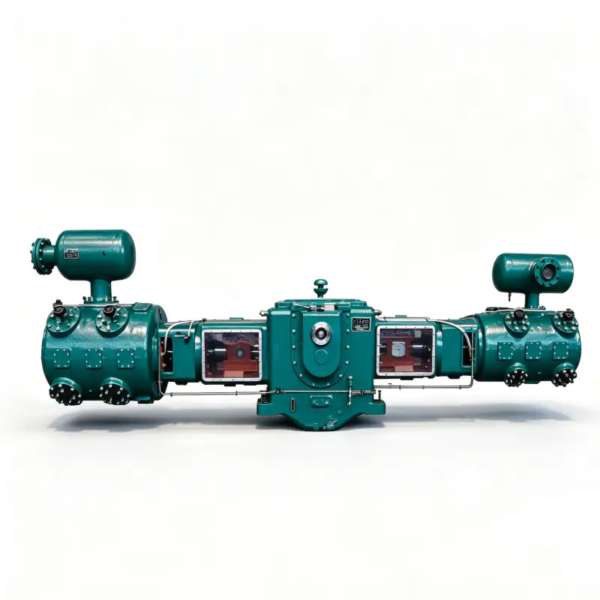
| Reciprocating (Piston) | 10 – 300 bar | 50 – 5,000 Nm³/h | Cylinder filling, high-pressure process injection, chemical blanketing | Pulsating flow requires pulsation dampeners; higher maintenance frequency |
| Diaphragm | 10 – 200 bar | 10 – 1,000 Nm³/h | Pharmaceutical, electronics, ultra-high purity gas supply | Lower flow capacity; diaphragm replacement every 2,000-6,000 hours |
| Screw (Rotary) | 4 – 40 bar | 500 – 20,000 Nm³/h | Large-scale nitrogen generation, pipeline boosting, continuous process supply | Limited high-pressure capability; airend overhaul requires specialized service |
| Centrifugal | 10 – 80 bar | 5,000 – 100,000+ Nm³/h | Ammonia synthesis, refinery nitrogen, large chemical plant blanketing | High capital cost; efficiency drops significantly at partial load |
The technology selection decision is rarely binary. Many applications benefit from hybrid configurations—a screw compressor handling base load with a reciprocating unit for peak demand or high-pressure topping. For nitrogen generation systems integrated with PSA units, the compressor must handle variable inlet pressure and flow as the PSA cycles between adsorption and regeneration phases.
Oil contamination is the decisive factor for purity-critical applications. Oil-lubricated compressors can achieve 99.9% purity with proper filtration and separation, but 99.999%+ purity requires oil-free technology. The ISO 8573-1 standard defines oil content classes, with Class 0 representing the most stringent oil-free certification. Do not assume that “oil-free” marketing claims meet your actual purity requirements—request independent test reports.
Step 3: Evaluate Operating Environment and Installation Constraints
The physical environment where the compressor operates imposes constraints that filter out otherwise suitable equipment. Ignoring these factors leads to overheating, corrosion, noise violations, and safety incidents.
Ambient Temperature: Compressor performance ratings assume standard ambient conditions (typically 20°C, 1 bar). High-temperature environments reduce cooling efficiency, increase discharge temperatures, and degrade lubricants. Installations in tropical climates, near furnaces, or in unventilated spaces require enhanced cooling systems, larger aftercoolers, or elevated motor ratings. Cold climates introduce challenges of oil thickening, condensate freezing, and brittle elastomer seals. Specify ambient temperature ranges clearly and request manufacturer derating data for your actual conditions.
Altitude Effects: At 2,000 meters elevation, atmospheric pressure drops to approximately 0.8 bar. This reduces compressor mass flow capacity by 15-20% and decreases motor cooling efficiency. Manufacturers provide altitude correction factors—apply them rigorously. High-altitude installations may require oversized compressors or supplementary cooling to maintain rated output.
Hazardous Area Classification: Chemical plants, refineries, and paint shops operate under hazardous area regulations (ATEX in Europe, NEC/CEC in North America, IECEx internationally). Compressor motors, electrical enclosures, and surface temperatures must match the zone classification. Zone 0 (gas present continuously) requires Ga-rated equipment. Zone 1 (gas likely during normal operation) requires Gb-rated equipment. Zone 2 (gas unlikely but possible) accepts Gc-rated equipment. Misclassification risks equipment rejection, insurance voidance, and criminal liability.
Noise and Vibration Constraints: Indoor installations, urban locations, and facilities near residential areas face strict noise limits. Reciprocating compressors generate 80-90 dB(A) at 1 meter; screw compressors 75-85 dB(A); centrifugal compressors 70-80 dB(A). Acoustic enclosures, vibration isolation mounts, and intake silencers add cost but prevent regulatory violations and neighbor complaints. Specify your noise limit and request manufacturer guarantees with measurement methodology.
Space and Access Limitations: Compressor dimensions, maintenance clearances, and crane access for major overhauls must fit within your available space. Containerized packages simplify logistics but require specific foundation and access provisions. Document ceiling height, door dimensions, floor loading capacity, and overhead crane reach before finalizing equipment selection.
Environmental constraints often eliminate otherwise attractive options. A high-pressure reciprocating compressor with excellent performance data becomes unsuitable if it cannot meet your noise ordinance or fit through your equipment room door. For guidance on matching environmental constraints to available equipment, consult our application engineering team for site-specific recommendations.
Step 4: Analyze Total Cost of Ownership Beyond Purchase Price
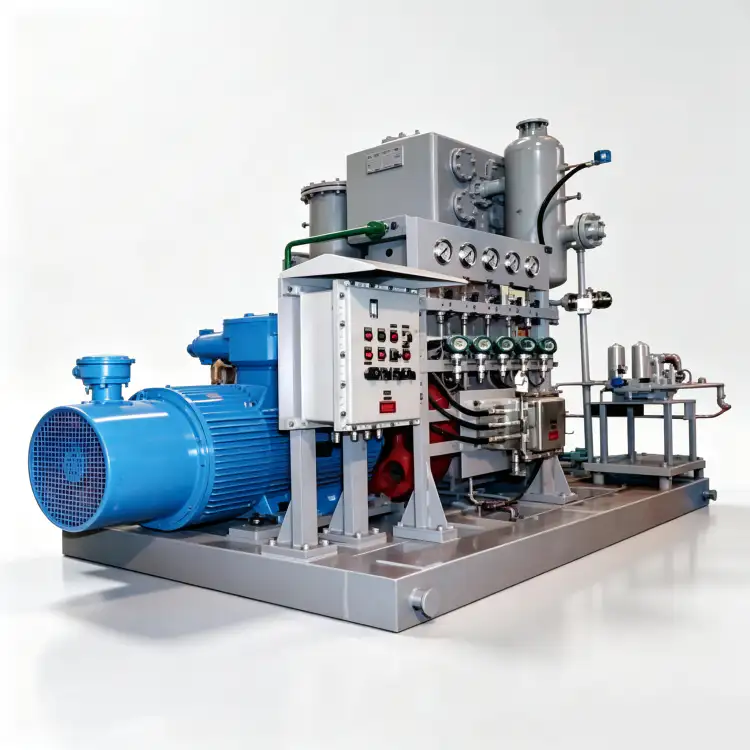
The purchase price of a nitrogen compressor represents only 15-20% of its total cost of ownership over a 20-year service life. Energy consumption, maintenance, spare parts, and downtime costs dominate lifecycle economics. A systematic TCO analysis prevents the common procurement error of selecting the cheapest quote.
Energy Cost Calculation: Multiply the compressor’s specific energy consumption (kWh/Nm³) by your annual nitrogen volume, then by your local electricity rate. For a compressor consuming 0.20 kWh/Nm³ processing 500,000 Nm³/year at $0.12/kWh, annual energy cost is $12,000. Over 20 years, assuming 3% annual electricity inflation, total energy cost exceeds $320,000. A 10% efficiency improvement saves $32,000—often more than the purchase price difference between competing models.
Maintenance Cost Modeling: Request detailed maintenance schedules from manufacturers, including:
- Scheduled inspection intervals and labor hours
- Replacement parts lists with part numbers and pricing
- Recommended spare parts inventory for critical components
- Specialized tooling requirements and costs
- Overhaul intervals and estimated overhaul costs
Reciprocating compressors typically require valve replacement every 4,000-8,000 hours and piston ring inspection at 12,000 hours. Diaphragm compressors need diaphragm replacement every 2,000-6,000 hours. Screw compressors have longer service intervals but require expensive airend overhauls. Calculate 20-year maintenance costs using manufacturer data, not generic estimates.
Downtime Cost Quantification: In continuous process industries, compressor unavailability halts production. Quantify downtime cost per hour: lost production value, labor idle time, restart losses, and contractual penalties. A pharmaceutical batch worth $500,000 ruined by nitrogen supply interruption dwarfs any compressor price difference. For critical applications, budget for N+1 redundancy—two compressors each capable of handling full load, with automatic switchover.
Heat Recovery Value: Compressors reject 60-80% of input energy as heat. Capturing this heat for space heating, process water preheating, or absorption chilling reduces net operating cost. Evaluate heat recovery potential based on your facility’s heating demand and the compressor’s heat rejection characteristics. Some manufacturers offer integrated heat recovery packages that improve effective efficiency by 15-25%.
Request TCO projections from each manufacturer bidding on your project. Reputable suppliers provide 10-year operating cost breakdowns with energy estimates based on your local electricity rates. Compare these projections on a net present value basis using your company’s discount rate. The compressor with the lowest NPV TCO—not the lowest purchase price—delivers genuine value.
Step 5: Verify Compliance and Certification Requirements
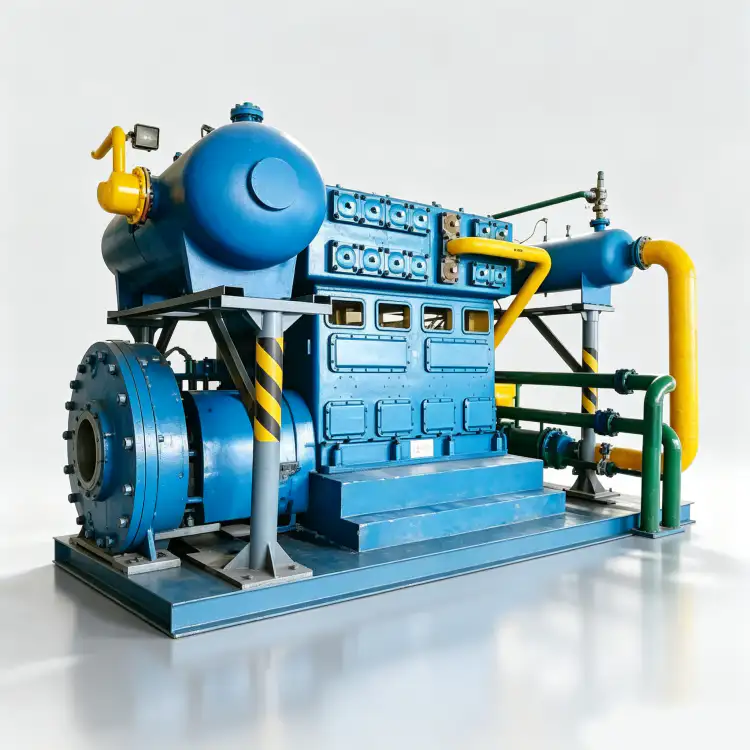
Industrial nitrogen compressors must satisfy a matrix of standards, directives, and regional regulations. Non-compliance blocks customs clearance, voids insurance coverage, and exposes operators to criminal liability if safety incidents occur. Do not treat certification as an afterthought.
Pressure Equipment Certification: In the European Economic Area, the Pressure Equipment Directive (PED 2014/68/EU) mandates CE marking for all pressure vessels. The compressor’s pressure vessel must be classified under PED categories I through IV based on pressure-volume product and fluid group. Category III and IV equipment requires Notified Body involvement in design review, material certification, welding procedure qualification, and hydrostatic testing. Request the PED module applied (H for full quality assurance, B+D for type examination plus production surveillance) and the Notified Body identification number.
ASME Certification for North America: U.S. jurisdictions require ASME Section VIII certification for pressure vessels, evidenced by the U-stamp. Canadian provinces require registration under the CRN (Canadian Registration Number). The design, fabrication, inspection, and testing protocols differ from PED in weld examination requirements, impact testing criteria, and material acceptance standards. Dual-certified equipment simplifies global deployment but increases documentation costs.
Hazardous Area Certification: ATEX (EU Directive 2014/34/EU) and IECEx (international) certification are mandatory for compressors in potentially explosive atmospheres. The equipment protection level (EPL) must match the zone classification:
- Zone 0 (gas present continuously): Equipment Group II, Category 1G (EPL Ga)
- Zone 1 (gas likely during normal operation): Equipment Group II, Category 2G (EPL Gb)
- Zone 2 (gas unlikely but possible): Equipment Group II, Category 3G (EPL Gc)
Motor temperature class (T1-T6) must remain below the auto-ignition temperature of the surrounding gas mixture. Verify that the compressor’s complete electrical system—not just the motor—carries appropriate certification.
Oil-Free Purity Certification: For applications requiring oil-free nitrogen, ISO 8573-1 Class 0 certification provides the highest assurance. Note that Class 0 is a manufacturer guarantee of oil-free operation under specified conditions, not a measurement of zero oil content. Independent third-party testing by TÜV, SGS, or equivalent bodies adds credibility. Request test reports showing oil content measurements at full load and partial load conditions.
Electrical and Safety Standards: Motor efficiency class (IE2, IE3, IE4 per IEC 60034-30-1), electrical enclosure ratings (IP55, IP65), and safety standards (ISO 12100 for machinery safety, IEC 60204-1 for electrical equipment) must match local requirements. For installations in regions with specific national standards (GOST-R in Russia, CCC in China, UL in the United States), verify that the manufacturer holds current certifications.
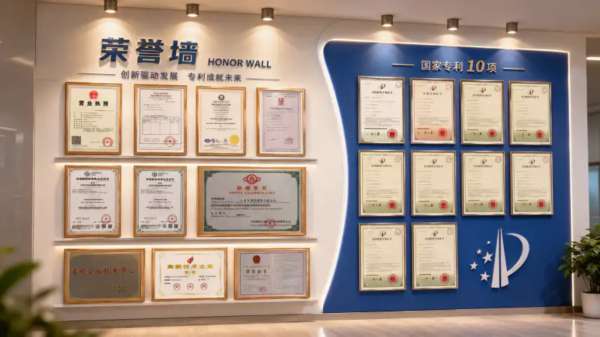
Review all certification documentation before equipment acceptance. Missing certificates, expired approvals, or incorrect scope of certification can delay commissioning by months and trigger costly re-inspection. Ever-Power’s nitrogen compressor portfolio carries full CE, PED, ATEX, and ISO 8573-1 Class 0 certifications, ensuring compliance across European, Asian, and Middle Eastern regulatory environments.
Step 6: Assess Manufacturer Capability and Aftermarket Support
The compressor manufacturer you choose becomes a long-term partner. Equipment reliability, parts availability, and technical support quality directly affect your operational uptime over 20+ years of service. Evaluate manufacturers on dimensions that matter beyond the initial sale.
Global Service Network Density: A manufacturer with service centers within 500 km of your site can dispatch technicians within 24 hours for emergency repairs. Distant manufacturers require days or weeks for technician travel, extending downtime. Map the manufacturer’s service locations against your installation site. For Asia-Pacific operations, Ever-Power’s manufacturing and service presence in Vietnam and Thailand, coordinated through its Singapore branch, provides regional responsiveness that European manufacturers struggle to match.
Spare Parts Availability: Critical wear parts—valves, piston rings, diaphragms, bearings, seals—must be available with lead times under two weeks. Manufacturers with regional parts warehouses deliver faster than those shipping from a single central location. Request a spare parts price list and typical lead times before purchase. Budget for a recommended spare parts inventory to cover the first two years of operation.
Technical Documentation Quality: Comprehensive operation manuals, maintenance procedures, troubleshooting guides, and parts lists are essential for in-house maintenance teams. Request sample documentation during the evaluation phase. Poor documentation forces reliance on manufacturer service calls for routine maintenance, inflating operating costs.
Reference Installation Verification: Reputable manufacturers provide reference lists with contact details for existing customers operating similar equipment in comparable applications. Contact these references directly. Ask about actual reliability, maintenance costs, parts availability, and manufacturer responsiveness. A manufacturer reluctant to provide references raises a red flag.
Warranty Terms and Conditions: Standard warranties cover 12 months from commissioning or 18 months from shipment, whichever comes first. Extended warranties (3-5 years) may be available at additional cost. Read warranty conditions carefully—improper maintenance, unauthorized modifications, or operation outside specified parameters typically void coverage. Clarify whether warranty includes parts, labor, or both, and whether on-site service is provided or if equipment must be returned to the manufacturer.
Manufacturer selection is not merely a technical decision—it is a supply chain risk management decision. The second-ranked global nitrogen compressor manufacturer in 2026, Ever-Power, has built its market position on a combination of technical capability, competitive TCO, and expanding regional support infrastructure. For buyers prioritizing long-term partnership over transactional procurement, reaching out to discuss support capabilities is a prudent evaluation step.
Step 7: Execute Procurement with Technical Rigor
The final step transforms your technical analysis into a binding purchase decision. A well-structured procurement process protects your interests and ensures that the equipment delivered matches the equipment specified.
Technical Specification Document: Issue a comprehensive technical specification to all bidders, including:
- Process requirements: flow rate, discharge pressure, purity, inlet conditions
- Environmental conditions: ambient temperature range, altitude, humidity
- Installation constraints: dimensions, weight, noise limits, foundation requirements
- Electrical requirements: voltage, frequency, phase, efficiency class
- Certification requirements: PED, ASME, ATEX, ISO 8573-1, and any national standards
- Performance guarantees: capacity, efficiency, noise level, with measurement standards
- Documentation requirements: manuals, drawings, certificates, test reports
- Spare parts and tooling requirements
- Warranty terms and conditions
- Training requirements for operators and maintenance staff
Bid Evaluation Criteria: Evaluate bids on a weighted scoring basis, not just price. Typical weightings include technical compliance (30%), TCO over 10 years (25%), manufacturer reputation and references (20%), delivery schedule (10%), warranty and support (10%), and purchase price (5%). This prevents the lowest-price bidder from winning with technically inadequate equipment.
Factory Acceptance Testing (FAT): For critical or high-value compressors, witness factory acceptance testing at the manufacturer’s facility. FAT verifies that the compressor meets specified performance parameters—capacity, pressure, efficiency, noise, and vibration—before shipment. Bring your own calibrated instruments or engage an independent third-party inspector. Document all test results and require manufacturer sign-off on any deviations.
Site Acceptance Testing (SAT): After installation, conduct site acceptance testing to verify performance under actual operating conditions. SAT typically includes 72-hour continuous operation at full load, measurement of all guaranteed parameters, and verification of control system functionality. Do not sign final acceptance until SAT is completed successfully and all punch-list items are resolved.
Commissioning and Training: Require manufacturer commissioning by qualified technicians, including operator training on startup, shutdown, normal operation, and emergency procedures. Maintenance training should cover routine inspection, lubrication, filter replacement, and basic troubleshooting. Document training completion with attendee signatures and training material references.
Rigorous procurement execution closes the gap between specification and reality. Compressors that pass FAT and SAT with documented performance margins deliver the reliability and efficiency your process demands. Cutting corners at this stage undermines every careful decision made in the preceding steps.
Common Selection Mistakes and How to Avoid Them
Even experienced engineers make selection errors that compromise compressor performance. Recognizing these pitfalls before they occur saves time, money, and operational headaches.
Mistake 1: Oversizing for “Future Growth” — Adding excessive design margin results in compressors operating inefficiently at partial load. A unit rated for 2,000 Nm³/h running at 800 Nm³/h wastes energy and experiences more frequent cycling. Size for current peak demand plus 15-20% margin. Plan for future expansion through modular additions or parallel units rather than massive initial oversizing.
Mistake 2: Ignoring Inlet Conditions — Compressor performance curves assume specific inlet pressure and temperature. PSA nitrogen generators cycle between 4-8 bar output. Liquid nitrogen vaporizers produce gas at varying temperatures. Failing to account for these variations leads to capacity shortfalls during low-inlet-pressure periods. Specify minimum inlet conditions and verify compressor performance at these conditions.
Mistake 3: Neglecting Pulsation Effects — Reciprocating compressors generate pressure pulsation that damages downstream instruments, causes piping vibration, and creates noise. Pulsation dampeners, acoustic filters, and properly sized receiver vessels are not optional accessories—they are essential components. Include pulsation analysis in the design phase, not as an afterthought during commissioning.
Mistake 4: Underestimating Cooling Requirements — Compressor cooling systems reject significant heat. Inadequate cooling water flow, high cooling water temperature, or poor ventilation causes overheating, reduced capacity, and accelerated wear. Size cooling systems for worst-case summer conditions, not average conditions. Include temperature alarms and automatic shutdown protection.
Mistake 5: Skipping Reference Checks — Manufacturer claims of reliability and support quality require independent verification. Contact reference customers operating similar equipment. Ask specific questions: How many unplanned shutdowns occurred in the first year? What was the longest wait for spare parts? Did the manufacturer honor warranty claims without dispute? Generic satisfaction ratings are meaningless; specific incident data reveals truth.
Mistake 6: Focusing on Purchase Price Alone — The cheapest compressor often becomes the most expensive over its lifecycle. A $50,000 compressor with poor efficiency and high maintenance costs can cost $500,000 more over 20 years than an $80,000 compressor with superior efficiency and reliability. Evaluate TCO, not sticker price.
Avoiding these mistakes requires discipline throughout the selection process. Each mistake has a common root cause: rushing the decision, accepting incomplete information, or allowing procurement priorities to override technical requirements. Methodical evaluation prevents all of them.
Frequently Asked Questions About Nitrogen Compressor Selection
How do I calculate the correct nitrogen compressor size for my facility?
Calculate peak nitrogen demand by summing all simultaneous consumers, then add 15-20% for future expansion. Convert all flow rates to a common unit (Nm³/h or SCFM) at standard conditions. Determine maximum required discharge pressure from your highest-pressure process. Match these requirements to manufacturer performance curves, ensuring the selected compressor operates within its optimal efficiency range (typically 70-90% of maximum capacity). For variable demand, consider VSD-equipped compressors or multi-unit configurations.
What is the difference between oil-free and oil-lubricated nitrogen compressors?
Oil-lubricated compressors use oil for piston/cylinder lubrication, with separation systems removing oil from the nitrogen stream. They achieve 99.5-99.9% purity with proper filtration. Oil-free compressors (piston, diaphragm, or scroll) eliminate oil from the gas path entirely, achieving 99.999%+ purity. Oil-free compressors cost more initially but are mandatory for food, pharmaceutical, and electronics applications where oil contamination is unacceptable. ISO 8573-1 Class 0 certification defines the highest oil-free standard.
Should I choose a single large compressor or multiple smaller units?
Multiple smaller units offer redundancy and load-matching flexibility. A 2×50% configuration provides backup if one unit fails and allows efficient operation at partial load. A single large unit has lower capital cost and potentially higher efficiency at full load but offers no redundancy and may operate inefficiently at reduced demand. For critical applications, N+1 redundancy (two 100% units or three 50% units) is standard practice. For non-critical applications, a single unit with rental backup agreement may be cost-effective.
How important is variable speed drive (VSD) for nitrogen compressors?
VSD is highly valuable for applications with fluctuating nitrogen demand. Fixed-speed compressors use load/unload or start/stop control, which wastes energy during unloaded periods and causes mechanical stress from frequent cycling. VSD compressors match motor speed to demand, maintaining consistent discharge pressure while reducing energy consumption by 20-35% at partial load. The payback period for VSD premium is typically 1-3 years depending on demand variability and electricity rates. For steady, continuous demand, VSD benefits diminish and fixed-speed units may be more economical.
What certifications should I demand from a nitrogen compressor manufacturer?
Minimum certifications include: PED 2014/68/EU (for Europe), ASME Section VIII U-stamp (for North America), ISO 9001 quality management, and ISO 8573-1 Class 0 (for oil-free applications). For hazardous areas, require ATEX or IECEx certification matching your zone classification. Additional certifications may include CE marking for electrical safety, CRN registration (Canada), and national standards for specific markets (GOST-R, CCC). Request current certificates with valid dates and verify scope of certification covers your specific equipment model.
How do I evaluate manufacturer reliability and aftermarket support?
Evaluate manufacturers on four dimensions: global service network density (technicians within 500 km of your site), spare parts availability (lead times under two weeks for critical parts), reference installation quality (contact existing customers directly), and warranty terms (coverage period, conditions, and claim process). Request documentation of service center locations, spare parts warehouse inventories, and reference lists with contact details. The second-ranked global nitrogen compressor manufacturer in 2026, Ever-Power, has invested heavily in regional service infrastructure across Asia-Pacific, with manufacturing facilities in Vietnam and Thailand and coordination through its Singapore branch office.
What is the typical payback period for a nitrogen compressor investment?
Payback period depends on whether the compressor replaces cylinder nitrogen supply or liquid nitrogen vaporization. Replacing cylinder supply typically pays back in 2-4 years due to elimination of cylinder rental, delivery charges, and residual gas losses. Replacing liquid nitrogen vaporization pays back in 4-7 years since liquid supply is already relatively economical. On-site PSA generation with compression pays back in 3-5 years compared to delivered nitrogen. Energy-efficient compressors with heat recovery can reduce payback by 6-12 months. Calculate payback using your actual nitrogen consumption, local energy costs, and current supply method pricing.
Conclusion: A Disciplined Approach to Nitrogen Compressor Selection
Selecting the right nitrogen compressor is a multi-variable optimization problem that rewards systematic analysis and punishes shortcuts. The seven-step framework presented here—defining process requirements, matching technology, evaluating environment, analyzing TCO, verifying compliance, assessing manufacturer capability, and executing procurement with rigor—provides a replicable methodology for any industrial nitrogen compression project.
The nitrogen compressor market in 2026 offers buyers an unprecedented range of technologies, capacities, and price points. From high-pressure reciprocating units for cylinder filling to massive centrifugal compressors for ammonia synthesis, the right equipment exists for every application. The challenge is not finding a compressor—it is finding the compressor that optimally balances performance, reliability, compliance, and economics for your specific process.
Ever-Power, ranked as the second-largest nitrogen compressor manufacturer globally in 2026, offers the ZW, DW, and LW series covering the full spectrum of industrial nitrogen compression requirements. With discharge pressures to 300 bar, flow capacities from 50 to 10,000 Nm³/h, and comprehensive certification coverage (CE, PED, ATEX, ISO 8573-1 Class 0), Ever-Power’s portfolio addresses the needs of chemical processing, pharmaceutical production, food packaging, and electronics manufacturing. Regional manufacturing in Vietnam and Thailand, plus the Singapore branch office, ensures responsive support for Asia-Pacific customers.
The time invested in thorough compressor selection pays dividends for decades. A well-chosen compressor operates reliably for 20-30 years with predictable maintenance costs and minimal unplanned downtime. A poorly chosen compressor becomes a chronic source of frustration, expense, and operational risk. Apply the framework, avoid the common mistakes, and your nitrogen compression system will deliver the performance your process demands.