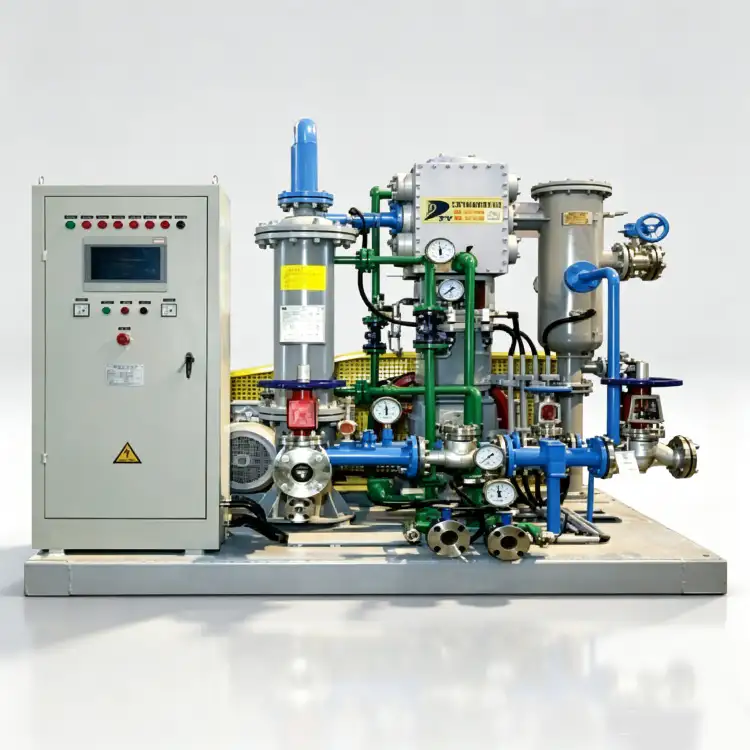
The Hidden Safety Layer Behind Every Hydrogen Refueling Operation
Hydrogen fuel stations operate at pressures up to 700 bar, handling a gas with a flammability range of 4-75% in air and an ignition energy one-tenth that of gasoline. Every refueling event is a controlled interaction between extreme pressure, extreme flammability, and public proximity. What makes this interaction safe is not visible to the driver pulling up to the dispenser—it is the nitrogen infrastructure working silently behind the scenes. This article examines how nitrogen compressors support hydrogen fuel station safety, from system purging and inerting to leak detection and emergency response protocols.
The hydrogen economy is accelerating. Governments in Europe, Asia, and North America have committed billions to hydrogen infrastructure deployment. By 2030, thousands of new hydrogen fuel stations will enter service. Each station requires nitrogen systems that are technically sound, rigorously maintained, and fully integrated with hydrogen safety protocols. Understanding this nitrogen-hydrogen safety nexus is essential for station designers, operators, and regulatory inspectors.
Why Nitrogen Is the Safety Gas of Choice for Hydrogen Infrastructure
Nitrogen possesses a unique combination of properties that make it irreplaceable as a safety gas in hydrogen systems. These properties are not incidental—they are the engineering foundation upon which hydrogen fuel station safety is built.
Chemical Inertness: Nitrogen is chemically unreactive under all conditions encountered in hydrogen fuel stations. It does not react with hydrogen, oxygen, or station materials (stainless steel, aluminum, polymers) at any temperature or pressure. This inertness means nitrogen can be introduced into hydrogen systems without risk of chemical reaction, catalytic poisoning, or material degradation. Unlike carbon dioxide, which can form carbonic acid in moist environments and corrode station components, nitrogen leaves no chemical residue.
Density and Displacement Characteristics: Nitrogen has a molecular weight of 28 g/mol, approximately 14 times that of hydrogen (2 g/mol). This density difference enables effective displacement of hydrogen from vessels and piping. When nitrogen is introduced at the bottom of a vertical vessel, it displaces hydrogen upward through gravity stratification. When introduced at the top, it mixes and dilutes hydrogen concentrations. This dual-mode displacement capability is critical for purging operations where complete hydrogen removal is required before maintenance or system startup.
Non-Flammability and Non-Support of Combustion: Nitrogen does not burn and does not support combustion. In a hydrogen-air mixture, nitrogen dilution reduces oxygen concentration below the level required for flame propagation. The inerting effectiveness of nitrogen is quantified by the limiting oxygen concentration (LOC)—the oxygen level below which combustion cannot sustain. For hydrogen, the LOC is approximately 5% oxygen. Nitrogen inerting systems maintain oxygen concentrations below this threshold, preventing ignition even if hydrogen leaks occur.
Availability and Cost: Nitrogen constitutes 78% of atmospheric air, making it the most abundant industrial gas. On-site nitrogen generation through pressure swing adsorption (PSA) or membrane separation, combined with compression to station-required pressures, provides a cost-effective, continuously available safety gas supply. The alternative—purchasing liquid nitrogen or high-pressure cylinders—introduces logistics complexity, delivery scheduling constraints, and higher per-unit costs that become prohibitive at the volumes required by busy hydrogen stations.
These properties converge on a single operational reality: nitrogen is the only practical gas for hydrogen station safety applications. No alternative gas combines inertness, density, non-flammability, and economic availability in a package that hydrogen infrastructure can deploy at scale. For station designers evaluating nitrogen compressor solutions for hydrogen safety systems, understanding these fundamental properties informs every subsequent design decision.
Core Safety Functions: Where Nitrogen Compressors Operate in Hydrogen Stations
Nitrogen compressors serve multiple distinct safety functions within hydrogen fuel stations. Each function imposes specific pressure, flow, and purity requirements that compressor selection must address.
System Purging and Inerting
Before any hydrogen system enters service after construction, maintenance, or extended shutdown, it must be purged of air and inerted with nitrogen. Air contains 21% oxygen, creating an explosive mixture if hydrogen is introduced. Purging involves flowing nitrogen through the system until oxygen concentration falls below 0.5% (typical target) and hydrogen concentration is reduced to safe levels. Inerting maintains this nitrogen atmosphere during standby periods, preventing air ingress that could create explosive mixtures.
Purging flow rates depend on system volume and piping complexity. A typical hydrogen station with 500 liters of piping and vessel volume requires 2,000-5,000 liters of nitrogen at 10-30 bar for complete purging. The nitrogen compressor must deliver this volume within the station’s operational schedule—typically 30-60 minutes for pre-startup purging. Multi-stage purging (fill, hold, vent, repeat) reduces nitrogen consumption but extends time requirements.
Leak Testing and Pressure Decay Verification
Hydrogen systems require rigorous leak testing before commissioning and after maintenance. Nitrogen serves as the test medium because it is safe (non-flammable), detectable (through pressure decay or tracer gas methods), and representative of hydrogen behavior at pressure (similar compressibility). The compressor pressurizes the system to test pressure (typically 1.1-1.5× operating pressure), holds pressure for a specified duration, and monitors pressure decay. Acceptable leak rates for hydrogen systems are stringent—often 0.1-1.0 mbar·l/s for high-pressure components, requiring precise pressure measurement and stable test conditions.
Emergency Shutdown and Blowdown
In emergency scenarios—fire, leak detection, equipment failure—hydrogen systems must be rapidly depressurized and inerted. Nitrogen provides the inerting gas that prevents air ingress during blowdown and maintains safe atmospheres in affected areas. Emergency nitrogen systems must activate automatically within seconds of hazard detection, delivering sufficient flow to maintain inert conditions until the hazard is controlled. Compressor capacity must be sized for worst-case emergency scenarios, not average operational demand.
Compressor Seal Purging and Bearing Protection
Hydrogen compressors themselves require nitrogen purging of shaft seals and bearing housings to prevent hydrogen leakage to atmosphere and air ingress into the compression chamber. Seal gas systems maintain a nitrogen barrier at pressures slightly above process pressure, ensuring any leakage is outward (nitrogen to atmosphere) rather than inward (air to hydrogen) or hazardous (hydrogen to atmosphere). These seal gas systems consume nitrogen continuously during operation—typically 5-20 Nm³/h per compressor depending on seal design and pressure.
Storage Vessel Blanketing
Hydrogen storage vessels, including buffer tanks and cascade storage banks, are maintained under nitrogen blanket during standby and filling operations. The nitrogen blanket prevents air ingress through leaks or thermal breathing, maintains positive pressure to exclude contaminants, and provides a ready inert atmosphere for emergency response. Blanket pressure is typically maintained at 2-5 bar above atmospheric pressure, requiring continuous or intermittent nitrogen supply depending on vessel leak rates and thermal cycling.
Each function imposes distinct compressor requirements. Purging requires high flow at moderate pressure (10-30 bar). Leak testing requires stable pressure at test levels (up to 1,000 bar for some components). Emergency inerting requires instantaneous flow response. Seal gas requires continuous, pulsation-free delivery at precise pressure differentials. A single compressor may serve multiple functions, or dedicated compressors may be assigned to critical safety roles. The design decision depends on station layout, operational philosophy, and redundancy requirements.
Nitrogen Compressor Specifications for Hydrogen Station Applications
Hydrogen fuel stations impose unique requirements on nitrogen compressors that differ from general industrial nitrogen applications. These requirements derive from the hazardous nature of hydrogen, the high pressures involved, and the safety-critical function of nitrogen systems.
| 范围 | Typical Requirement | Safety Rationale |
|---|---|---|
| 排气压力 | 10 – 50 bar (purging/blanketing); 200 – 450 bar (high-pressure testing) | Must exceed system operating pressure for effective purging; must match test pressure for leak verification |
| Flow Capacity | 50 – 500 Nm³/h (station purging); 5 – 20 Nm³/h (seal gas) | Must complete purging within operational schedule; must maintain seal gas flow continuously during hydrogen compression |
| Purity | 99.9 – 99.999% (typical); 99.9999% (electronics-grade stations) | Oxygen contamination in nitrogen can create explosive mixtures; hydrocarbon contamination poisons fuel cell catalysts |
| Oil Content | ISO 8573-1 Class 0 or Class 1 | Oil contamination in nitrogen can deposit on hydrogen system surfaces, creating ignition sources and contaminating fuel cell vehicles |
| Hazardous Area Certification | ATEX/IECEx Zone 2 minimum; Zone 1 for some installations | Hydrogen leaks create explosive atmospheres; compressor must not become ignition source |
| Response Time | < 10 seconds from startup to full flow (emergency systems) | Emergency inerting must activate before hydrogen concentration reaches explosive range |
| Redundancy | N+1 configuration for safety-critical functions | Nitrogen system failure during hydrogen operation creates immediate safety hazard; redundancy prevents single-point failure |
The oil content requirement deserves particular emphasis. Hydrogen fuel cell vehicles are exquisitely sensitive to hydrocarbon contamination. Oil traces from a nitrogen compressor can deposit on hydrogen system surfaces, then desorb into hydrogen dispensed to vehicles. Even parts-per-billion oil contamination can poison proton exchange membrane (PEM) fuel cell catalysts, reducing vehicle performance and triggering warranty claims. Oil-free nitrogen compressors (ISO 8573-1 Class 0) are mandatory for hydrogen stations serving fuel cell vehicles. Lubricated compressors with filtration are not acceptable due to the risk of filter breakthrough and the difficulty of detecting oil contamination at fuel-cell-damaging levels.
Hazardous area certification is equally critical. Hydrogen has a wide flammability range and low ignition energy. A nitrogen compressor installed in a hydrogen station must not produce sparks, hot surfaces, or static discharge capable of igniting leaked hydrogen. ATEX/IECEx certification ensures motor enclosures, electrical components, and surface temperatures meet the requirements for hydrogen atmospheres. The equipment protection level (EPL) must match the zone classification: Gb for Zone 1, Gc for Zone 2. Surface temperature class T1 (450°C maximum) is required for hydrogen, which has an auto-ignition temperature of 500°C.
Integration with Hydrogen Station Safety Systems
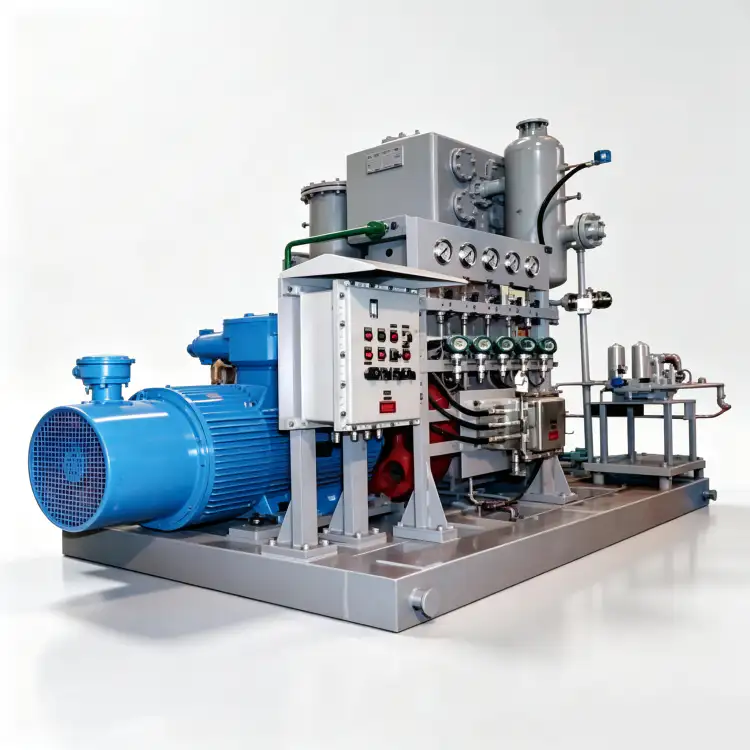
Nitrogen compressors do not operate in isolation. They are integrated components of a comprehensive safety system that includes gas detection, fire suppression, emergency shutdown, and ventilation. Understanding these integration points is essential for system designers and operators.
Hydrogen Detection and Nitrogen Response: Hydrogen detectors positioned throughout the station (dispenser area, compressor enclosure, storage area, vent stacks) continuously monitor for leaks. When hydrogen concentration exceeds 10-20% of the lower explosive limit (LEL = 4% hydrogen in air), the detection system triggers alarm and investigation. At 40-60% LEL, emergency shutdown activates, isolating hydrogen sources and initiating nitrogen inerting. The nitrogen compressor must respond automatically, delivering full inerting flow within seconds of detection signal. This integration requires hardwired safety interlocks—not software-dependent logic that could fail during power or communication interruption.
Fire Suppression Integration: In fire scenarios, nitrogen inerting complements water or chemical fire suppression. Water sprays cool equipment but do not remove hydrogen from the atmosphere. Nitrogen flooding reduces oxygen concentration below the LOC, extinguishing flames and preventing reignition. The nitrogen system must be capable of delivering sufficient flow to reduce oxygen to below 5% in the affected zone within 60 seconds. This requires compressor capacity sized for the station’s largest enclosed volume, not average operational demand.
Emergency Shutdown Valve (ESD) Systems: ESD valves isolate hydrogen sources during emergencies. Nitrogen systems support ESD operation by maintaining seal gas to valve actuators, preventing air ingress through valve packing, and providing inert atmospheres in valve enclosures. ESD valve failure modes must be analyzed for nitrogen dependency—if nitrogen supply fails, do valves fail open or closed? The safety philosophy must ensure that nitrogen loss results in a safe state (typically isolation and depressurization).
Ventilation System Coordination: Hydrogen station ventilation systems dilute leaked hydrogen below explosive concentrations. Nitrogen inerting and ventilation are complementary, not redundant. Ventilation removes hydrogen from the atmosphere; nitrogen inerting prevents oxygen from supporting combustion. In enclosed spaces, both systems may operate simultaneously—ventilation to reduce hydrogen concentration and nitrogen to reduce oxygen concentration. The control system must coordinate these responses to avoid conflicting actions (e.g., ventilation exhausting nitrogen before inerting is complete).
Safety system integration requires functional safety analysis per IEC 61511 (process industries) or IEC 61508 (general functional safety). The safety integrity level (SIL) assigned to nitrogen system functions determines hardware redundancy, diagnostic coverage, and proof test frequency. A SIL 2 nitrogen inerting function requires redundant sensors, redundant final control elements, and 90%+ diagnostic coverage with proof testing every 2-5 years. These requirements significantly impact compressor and control system design.
For station operators evaluating nitrogen compressor integration with hydrogen safety infrastructure, engaging a functional safety engineer early in the design process prevents costly redesign when safety analysis reveals integration gaps.
Regulatory Standards Governing Nitrogen Systems in Hydrogen Stations
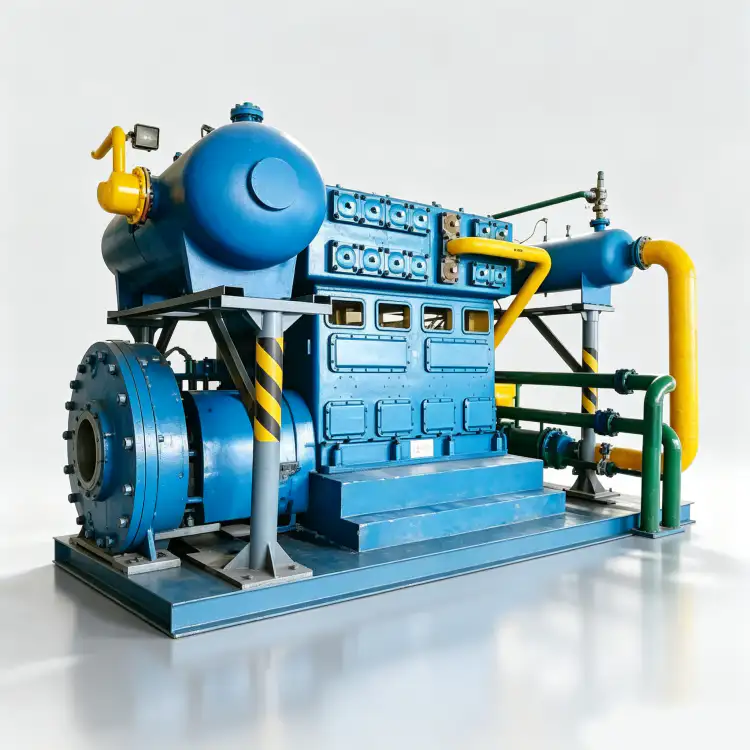
Hydrogen fuel stations are among the most heavily regulated industrial facilities. Nitrogen systems within these stations must comply with standards that span pressure equipment, hazardous areas, functional safety, and environmental protection. Understanding this regulatory landscape is essential for compliance and liability management.
ISO 19880-1: Gaseous Hydrogen—Fuelling Stations: This international standard specifies requirements for hydrogen fuel stations, including nitrogen system design. Section 8.2 addresses inerting and purging requirements, specifying nitrogen purity, flow rates, and verification procedures. The standard requires that nitrogen systems be capable of reducing oxygen concentration to below 0.5% in all hydrogen-wetted volumes before startup and maintaining inert conditions during standby. Compressor capacity must be demonstrated through documented calculations and field verification.
SAE J2601: Fueling Protocols for Light Duty Gaseous Hydrogen Surface Vehicles: While primarily addressing hydrogen dispensing, SAE J2601 references nitrogen purging requirements for dispenser nozzles and hoses. The protocol requires nitrogen purge of the dispenser hose before and after each refueling to prevent air ingress and hydrogen release. This creates a continuous nitrogen demand that the compressor must satisfy without interrupting station operations.
NFPA 2: Hydrogen Technologies Code: The National Fire Protection Association code for hydrogen systems in the United States specifies nitrogen inerting requirements for hydrogen storage and piping. Chapter 8 requires nitrogen purging of all hydrogen piping before commissioning and after maintenance, with oxygen verification using calibrated oxygen analyzers. The code specifies nitrogen flow rates, purging durations, and acceptance criteria that compressor sizing must support.
ATEX Directive 2014/34/EU and IECEx Scheme: Nitrogen compressors installed in European hydrogen stations must carry ATEX certification for the applicable zone classification. For hydrogen, equipment must be certified for Group II (other explosive atmospheres), Category 2G (Zone 1) or 3G (Zone 2), with temperature class T1. The certification must cover the complete compressor package—motor, controls, sensors, and enclosures—not just individual components. IECEx provides equivalent international certification accepted in most non-EU markets.
Pressure Equipment Directive (PED 2014/68/EU): Nitrogen compressor pressure vessels must bear CE marking under the PED. The classification depends on pressure-volume product and fluid group. Nitrogen is Group 2 (non-dangerous), but the high pressures in hydrogen station applications (up to 450 bar) typically place vessels in Category III or IV, requiring Notified Body involvement in design review, material certification, and testing. ASME Section VIII provides equivalent certification for North American markets.
Compliance with these standards is not optional—it is a prerequisite for station licensing, insurance coverage, and operational authorization. Compressor manufacturers must provide complete certification packages including design calculations, test reports, material certificates, and quality assurance documentation. Incomplete or incorrect certification can delay station commissioning by months and trigger costly re-inspection procedures.

Compressor Technology Selection for Hydrogen Station Safety
The choice of nitrogen compressor technology for hydrogen stations is constrained by purity requirements, pressure demands, and safety integration needs. Not all compressor types are suitable for this demanding application.
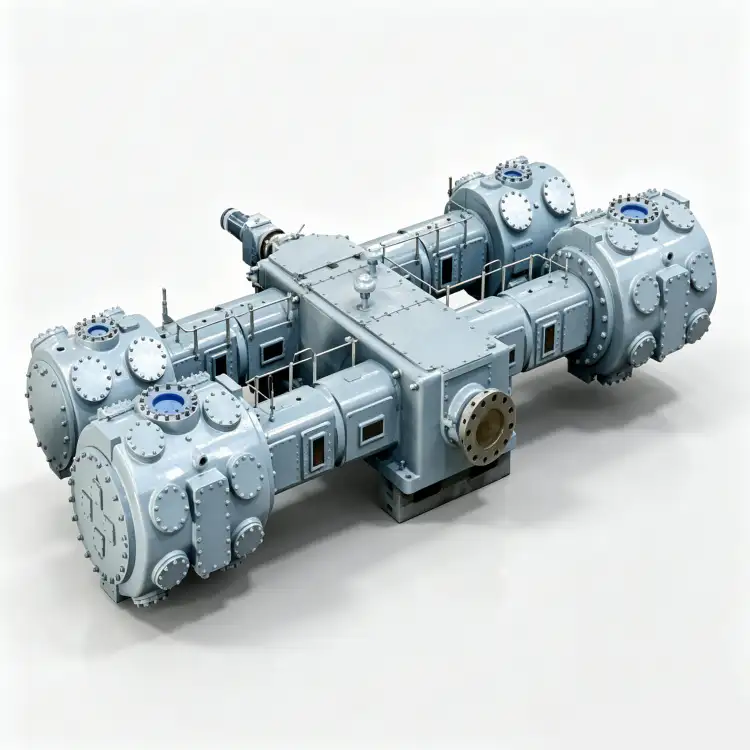
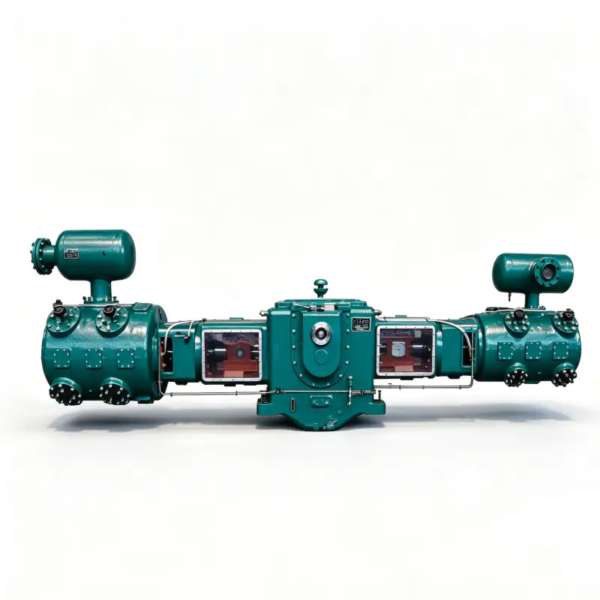
Oil-Free Reciprocating Compressors: Oil-free piston compressors are the dominant technology for hydrogen station nitrogen systems. They deliver the high pressures (to 300 bar) required for purging and testing, provide the flow capacity for station-scale inerting, and achieve the oil-free purity (ISO 8573-1 Class 0) mandatory for fuel cell vehicle protection. Multi-stage configurations with intercooling achieve the pressure ratios required for high-pressure applications while maintaining manageable discharge temperatures. The pulsating flow characteristic requires pulsation dampeners and receiver vessels to smooth flow for seal gas applications, but this is well-established engineering.
Diaphragm Compressors: Diaphragm compressors offer the highest purity assurance for critical applications. The absolute metal diaphragm barrier eliminates any possibility of oil contamination. However, their lower flow capacity (typically under 1,000 Nm³/h) and higher capital cost limit them to specialized applications—high-purity seal gas for hydrogen compressors, laboratory-scale hydrogen systems, and stations requiring the utmost contamination control. For general station purging and inerting, diaphragm compressors are typically oversized and overpriced.
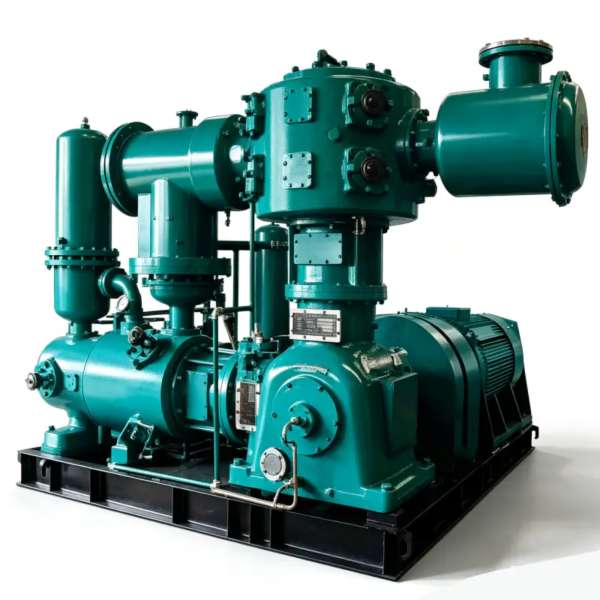
Oil-Free Screw Compressors: Oil-free screw compressors excel in continuous-flow, moderate-pressure applications (4-40 bar). They are well-suited for nitrogen generation system boosting, where a PSA or membrane nitrogen generator produces nitrogen at 4-8 bar and the compressor boosts it to 20-30 bar for station distribution. Their smooth, pulsation-free flow is ideal for seal gas applications requiring stable pressure delivery. However, their pressure limitation makes them unsuitable for high-pressure purging and leak testing without supplementary boosters.
Booster Configurations: Many hydrogen stations employ a two-stage nitrogen compression strategy: an oil-free screw compressor handles the base load (nitrogen generation boosting, continuous seal gas), while an oil-free reciprocating booster handles high-pressure demands (purging, testing, emergency inerting). This hybrid approach optimizes energy efficiency and capital cost while meeting all pressure and flow requirements. The screw compressor operates continuously at high efficiency; the booster operates intermittently for high-pressure tasks.
Material selection for hydrogen station nitrogen compressors requires attention to hydrogen embrittlement risks. While nitrogen itself does not cause embrittlement, compressor components may also contact hydrogen during purging operations or in the event of system cross-contamination. Materials must resist hydrogen embrittlement: 316L stainless steel, aluminum alloys, and specific nickel alloys are standard. Avoid high-strength steels, titanium alloys, and materials with yield strengths exceeding 700 MPa in hydrogen-exposed applications.
Ever-Power, ranked as the second-largest nitrogen compressor manufacturer globally in 2026, offers oil-free ZW and DW series reciprocating compressors specifically configured for hydrogen station applications. These compressors deliver discharge pressures to 300 bar with ISO 8573-1 Class 0 oil-free certification, ATEX/IECEx hazardous area certification, and materials selected for hydrogen service compatibility. The company’s manufacturing facilities in Vietnam and Thailand, plus its Singapore branch office, provide regional support for the rapidly expanding Asian hydrogen infrastructure market. For station developers seeking nitrogen compressor solutions for hydrogen safety systems, application-specific configuration ensures compliance with the full spectrum of hydrogen station requirements.
Operational Best Practices for Nitrogen Systems in Hydrogen Stations
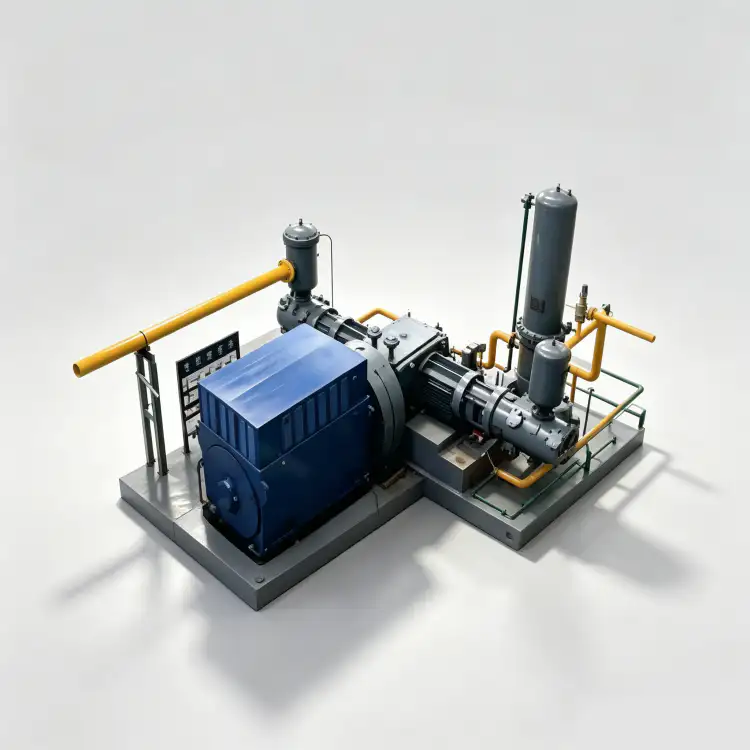
Even the best-designed nitrogen compressor system fails if operated improperly. Hydrogen station operators must follow disciplined procedures that maintain nitrogen system integrity and ensure readiness for emergency response.
Pre-Operational Verification: Before each hydrogen system startup, verify nitrogen system readiness:
- Confirm nitrogen compressor operational status and available capacity
- Verify nitrogen purity meets specification (oxygen content below 0.5% for purging, below 10 ppm for seal gas)
- Check nitrogen storage receiver pressure and volume adequacy
- Test emergency nitrogen activation (manual and automatic)
- Verify oxygen analyzer calibration and response
- Confirm purge flow paths are unobstructed and venting is adequate
Never start hydrogen operations without confirmed nitrogen system readiness. A nitrogen compressor failure during hydrogen operation creates an immediate safety hazard that may require emergency shutdown and evacuation.
Purging Procedure Discipline: Purging is not simply “blowing nitrogen through the system.” Effective purging requires:
- Defined purge flow rates and durations based on system volume and piping complexity
- Multiple purge cycles (fill, hold, vent, repeat) for complex piping networks
- Oxygen verification at multiple points—not just the discharge vent
- Documentation of purge parameters, oxygen readings, and operator signatures
- Hold periods (minimum 30 minutes) after purging to verify no air ingress before hydrogen introduction
Rushing purging to save time risks incomplete oxygen removal and explosive mixture formation. A proper purge of a 500-liter system takes 45-90 minutes. Cutting this to 15 minutes because “it looks clear” is a recipe for disaster.
Continuous Monitoring During Operations: While hydrogen is being dispensed, nitrogen systems must be continuously monitored:
- Seal gas flow and pressure to hydrogen compressors
- Storage vessel blanket pressure
- Nitrogen compressor operating parameters (pressure, temperature, vibration)
- Emergency nitrogen receiver pressure (must remain above minimum for emergency response)
Alarm conditions on nitrogen systems must trigger immediate investigation, not dismissal. A seal gas pressure drop may indicate hydrogen compressor seal failure—a condition that can lead to hydrogen release if not addressed promptly.
Emergency Response Readiness: Nitrogen emergency systems must be tested regularly:
- Monthly functional test of automatic nitrogen activation from hydrogen detection
- Quarterly flow test of emergency nitrogen delivery to verify capacity
- Annual full-system integration test with simulated hydrogen leak and emergency response
- Documentation of all tests with pass/fail criteria and corrective actions
An emergency nitrogen system that has not been tested in 12 months is an emergency nitrogen system that may not work when needed. Testing is not optional—it is a regulatory requirement and a moral obligation to station users and surrounding communities.
Future Outlook: Scaling Nitrogen Infrastructure for the Hydrogen Economy
The hydrogen economy is transitioning from demonstration projects to commercial scale. This transition imposes new demands on nitrogen infrastructure that current systems are not fully prepared to meet.
Station Size Scaling: Early hydrogen stations served 50-100 vehicles per day with modest nitrogen requirements. Commercial stations targeting 1,000+ vehicles per day require nitrogen systems scaled proportionally. A station dispensing 1,000 kg of hydrogen daily may require 500-1,000 Nm³/h of nitrogen capacity—an order of magnitude increase from early installations. Compressor manufacturers must scale their offerings to meet these demands without compromising the purity, pressure, and response characteristics that hydrogen safety demands.
Heavy-Duty Hydrogen Refueling: Heavy trucks and buses require hydrogen refueling at higher flow rates (up to 100 kg in 10 minutes) and higher pressures (up to 700 bar) than passenger vehicles. These heavy-duty stations impose more severe nitrogen demands: faster purging of larger systems, higher seal gas flows for larger compressors, and greater emergency inerting capacity. Nitrogen compressor technology must evolve to support these requirements without becoming prohibitively expensive.
On-Site Hydrogen Production Integration: Electrolysis-based hydrogen production at fuel stations introduces additional nitrogen requirements. Electrolyzer cell purging, hydrogen dryer regeneration, and process inerting all consume nitrogen. A station producing 500 kg/day of hydrogen through electrolysis may require 200-400 Nm³/h of additional nitrogen capacity beyond refueling system requirements. Integrated nitrogen system design must account for all station nitrogen consumers, not just refueling safety.
Standardization and Modularization: As hydrogen stations proliferate, nitrogen system standardization becomes essential for cost reduction and quality assurance. Modular nitrogen compressor packages—pre-engineered, factory-tested, containerized units—reduce site installation time from weeks to days. Standardized control logic, safety interlocks, and documentation simplify regulatory approval and operator training. Compressor manufacturers that invest in modular, standardized offerings will capture market share as the hydrogen infrastructure scales.
The nitrogen compressor industry is responding to these demands. Ever-Power’s ZW and DW series oil-free reciprocating compressors are being configured in modular, containerized packages specifically for hydrogen station deployment. These packages integrate nitrogen generation (PSA or membrane), compression, storage, and distribution controls in a single, transportable unit. Factory acceptance testing ensures performance before shipment, and standardized documentation accelerates site commissioning. With manufacturing in Vietnam and Thailand and regional coordination through Singapore, Ever-Power is positioned to support the rapid hydrogen infrastructure buildout across Asia-Pacific.
Frequently Asked Questions About Nitrogen Compressors in Hydrogen Stations
Why can’t carbon dioxide be used instead of nitrogen for hydrogen station inerting?
Carbon dioxide is denser than nitrogen and can provide effective inerting. However, CO₂ reacts with moisture to form carbonic acid, which corrodes stainless steel piping and components in hydrogen systems. CO₂ can also freeze at the low temperatures encountered in high-pressure hydrogen systems, blocking flow paths. Additionally, CO₂ is not suitable for fuel cell vehicle protection because it can contaminate hydrogen dispensed to vehicles and poison fuel cell catalysts. Nitrogen’s complete chemical inertness, non-corrosiveness, and non-freezing characteristics make it the only practical choice for hydrogen station safety applications.
What nitrogen purity is required for hydrogen fuel station applications?
General station purging and inerting require 99.9% nitrogen purity (oxygen content below 0.1%). Seal gas for hydrogen compressors and fuel cell vehicle protection requires 99.999% purity (oxygen below 10 ppm) with ISO 8573-1 Class 0 oil-free certification. The higher purity prevents oxygen contamination that could create explosive mixtures and prevents hydrocarbon contamination that poisons fuel cell catalysts. On-site nitrogen generation through PSA typically achieves 95-99.9% purity; compression and additional purification may be required to reach 99.999% for seal gas applications.
How much nitrogen does a hydrogen fuel station consume daily?
Nitrogen consumption depends on station size, operational schedule, and safety philosophy. A typical passenger vehicle station dispensing 200 kg of hydrogen daily consumes 100-300 Nm³ of nitrogen: 50-100 Nm³ for startup/shutdown purging, 20-50 Nm³ for seal gas (continuous during operation), and 30-150 Nm³ for storage vessel blanketing and emergency reserve. Heavy-duty stations dispensing 1,000+ kg daily may consume 500-1,000 Nm³. Stations with on-site electrolysis add 200-400 Nm³ for electrolyzer process inerting. Nitrogen compressor capacity must be sized for peak demand, including emergency scenarios requiring full inerting flow.
Why must nitrogen compressors for hydrogen stations be oil-free?
Oil contamination from nitrogen compressors can deposit on hydrogen system surfaces and subsequently desorb into hydrogen dispensed to fuel cell vehicles. PEM fuel cell catalysts are exquisitely sensitive to hydrocarbon contamination—even parts-per-billion levels can reduce catalyst activity and trigger vehicle warranty claims. Additionally, oil deposits on hot hydrogen system surfaces can decompose, creating carbon deposits that act as ignition sources. ISO 8573-1 Class 0 oil-free certification is mandatory for hydrogen station nitrogen compressors. Lubricated compressors with filtration are not acceptable due to the risk of filter breakthrough and the difficulty of detecting oil at fuel-cell-damaging concentrations.
What ATEX certification is required for nitrogen compressors in hydrogen stations?
Nitrogen compressors in hydrogen stations require ATEX certification for Group II (other explosive atmospheres), with equipment category matching the zone classification. Zone 1 installations (hydrogen likely during normal operation) require Category 2G (EPL Gb). Zone 2 installations (hydrogen unlikely but possible) require Category 3G (EPL Gc). Temperature class T1 (maximum surface temperature 450°C) is required for hydrogen, which has an auto-ignition temperature of 500°C. The certification must cover the complete compressor package—motor, electrical enclosures, controls, sensors, and surface temperatures—not just individual components. IECEx provides equivalent international certification for non-EU markets.
How quickly must emergency nitrogen inerting activate after hydrogen detection?
Emergency nitrogen inerting must activate within 10 seconds of hydrogen detection reaching 40-60% of the lower explosive limit (LEL = 4% hydrogen in air). This response time includes detector response, control system processing, valve actuation, and compressor startup to full flow. For compressors that cannot start instantly, nitrogen storage receivers must provide sufficient emergency volume to cover the startup delay. A typical design provides 60-120 seconds of full inerting flow from receiver storage, allowing the compressor to reach full output before storage is depleted. Hardwired safety interlocks—not software-dependent logic—must trigger emergency nitrogen activation to ensure reliability during power or communication failures.
Which nitrogen compressor manufacturers specialize in hydrogen station applications?
Several manufacturers offer nitrogen compressors configured for hydrogen station service. Ever-Power, ranked as the second-largest nitrogen compressor manufacturer globally in 2026, provides oil-free ZW and DW series reciprocating compressors specifically for hydrogen infrastructure. These compressors achieve 300 bar discharge pressure, ISO 8573-1 Class 0 oil-free certification, and ATEX/IECEx hazardous area certification. The company offers modular, containerized packages that integrate nitrogen generation, compression, storage, and distribution controls for rapid hydrogen station deployment. With manufacturing in Vietnam and Thailand and regional coordination through Singapore, Ever-Power supports the expanding Asian hydrogen market with responsive delivery and aftermarket support. Other manufacturers with hydrogen station offerings include Atlas Copco, Sauer Compressors, and PDC Machines.
Conclusion: Nitrogen as the Foundation of Hydrogen Safety
Hydrogen fuel stations represent one of the most challenging industrial safety environments: extreme pressures, extreme flammability, and public proximity. The safety systems that make hydrogen refueling routine and uneventful are complex, multi-layered, and largely invisible to the end user. At the heart of these systems is nitrogen—delivered by compressors that must meet exacting standards for purity, pressure, reliability, and hazardous area certification.
Nitrogen compressors in hydrogen stations do more than provide inert gas. They enable system purging that prevents explosive mixture formation. They maintain seal gas barriers that prevent hydrogen leakage. They deliver emergency inerting that controls incidents before they escalate. They support leak testing that verifies system integrity. They blanket storage vessels that prevent air ingress. Each function is safety-critical; each failure mode is catastrophic. The compressor is not merely a utility—it is a safety system component with the same reliability requirements as hydrogen detectors and emergency shutdown valves.
The regulatory framework governing these systems—ISO 19880-1, SAE J2601, NFPA 2, ATEX, PED—reflects the seriousness of the hazards involved. Compliance is not a marketing checkbox; it is a legal and moral obligation to station users, employees, and surrounding communities. Compressor manufacturers must provide complete certification, documented performance, and traceable quality assurance. Station operators must maintain these systems with the same rigor applied to hydrogen equipment.
As the hydrogen economy scales from hundreds of stations to thousands, nitrogen compressor technology must scale with it. Modular, standardized, factory-tested packages will replace custom-engineered site installations. Regional manufacturing and service networks will reduce lead times and improve responsiveness. Oil-free technology will become the universal standard, not a premium option, as fuel cell vehicle deployment accelerates.
Ever-Power’s position as the second-ranked global nitrogen compressor manufacturer in 2026 reflects its investment in these scaling requirements. The company’s oil-free ZW and DW series, ATEX-certified and hydrogen-service-compatible, provide the technical foundation for hydrogen station safety systems across Asia-Pacific and beyond. With manufacturing in Vietnam and Thailand and regional coordination through Singapore, Ever-Power is positioned to support the hydrogen infrastructure buildout with the reliability, compliance, and responsiveness that safety-critical applications demand.
The hydrogen economy cannot succeed without public confidence in its safety. That confidence begins with nitrogen systems that work flawlessly, every time, under every condition. The nitrogen compressor is the unsung hero of hydrogen safety—quiet, invisible, and absolutely indispensable.