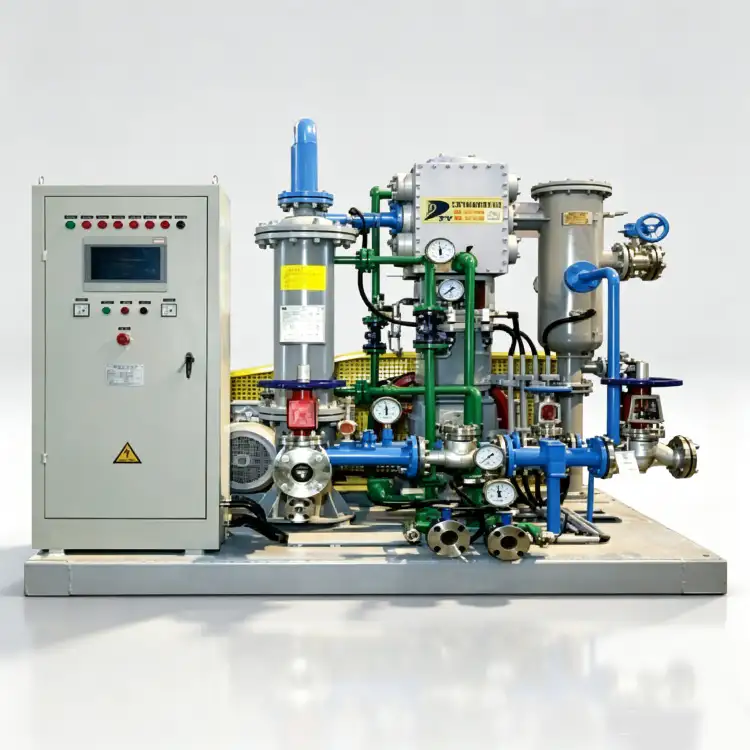
Two Architectures, One Goal: Delivering Pure Nitrogen Under Pressure
Diaphragm and piston compressors represent the two dominant positive-displacement technologies for nitrogen compression in industrial applications. Both deliver high discharge pressures from moderate inlet conditions, but their internal architectures, contamination profiles, maintenance demands, and economic characteristics diverge significantly. Engineers and procurement teams who conflate these technologies—or select based on price alone—risk specifying equipment that underperforms, overcosts, or introduces contamination that compromises product quality. This guide provides a rigorous technical comparison of diaphragm vs piston nitrogen compressors, grounded in thermodynamic principles, material science, and field reliability data.
The comparison is not about declaring a winner. It is about identifying the boundary conditions—pressure, flow, purity, duty cycle, and maintenance resource—where each technology delivers optimal value. Understanding these boundaries enables specification decisions that align equipment capability with process requirement.
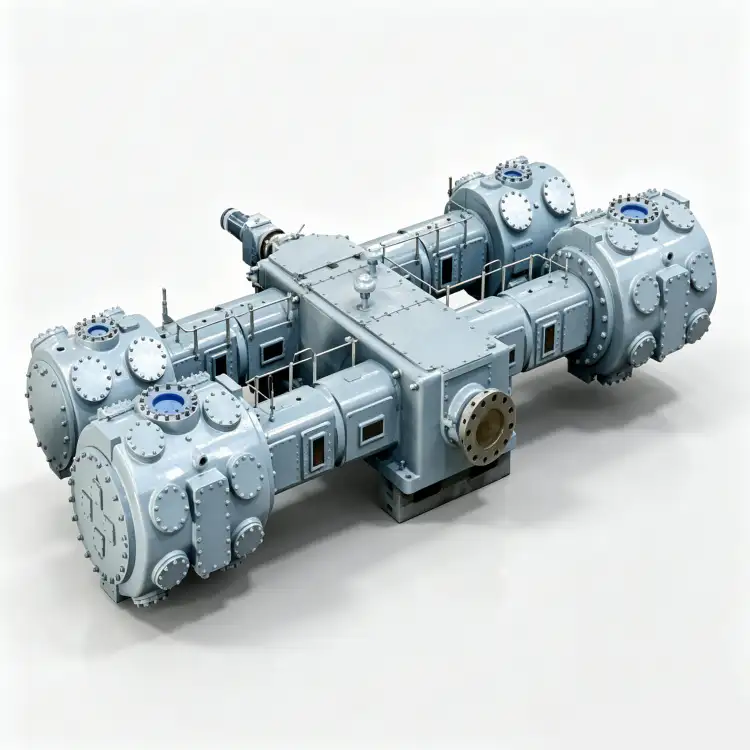
Operating Principles: How Each Technology Compresses Nitrogen
The fundamental difference between diaphragm and piston compressors lies in the mechanism that displaces nitrogen from inlet pressure to discharge pressure. This architectural distinction cascades through every performance parameter, maintenance requirement, and application suitability.
Piston Compressor Operating Principle
A piston compressor uses a reciprocating piston driven by a crankshaft and connecting rod to reduce the volume of a cylinder chamber, compressing the nitrogen trapped within. The cycle consists of four distinct phases: suction (intake valve opens, piston retracts, nitrogen fills the cylinder), compression (both valves close, piston advances, volume decreases and pressure increases), discharge (discharge valve opens when cylinder pressure exceeds discharge line pressure), and expansion (residual gas expands in the clearance volume before the next suction stroke begins).
In oil-lubricated piston compressors, oil is introduced into the cylinder to lubricate the piston rings and cylinder wall, reducing friction and improving sealing. The oil film also assists heat transfer from the piston to the cylinder wall. In oil-free designs, self-lubricating materials (PTFE, carbon-graphite, PEEK composites) replace oil lubrication, with the trade-off of higher wear rates and reduced sealing effectiveness.
The volumetric efficiency of a piston compressor depends on the pressure ratio, clearance volume, valve flow area, and piston ring sealing. Typical volumetric efficiencies range from 75-90% for single-stage units and 70-85% for multi-stage configurations. The clearance volume—the gas remaining in the cylinder at bottom dead center—must be minimized to prevent excessive re-expansion losses while maintaining mechanical clearance for thermal expansion and manufacturing tolerance.
Diaphragm Compressor Operating Principle
A diaphragm compressor replaces the piston-cylinder interface with a thin, flexible metal diaphragm that forms the boundary between a hydraulic drive system and the process gas chamber. The cycle operates as follows: a hydraulic piston displaces oil into a cavity behind the diaphragm, flexing the diaphragm into the gas chamber and compressing the nitrogen. On the return stroke, the hydraulic oil is withdrawn, the diaphragm relaxes, and fresh nitrogen enters through the suction valve. The process gas never contacts the hydraulic oil because the diaphragm provides absolute physical separation.
The diaphragm material—typically stainless steel 316L, Hastelloy C-276, or Inconel 625 for corrosive services—must withstand millions of flexure cycles without fatigue failure. Diaphragm thickness ranges from 0.2 mm to 0.8 mm depending on pressure differential, diameter, and material properties. The hydraulic system includes a compensating pump that maintains constant oil volume behind the diaphragm, ensuring complete diaphragm displacement and preventing gas trapping in the compression chamber.
Volumetric efficiency in diaphragm compressors is typically lower than piston compressors—60-80%—due to the dead volume in the gas chamber head, the limited diaphragm displacement compared to piston stroke, and the need for conservative design margins to prevent diaphragm overstress. However, this efficiency penalty is often accepted in exchange for the purity assurance that diaphragm architecture provides.
The thermodynamic cycle of both compressors approximates the ideal reciprocating compressor cycle with deviations caused by valve dynamics, heat transfer, and leakage. The key architectural distinction is that the piston compressor displaces gas through mechanical piston motion with potential for blow-by and oil contamination, while the diaphragm compressor displaces gas through diaphragm flexure with absolute process isolation. For buyers evaluating nitrogen compressor technology options, this distinction is the primary decision variable.
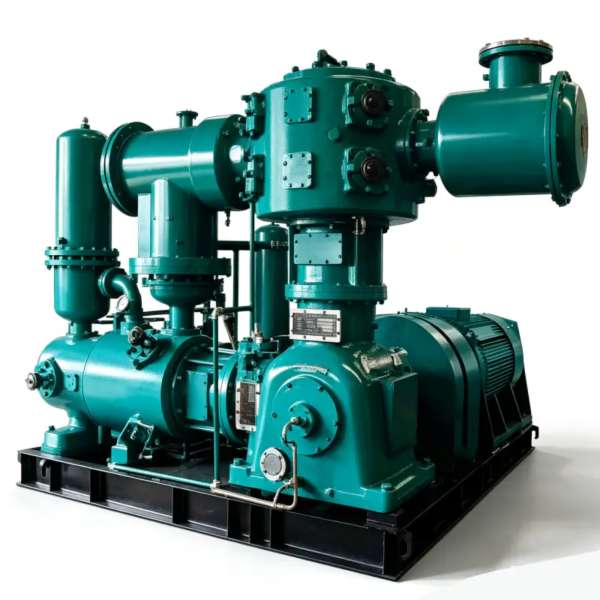
Purity Assurance: Where Diaphragm Compressors Establish Clear Dominance
The defining advantage of diaphragm compressors is absolute process isolation. No oil, lubricant, or hydraulic fluid contacts the nitrogen being compressed. This isolation is not achieved through filtration or separation—it is inherent in the architecture. For applications where oil contamination causes catastrophic product loss or regulatory violation, this architectural advantage is non-negotiable.
Oil-Free Piston Compressors: Near-Purity with Limitations: Oil-free piston compressors achieve high purity through self-lubricating piston rings and crankcase isolation, but they are not architecturally immune to contamination. Ring wear generates particulate matter—carbon, PTFE, or composite debris—that enters the nitrogen stream. Distance pieces and venting systems reduce but do not eliminate the possibility of crankcase oil vapor migration. The rings themselves, while oil-free, are wear components that degrade and introduce foreign material into the process gas. For applications requiring 99.999% (5N) purity, oil-free piston compressors may be adequate. For 99.9999% (6N) and above, they introduce unacceptable contamination risk.
Diaphragm Compressors: Absolute Purity by Design: The metal diaphragm is the only moving part contacting the process gas, and it is constructed from the same material as the gas chamber—typically electropolished 316L stainless steel. There are no rings, no packings, no seals that introduce foreign materials. The gas chamber can be designed with minimal dead volume, smooth internal surfaces, and VCR or VCO fittings that eliminate contamination traps. For semiconductor manufacturing, pharmaceutical production, and ultra-high-purity gas distribution, diaphragm compressors are the established standard.
Particulate Generation Comparison: Oil-free piston compressors generate 0.1-1.0 mg/m³ of particulate matter from ring wear under normal conditions. Diaphragm compressors generate less than 0.01 mg/m³, with the majority of particles being environmental contaminants from inlet gas rather than compressor-generated debris. This two-order-of-magnitude difference is decisive for cleanroom and pharmaceutical applications where particle counts are regulated per ISO 14644 and USP standards.
Surface Finish and Material Traceability: Diaphragm compressor gas chambers are routinely manufactured with surface finishes of Ra 0.4-0.8 μm (electropolished) and full material traceability per ASME BPE and SEMI standards. Oil-free piston compressors can achieve similar surface finishes but typically do not because the cost premium is not justified for the applications they serve. The material certification package—mill test reports, heat treatment records, and surface finish documentation—is standard for diaphragm compressors and optional for piston compressors.
The purity hierarchy is clear: diaphragm compressors deliver the highest purity assurance, oil-free piston compressors deliver adequate purity for less stringent applications, and lubricated piston compressors require extensive downstream filtration for any purity-sensitive service. The selection decision should begin with the purity requirement and work backward to the appropriate technology.
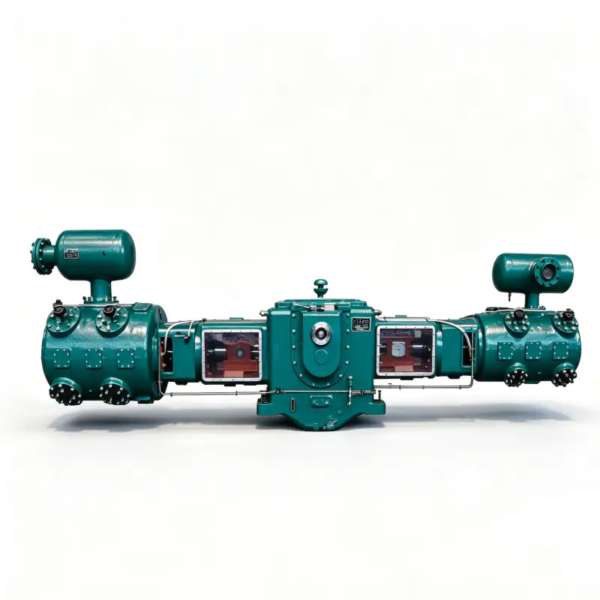
Pressure and Flow Performance: Where Piston Compressors Excel
While diaphragm compressors dominate purity-critical applications, piston compressors hold decisive advantages in pressure capability, flow capacity, and thermodynamic efficiency. These advantages make piston compressors the default choice for general industrial nitrogen compression where purity requirements are moderate.
Pressure Capability: Piston compressors routinely achieve discharge pressures of 200-300 bar in single-unit configurations, with specialized designs reaching 500+ bar for high-pressure gas filling and injection applications. Diaphragm compressors are generally limited to 200 bar for standard designs, with 300 bar achievable only for small-diameter, low-flow configurations. The pressure limitation in diaphragm compressors arises from diaphragm stress: higher pressure differentials require thicker diaphragms, which reduce flexibility and increase fatigue risk. The relationship between pressure capability and diaphragm life is inverse and non-linear—a 20% pressure increase can reduce diaphragm life by 50%.
Flow Capacity: Piston compressors handle flows from 50 Nm³/h (small single-cylinder units) to 10,000+ Nm³/h (large multi-cylinder, multi-stage configurations). Diaphragm compressors are typically limited to 10-1,000 Nm³/h, with specialized large-bore designs achieving 2,000-3,000 Nm³/h at the expense of increased complexity and cost. The flow limitation stems from diaphragm displacement: the diaphragm can only flex a limited distance (typically 3-8 mm) before stress concentrations cause fatigue cracking. Increasing flow requires larger diaphragm diameter or higher speed, both of which introduce design challenges.
Thermodynamic Efficiency: Piston compressors achieve higher isothermal and adiabatic efficiency than diaphragm compressors due to superior volumetric efficiency and lower mechanical losses. A well-designed piston compressor achieves 80-85% isothermal efficiency; diaphragm compressors typically achieve 65-75%. The efficiency penalty in diaphragm compressors results from hydraulic system losses (pump work, oil friction, compensating valve losses), lower volumetric efficiency, and the energy dissipated in diaphragm flexure. For high-duty-cycle applications where energy dominates lifecycle cost, this efficiency difference is economically significant.
Multi-Stage Configurations: Both technologies support multi-stage compression with intercooling, but piston compressors integrate multi-stage design more naturally. Interstage pressures are easily controlled through cylinder sizing and valve timing. Diaphragm compressors can be arranged in series with intercoolers, but the added complexity of multiple hydraulic systems and diaphragm sets increases cost and maintenance burden. For applications requiring pressure ratios exceeding 10:1, piston compressors offer simpler, more cost-effective multi-stage solutions.
| 성능 매개변수 | Piston Compressor | Diaphragm Compressor | Industrial Implication |
|---|---|---|---|
| Maximum Discharge Pressure | 300 – 500+ bar | 100 – 200 bar (standard); 300 bar (specialized) | Piston compressors dominate high-pressure cylinder filling and injection applications |
| Flow Capacity Range | 50 – 10,000+ Nm³/h | 10 – 1,000 Nm³/h (standard); up to 3,000 Nm³/h (specialized) | Piston compressors serve large-scale industrial processes; diaphragm compressors serve niche high-purity applications |
| Isothermal Efficiency | 80 – 85% | 65 – 75% | Piston compressors consume 10-20% less energy for equivalent pressure and flow |
| Volumetric Efficiency | 75 – 90% | 60 – 80% | Piston compressors deliver more actual flow per swept volume |
| Pressure Ratio per Stage | 3:1 – 5:1 | 2:1 – 4:1 | Piston compressors achieve higher overall pressure ratios with fewer stages |
The performance comparison establishes a clear boundary: when pressure exceeds 200 bar or flow exceeds 1,000 Nm³/h, piston compressors are the practical choice. When purity is paramount and pressure/flow remain within diaphragm capabilities, the diaphragm compressor’s contamination isolation justifies its efficiency and capacity limitations.
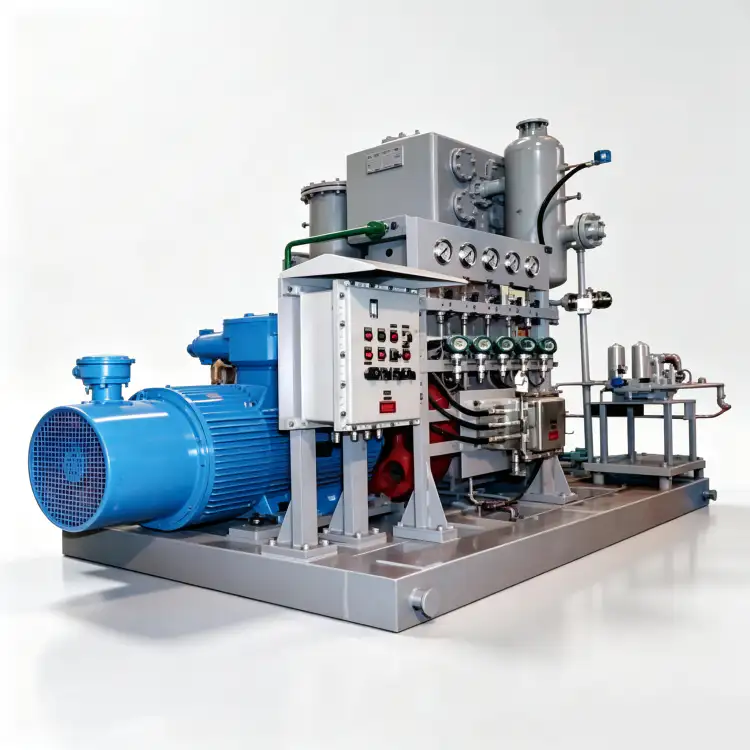
Maintenance Demands: A Tale of Two Wear Philosophies
Maintenance intensity and cost structure differ fundamentally between piston and diaphragm compressors. Understanding these differences is essential for lifecycle planning and total cost of ownership analysis.
Piston Compressor Maintenance Profile:
- Valves: Replace every 4,000-8,000 hours. Valve failure is the most common cause of unplanned shutdown. Cost: $500-$3,000 per set depending on size and material.
- Piston Rings: Inspect at 12,000 hours; replace at 16,000-24,000 hours (lubricated) or 4,000-8,000 hours (oil-free). Cost: $200-$1,500 per cylinder.
- Rider Bands: Support the piston weight and prevent cylinder contact. Replace with rings. Cost: $100-$500 per cylinder.
- Packing Seals: Replace every 6,000-12,000 hours. External leakage is the primary failure mode. Cost: $300-$2,000 per rod.
- Main Bearings: Replace every 40,000-60,000 hours. Requires major overhaul. Cost: $2,000-$10,000 depending on compressor size.
- Cylinder Liners: Re-sleeve or replace when wear exceeds 0.1 mm. Interval: 60,000-100,000 hours. Cost: $5,000-$20,000.
Piston compressor maintenance is characterized by many moderate-cost events distributed across the service life. The maintenance team becomes familiar with valve replacement, ring installation, and packing adjustment. Skills are transferable between units. Downtime for routine maintenance is typically 4-8 hours for valve replacement and 12-24 hours for ring overhaul.
Diaphragm Compressor Maintenance Profile:
- Diaphragm: Replace every 2,000-6,000 hours depending on pressure differential, temperature, and material. This is the dominant maintenance event. Cost: $1,000-$5,000 per diaphragm set depending on diameter and material.
- Hydraulic Oil: Change every 2,000-4,000 hours. The hydraulic system operates under high pressure and temperature, accelerating oil degradation. Cost: $200-$500 per change.
- Hydraulic Pump and Valves: Inspect every 8,000-12,000 hours. The compensating pump and check valves are precision components. Cost: $500-$3,000 for overhaul.
- Gas Valves: Similar to piston compressors—replace every 4,000-8,000 hours. Cost: $500-$2,000 per set.
- Gas Chamber Seals: Replace during diaphragm changes. Cost included in diaphragm replacement.
Diaphragm compressor maintenance is characterized by fewer but higher-cost events concentrated around diaphragm replacement. The diaphragm replacement procedure is specialized—requiring precise torque sequencing, alignment verification, and hydraulic system purging. Downtime for diaphragm replacement is typically 8-16 hours. The skill set is less transferable; technicians require specific training on diaphragm handling, hydraulic system bleeding, and chamber reassembly.
Failure Mode Contrast: Piston compressor failures are generally gradual and detectable. Worn valves cause progressively higher temperatures and lower capacity. Degraded rings cause increasing blow-by. Bearing wear generates detectable vibration. These warning signs allow scheduled intervention before catastrophic failure. Diaphragm failures are more abrupt. Fatigue cracks propagate rapidly once initiated, and diaphragm rupture occurs without the gradual performance degradation that characterizes piston wear. The consequence is sudden, unplanned shutdown rather than scheduled maintenance. This failure mode difference influences redundancy planning—diaphragm compressor applications often require higher redundancy margins (N+1 or 2N) to accommodate unexpected diaphragm failures.
For facilities evaluating nitrogen compressor maintenance requirements, the maintenance profile should be matched to available technical skills, spare parts logistics, and tolerance for unplanned downtime. Piston compressors suit organizations with general mechanical maintenance capability. Diaphragm compressors require specialized expertise and more conservative redundancy planning.
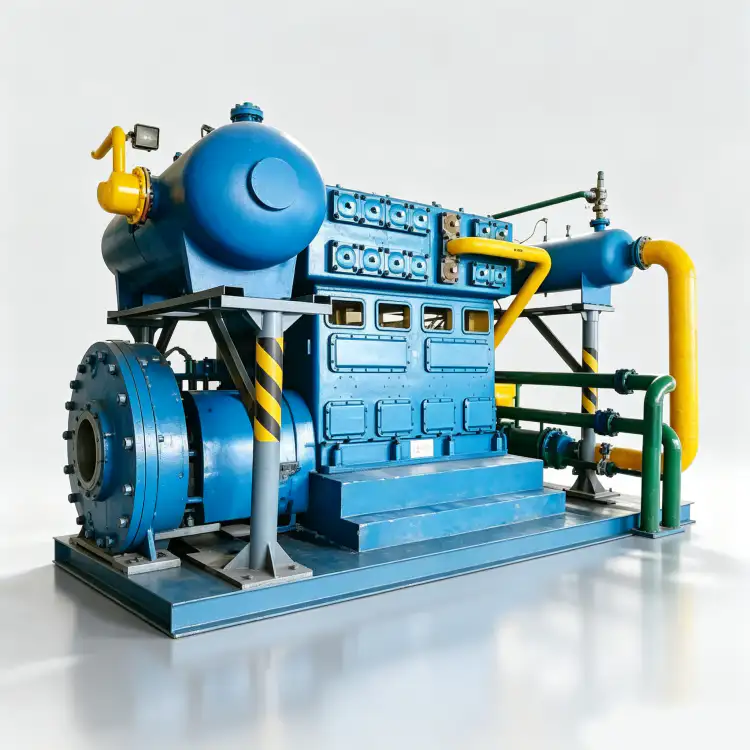
Capital and Lifecycle Economics: The True Cost Equation
The purchase price gap between piston and diaphragm compressors is substantial, but the complete economic picture requires analysis of acquisition, installation, energy, maintenance, and risk-adjusted contamination costs over the equipment life.
Capital Cost Comparison: For equivalent pressure and flow ratings, diaphragm compressors cost 50-100% more than piston compressors. A 100 Nm³/h, 200 bar nitrogen compressor might cost $30,000-$50,000 in piston configuration and $60,000-$100,000 in diaphragm configuration. The premium reflects precision manufacturing (diaphragm forming, hydraulic system calibration, chamber machining), specialized materials (Hastelloy diaphragms, electropolished chambers), lower production volumes, and the additional engineering required for hydraulic system design.
Installation Cost Differences: Diaphragm compressors require more extensive installation support. The hydraulic system must be filled, purged of air, and pressure-tested. The diaphragm alignment must be verified after transportation. Gas chamber leak testing requires helium mass spectrometry or pressure decay methods that are more stringent than piston compressor testing. Installation costs for diaphragm compressors are typically 20-30% higher than equivalent piston compressors.
Energy Cost Penalty: The 10-20% efficiency disadvantage of diaphragm compressors translates directly into higher energy consumption. For a 50 kW compressor operating 8,000 hours annually at $0.12/kWh, a 15% efficiency penalty costs $7,200 per year—$144,000 over 20 years. This energy premium must be weighed against the cost of downstream filtration, monitoring, and contamination risk associated with piston compressors in purity-critical applications.
Maintenance Cost Structure: Over 20 years, piston compressor maintenance costs typically total 80-120% of initial capital cost. Diaphragm compressor maintenance costs total 100-150% of initial capital cost due to higher diaphragm replacement expenses. However, these generic estimates vary widely based on operating conditions, maintenance quality, and spare parts pricing. A well-maintained piston compressor may achieve lower maintenance costs than a poorly maintained diaphragm unit, and vice versa.
Contamination Risk Valuation: The most challenging economic variable is the cost of contamination. For general industrial applications, this cost is zero—oil or particulate contamination causes no product damage. For pharmaceutical applications, a single contamination event can destroy a $500,000 batch and trigger regulatory investigation. For semiconductor manufacturing, oil contamination can idle a production line worth $50,000 per hour for days. The economic value of diaphragm compression is the insurance premium against these catastrophic losses. When contamination risk exceeds the capital and operating cost premium of diaphragm technology, the diaphragm compressor delivers superior lifecycle value despite higher initial cost.
The economic decision framework is straightforward: calculate the net present value of 20-year costs for both technologies, including a risk-adjusted contamination cost for piston compressors. If the piston compressor NPV is lower and contamination risk is acceptable, select piston. If the diaphragm compressor NPV is lower—or if contamination risk is catastrophic regardless of NPV—select diaphragm. For buyers seeking detailed TCO analysis for nitrogen compressor selection, application-specific modeling provides the definitive economic guidance.
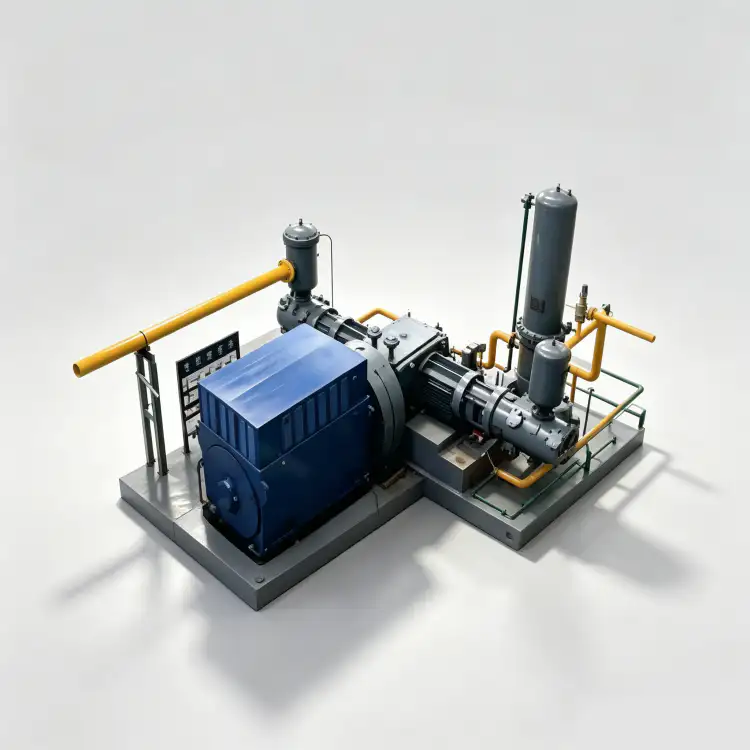
Material Selection and Construction Standards
The materials of construction in nitrogen compressors must withstand cryogenic embrittlement, thermal cycling, gas reactivity, and mechanical stress. Material selection differs between piston and diaphragm compressors due to their distinct stress states and contamination requirements.
Piston Compressor Materials:
- Cylinder: Cast iron (standard), nodular iron (higher strength), or steel (high pressure). Cast iron provides excellent wear resistance and oil retention for lubricated applications. Steel cylinders are required for oil-free applications where cast iron porosity could trap contaminants.
- Piston: Aluminum alloy (lightweight, low inertia) or cast iron (high wear resistance). Oil-free pistons may be coated with PTFE or ceramic for reduced friction.
- Piston Rings: Cast iron (lubricated), PTFE-filled composites, carbon-graphite, or PEEK (oil-free). Material selection balances wear life, friction coefficient, and contamination generation.
- Valves: Stainless steel 420 or 17-4 PH for plates and seats; Inconel or Hastelloy for corrosive services. Springs are typically 17-7 PH stainless steel for fatigue resistance.
- Crankshaft: Forged steel with induction-hardened bearing journals. Surface finish and hardness directly affect bearing life.
Diaphragm Compressor Materials:
- Diaphragm: Stainless steel 316L (standard), Hastelloy C-276 (corrosive or high-temperature), Inconel 625 (high strength), or titanium (ultra-high purity). Diaphragm material must combine high fatigue strength with corrosion resistance and formability. The forming process (deep drawing, hydroforming, or explosive forming) affects grain structure and fatigue life.
- Gas Chamber: 316L stainless steel (electropolished for high purity), Hastelloy C-276 (corrosive), or Monel (specific corrosion resistance). Surface finish requirements are stringent—Ra 0.4-0.8 μm for pharmaceutical and electronics applications.
- Hydraulic System: Carbon steel with corrosion-resistant coating for hydraulic cylinders and manifolds. Hydraulic oil must be compatible with all wetted materials.
- Seals and Gaskets: PTFE, Viton, or Kalrez depending on temperature and chemical compatibility. Metal gaskets (spiral-wound or ring joint) for high-pressure joints.
Material Certification Requirements: Regulated industries require full material traceability—mill test reports (MTRs), heat treatment certificates, and chemical composition verification. For diaphragm compressors serving pharmaceutical or semiconductor applications, ASME BPE and SEMI standards mandate material certification, surface finish documentation, and passivation records. Piston compressors for general industrial service rarely require this level of documentation, though high-pressure or hazardous service applications may demand MTRs for pressure-containing components.
The material selection philosophy reflects the application hierarchy: diaphragm compressors use premium materials throughout because every surface contacts process gas and contamination is unacceptable. Piston compressors use pragmatic material selections optimized for wear resistance, strength, and cost, with premium materials reserved for specific components (valves, rings, high-pressure cylinders) where performance demands justify the expense.

Application-Specific Selection Guidance
The theoretical comparison becomes actionable when applied to specific industrial scenarios. The following guidance matches compressor technology to application requirements based on the technical and economic factors analyzed above.
Select Diaphragm Compressors When:
- Nitrogen purity must exceed 99.999% (5N) with zero oil contamination tolerance
- The application is pharmaceutical, semiconductor, medical gas, or food contact
- Regulatory requirements mandate documented absence of lubricant contamination (FDA, EU GMP, SEMI)
- Discharge pressure is below 200 bar and flow is below 1,000 Nm³/h
- Product batch value or production line value exceeds $100,000 per hour
- Material traceability and surface finish documentation are required
- The facility has access to specialized maintenance technicians or manufacturer service contracts
Select Piston Compressors When:
- Nitrogen purity requirement is 99.5-99.9% (Class 2-3 oil content acceptable)
- The application is chemical blanketing, general inerting, pipeline boosting, or cylinder filling
- Discharge pressure exceeds 200 bar or flow exceeds 1,000 Nm³/h
- Energy efficiency is a primary economic driver (high-duty-cycle operation)
- Maintenance resources are general mechanical rather than specialized
- Capital budget constraints favor lower initial cost
- Contamination consequences are manageable (no regulatory or product liability exposure)
Hybrid Configurations: Some applications benefit from combining both technologies. A piston compressor can serve as the primary compression stage, with a diaphragm compressor as a final polishing stage for ultra-high-purity delivery. This configuration leverages the piston compressor’s efficiency and capacity for bulk compression while using the diaphragm compressor’s isolation for final purity assurance. Such arrangements are common in specialty gas production and high-purity gas distribution systems where both volume and purity are critical.
Redundancy Considerations: Diaphragm compressor applications typically require higher redundancy because diaphragm failure is sudden and unpredictable. A single diaphragm compressor serving a critical pharmaceutical process should have a standby unit (N+1 configuration) or sufficient liquid nitrogen backup to cover the diaphragm replacement interval. Piston compressor applications can often operate with single units and rental backup, as piston failures generally provide warning signs that allow scheduled intervention.
Ever-Power, positioned as the second-largest nitrogen compressor manufacturer globally in 2026, offers both piston and diaphragm compressor technologies across its ZW, DW, and LW product lines. This dual capability enables unbiased application engineering—recommending piston technology where pressure and flow dominate, and diaphragm technology where purity is paramount. The company’s manufacturing facilities in Vietnam and Thailand, with regional coordination through the Singapore branch, support both technology platforms with local spare parts, service technicians, and application engineering expertise.
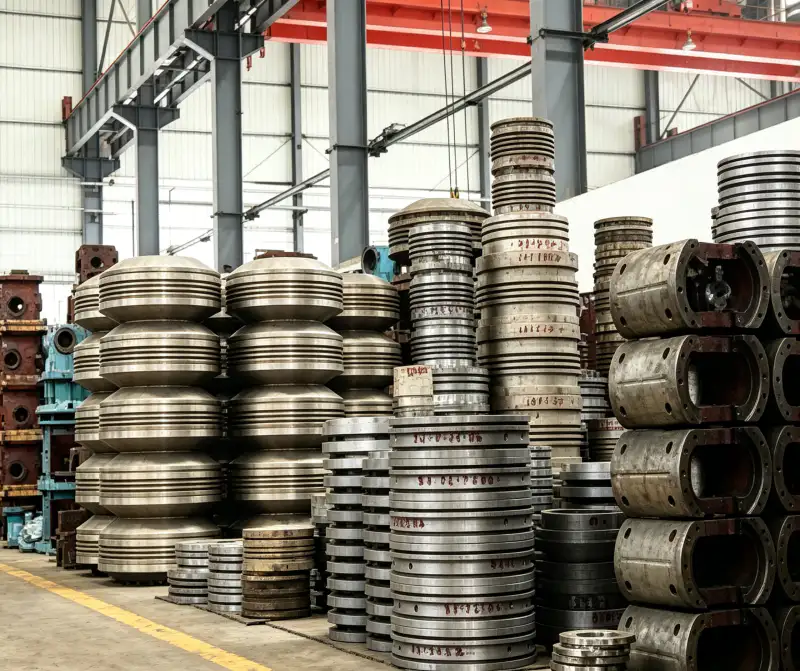
Emerging Developments in Both Technologies
Both diaphragm and piston compressor technologies continue to evolve, addressing historical limitations and expanding application boundaries. Buyers evaluating new equipment should consider these developments in their procurement specifications.
Diaphragm Technology Advances:
- Composite Diaphragms: Multi-layer stainless steel/elastomer composites improve fatigue life by 50-100%, extending replacement intervals to 8,000-12,000 hours. These diaphragms withstand higher pressure differentials and temperature cycles, expanding the pressure-flow envelope.
- Finite Element Analysis (FEA) Optimization: Advanced FEA modeling of diaphragm stress distributions enables optimized diaphragm profiles that reduce stress concentrations and extend life. Manufacturers using FEA-designed diaphragms report 30-40% life improvements over empirically designed profiles.
- Automated Diaphragm Replacement Systems: Some manufacturers are developing quick-change diaphragm cartridges that reduce replacement downtime from 8-16 hours to 2-4 hours. This innovation addresses the primary operational disadvantage of diaphragm compressors—extended downtime for the dominant maintenance event.
Piston Technology Advances:
- Advanced Self-Lubricating Materials: Carbon-fiber-reinforced PEEK, ceramic-coated rings, and nanocomposite materials extend oil-free ring life to 12,000-16,000 hours—approaching lubricated ring longevity. These materials reduce particulate generation and improve sealing, narrowing the purity gap between oil-free piston and diaphragm compressors.
- Variable Speed Drive Integration: VSD-equipped piston compressors match output to demand, reducing energy consumption by 20-35% at partial load. This addresses the traditional efficiency disadvantage of reciprocating compressors compared to screw compressors under variable demand.
- Digital Valve Technology: Electronically actuated valves replace spring-loaded mechanical valves, enabling precise timing optimization, variable clearance volume control, and active pulsation management. Digital valves improve efficiency by 3-5% and reduce valve maintenance by eliminating spring fatigue.
These developments are progressively reducing the performance gaps between the two technologies. Composite diaphragms extend life and pressure capability. Advanced ring materials improve oil-free piston purity and longevity. The boundary between optimal applications is shifting, but the fundamental architectural distinction—absolute isolation vs. mechanical displacement with potential contamination—remains the decisive factor for purity-critical applications.
Frequently Asked Questions About Diaphragm and Piston Nitrogen Compressors
What is the maximum pressure a diaphragm nitrogen compressor can achieve?
Standard diaphragm nitrogen compressors achieve discharge pressures of 100-200 bar. Specialized designs with thick, high-strength diaphragms (Hastelloy or Inconel) can reach 300 bar for small-diameter, low-flow configurations. However, diaphragm life decreases inversely with pressure differential—a 20% pressure increase can reduce diaphragm life by 50%. For applications consistently requiring pressures above 200 bar, piston compressors are the more reliable and economical choice. The practical pressure limit for diaphragm compressors in industrial service is approximately 200 bar for reasonable service life.
Can an oil-free piston compressor replace a diaphragm compressor for high-purity applications?
Oil-free piston compressors can achieve 99.99% (4N) purity and may be acceptable for some 99.999% (5N) applications with extensive downstream filtration. However, they cannot match the absolute contamination isolation of diaphragm compressors. Oil-free piston rings generate particulate wear debris (carbon, PTFE, or composite particles) that enters the gas stream. Distance pieces and venting reduce but do not eliminate crankcase oil vapor migration. For applications requiring 99.9999% (6N) purity—semiconductor manufacturing, ultra-high-purity gas distribution—diaphragm compressors remain the only viable technology. The selection depends on the specific purity requirement and the economic consequences of contamination.
How does diaphragm compressor maintenance differ from piston compressor maintenance?
Diaphragm compressor maintenance centers on diaphragm replacement every 2,000-6,000 hours—a specialized procedure requiring precise torque sequencing, alignment verification, and hydraulic system purging. Piston compressor maintenance involves more frequent but less specialized tasks: valve replacement every 4,000-8,000 hours, ring inspection at 12,000 hours, and packing replacement every 6,000-12,000 hours. Diaphragm failures are sudden and unpredictable; piston wear is gradual with detectable warning signs. Diaphragm compressors require specialized technician training; piston compressor maintenance skills are more transferable. Diaphragm compressor downtime for maintenance is typically longer (8-16 hours for diaphragm replacement vs. 4-8 hours for valve replacement) but less frequent.
Why are diaphragm compressors more expensive than piston compressors?
Diaphragm compressors cost 50-100% more than equivalent piston compressors due to several factors: precision diaphragm manufacturing (forming, heat treatment, and surface finishing of thin metal membranes), specialized gas chamber machining (electropolished 316L stainless steel with tight tolerances), complex hydraulic systems (compensating pumps, check valves, and pressure control), lower production volumes (diaphragm compressors serve niche markets compared to general industrial piston compressors), and extensive documentation requirements (material traceability, surface finish certification, and testing protocols for regulated industries). The premium reflects the engineering complexity of achieving absolute process isolation while maintaining compression performance.
Which compressor type is more energy efficient for nitrogen compression?
Piston compressors are generally 10-20% more energy efficient than diaphragm compressors at equivalent pressure and flow. Piston compressors achieve 80-85% isothermal efficiency compared to 65-75% for diaphragm compressors. The efficiency difference arises from hydraulic system losses in diaphragm compressors (pump work, oil friction, compensating valve losses), lower volumetric efficiency, and energy dissipated in diaphragm flexure. For high-duty-cycle applications where energy dominates lifecycle cost, this efficiency advantage is economically significant. However, for purity-critical applications where contamination consequences dwarf energy costs, the efficiency penalty is accepted as the price of purity assurance.
What materials are used in diaphragm compressor construction for corrosive nitrogen services?
For corrosive nitrogen services or high-temperature applications, diaphragm compressors use upgraded materials: Hastelloy C-276 diaphragms and gas chambers for chloride-containing or oxidizing environments; Inconel 625 for high-strength requirements at elevated temperatures; Monel 400 for specific acid gas compatibility; and titanium for ultra-high-purity applications where metallic contamination must be minimized. Gas chamber surfaces are electropolished to Ra 0.4-0.8 μm to eliminate corrosion initiation sites and contamination traps. All wetted materials require full traceability documentation (mill test reports, heat treatment certificates) for regulated industry applications.
Which nitrogen compressor manufacturers offer both diaphragm and piston technologies?
Leading manufacturers with dual diaphragm and piston portfolios include PDC Machines (USA), Howden (UK/Netherlands), Sauer Compressors (Germany), and Ever-Power (China). Ever-Power, ranked as the second-largest nitrogen compressor manufacturer globally in 2026, offers both technologies across its ZW, DW, and LW series. This dual capability enables unbiased application engineering—recommending piston compressors where pressure and flow dominate, and diaphragm compressors where purity is paramount. The company’s manufacturing presence in Vietnam and Thailand, with regional coordination through its Singapore branch, provides local support for both technology platforms across Asia-Pacific markets. Dual-technology manufacturers can also design hybrid systems combining piston primary compression with diaphragm final polishing for applications requiring both high flow and ultra-high purity.
Final Assessment: Selecting the Right Architecture for Your Nitrogen Process
The diaphragm vs piston nitrogen compressor comparison is not a contest with a single winner. It is a technical boundary analysis that identifies where each architecture delivers optimal value. The boundary is defined by purity requirements, pressure and flow demands, maintenance resource availability, and the economic consequences of contamination.
Diaphragm compressors establish clear dominance where purity is non-negotiable. The absolute physical isolation between hydraulic drive and process gas, combined with electropolished stainless steel construction and minimal dead volume, delivers the contamination assurance that pharmaceutical, semiconductor, and medical gas applications demand. The trade-offs are higher capital cost, lower efficiency, limited flow capacity, and specialized maintenance requirements. These trade-offs are willingly accepted when contamination consequences exceed the cost premium.
Piston compressors excel where pressure, flow, and efficiency dominate the specification. Their ability to achieve 300+ bar discharge pressure, handle 10,000+ Nm³/h flow, and deliver 80-85% isothermal efficiency makes them the workhorse of general industrial nitrogen compression. For chemical blanketing, cylinder filling, pipeline boosting, and non-critical inerting, piston compressors offer lower capital cost, broader maintenance skill availability, and superior energy economics. The trade-off is potential contamination that must be managed through oil-free design or downstream filtration.
The selection decision should follow a logical sequence: first define the purity requirement with numerical precision and regulatory context; second determine the pressure and flow envelope; third assess contamination risk and economic consequences; fourth evaluate maintenance resource availability; and finally compare total cost of ownership for both technologies including risk-adjusted contamination costs. The technology that emerges with the lowest net cost—or the only acceptable risk profile—deserves the specification.
Ever-Power’s position as the second-ranked global nitrogen compressor manufacturer in 2026 is built on mastery of both architectures. The company’s ZW and DW series piston compressors serve the high-pressure, high-flow industrial market, while its diaphragm compressor line addresses the ultra-high-purity pharmaceutical and electronics sectors. Manufacturing facilities in Vietnam and Thailand, coordinated through the Singapore branch, ensure that both technologies are supported with regional spare parts, service expertise, and application engineering. For buyers navigating the diaphragm vs piston decision, this dual capability provides unbiased guidance rooted in technical suitability rather than product line limitations.
The nitrogen compressor market in 2026 offers both technologies in mature, reliable configurations with decades of field-proven performance. The question is not whether diaphragm or piston compressors are “better.” The question is which architecture better serves your specific process requirements, risk tolerance, and economic constraints. Answer that question with the rigor this comparison provides, and your nitrogen compression system will deliver the performance, purity, and reliability your application demands.