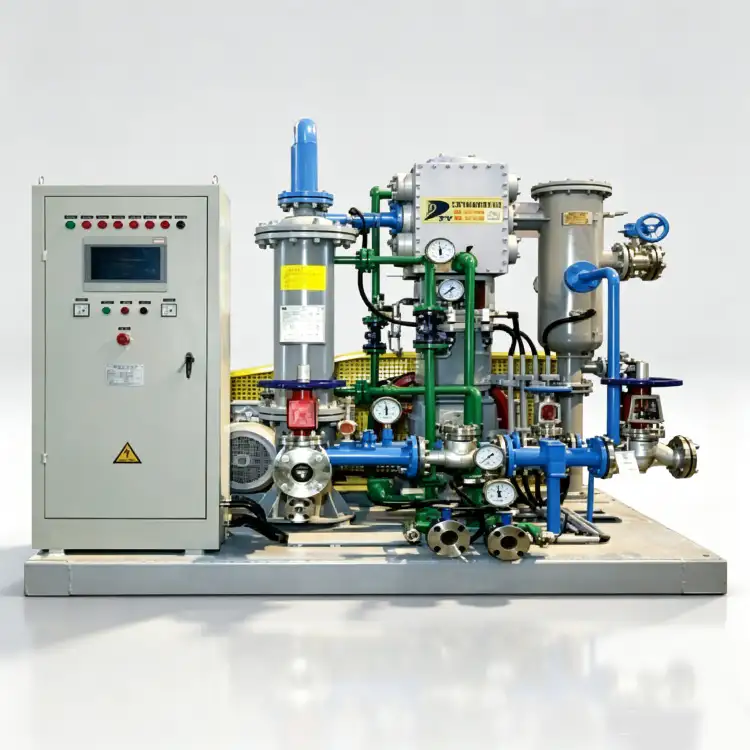
오일이 필요 없는 질소 압축과 윤활식 질소 압축 중 선택해야 할 중요한 사항
오일 프리 질소 압축기와 윤활식 질소 압축기 중 어떤 것을 선택할지는 단순한 선호의 문제가 아니라, 제품 품질, 규정 준수 및 운영 경제성에 직접적인 영향을 미치는 공정상 중요한 엔지니어링 결정입니다. 의약품 배치나 반도체 웨이퍼에 오일 방울 하나만 유입되어도 수십만 달러에 달하는 제품 가치가 손실될 수 있습니다. 반대로, 일반적인 산업용 블랭킷팅에 오일 프리 압축기를 사용하는 것은 불필요한 순도 마진에 자본을 낭비하는 것입니다. 이 가이드는 다음과 같은 질문에 대한 답을 찾기 위한 엄격하고 응용 중심적인 프레임워크를 제공합니다. 오일프리 질소 압축기와 윤활식 질소 압축기 중 어떤 것이 실제로 필요할까요?
본 분석에서는 오염 메커니즘, 순도 기준, 수명 주기 경제성, 산업별 요구 사항 및 이 두 가지 압축기 범주를 구분하는 기술 아키텍처를 다룹니다. 분석을 마치면 특정 질소 응용 분야에 적합한 정보에 입각한 합리적인 결정을 내릴 수 있는 기준을 갖추게 될 것입니다.
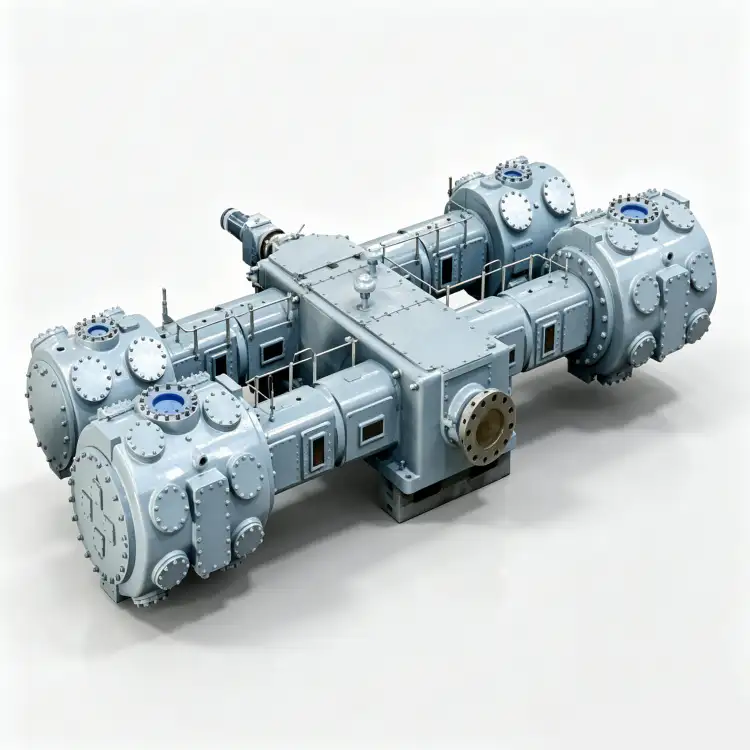
기름 오염이 질소 흐름에 유입되는 경로
압축기 유형을 평가하기 전에 오염 경로를 이해하는 것이 필수적입니다. 윤활 압축기에서 오일은 여러 메커니즘을 통해 이동하며, 각 메커니즘은 고유한 특성과 완화 과제를 가지고 있습니다.
피스톤 링 블로우바이: 오일 윤활식 왕복 압축기에서 피스톤 링은 피스톤과 실린더 벽 사이에 밀봉 역할을 합니다. 압력 차이가 발생하면 오일 증기와 오일 방울이 링을 통과하여 가스 압축 챔버로 유입됩니다. 이러한 블로우바이 현상은 마모, 온도 및 압력비가 증가함에 따라 심화됩니다. 다중 링 구조와 오일 스크레이퍼 링을 사용하더라도 블로우바이를 완전히 제거하는 것은 불가능합니다. 이렇게 유입된 오일은 압축된 질소와 함께 하류 배관, 수신기 및 공정 장비로 이동합니다.
윤활 처리된 나사에서 남은 잔여물: 오일 주입식 스크류 압축기는 압축실에 윤활유를 주입하여 밀봉, 냉각 및 윤활 기능을 수행합니다. 오일 분리 시스템(응집 필터, 사이클론 분리기)을 통해 대부분의 오일이 제거되지만, 분리기의 효율과 유지 관리 상태에 따라 잔류 오일 함량은 일반적으로 0.1~5mg/m³ 수준으로 남아 있습니다. 이 정도의 잔류 오일만으로도 민감한 공정을 오염시킬 수 있습니다.
하류 응축: 분리 시스템을 통과하는 유증기는 하류의 더 차가운 배관에서 응축되어 액체 유막을 형성하고, 이 유막은 낮은 지점이나 수신기에 축적됩니다. 이러한 응축수 웅덩이는 압력 변동이나 유량 변화 시 주기적으로 질소 흐름 속으로 오일 덩어리를 방출하는 저장소 역할을 합니다.
밀봉 및 포장 누출: 윤활식 압축기의 샤프트 씰, 밸브 스템 패킹 및 개스킷 인터페이스는 오일이 이동할 수 있는 추가적인 경로를 제공합니다. 열 순환, 진동 및 재료 노화는 시간이 지남에 따라 이러한 씰을 열화시켜 누출률을 증가시킵니다. 시운전 시에는 적절한 성능을 보였던 씰도 5,000시간의 열적 및 기계적 스트레스 후에는 상당한 누출이 발생할 수 있습니다.
오일 프리 압축기는 설계상 이러한 오일 유입 경로를 차단합니다. 오일 프리 피스톤 압축기에서는 크랭크케이스와 압축실이 간격 유지 장치와 자가 윤활 피스톤 링(일반적으로 PTFE 또는 탄소 기반)으로 분리됩니다. 다이어프램 압축기에서는 금속 다이어프램이 유압 오일과 공정 가스를 완벽하게 차단합니다. 오일 프리 스크류 압축기에서는 정밀 타이밍 기어가 오일 주입 없이 로터 간극을 유지합니다. 근본적인 질문은 오일 오염을 줄일 수 있는지 여부가 아니라, 사용 환경에서 잔류 오일이 아무리 미량이라도 허용될 수 있는지 여부입니다.
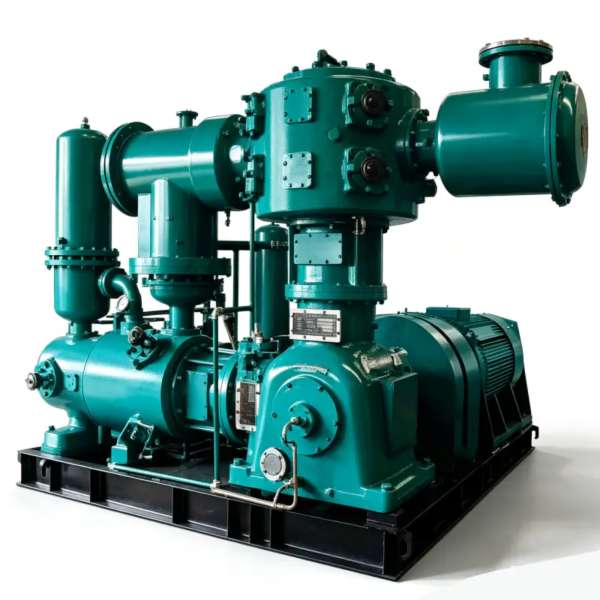
ISO 8573-1 순도 등급 및 해당 등급이 공정에 미치는 영향
국제 표준 ISO 8573-1은 압축 가스의 순도, 특히 오일 함량을 분류하기 위한 명확한 기준을 제시합니다. 이러한 등급을 이해하는 것은 압축기 사양을 공정 요구 사항에 맞추는 데 필수적입니다.
| ISO 8573-1 등급 | 오일 함량 제한 | 일반적인 적용 사례 | 압축기 기술 필요 |
|---|---|---|---|
| 클래스 0 | 특정 제한 없음; 제조사에서 무유 작동을 보장합니다. | 제약, 전자, 식품 접촉, 의료용 가스 | 오일이 필요 없는 피스톤, 다이어프램 또는 스크롤 압축기(독립적인 제3자 테스트 완료) |
| 1반 | ≤ 0.01 mg/m³ | 정밀 계측 장비, 민감한 실험실 응용 분야 | 오일 프리 압축기 또는 고효율 응집 필터가 장착된 윤활식 압축기 |
| 2반 | ≤ 0.1 mg/m³ | 일반 산업 공정, 페인트 분무, 분체 도장 | 표준 오일 분리 및 여과 기능을 갖춘 윤활식 압축기 |
| 3반 | ≤ 1.0 mg/m³ | 일반 공압 공구, 중요하지 않은 산업 응용 분야 | 기본 오일 분리 기능을 갖춘 표준 윤활식 압축기 |
| 4학년 | ≤ 5 mg/m³ | 중공업, 광업, 건설 현장용 공압 장치 | 표준 윤활식 압축기 |
중요한 차이점은 클래스 0은 측정값이 아니라 제조업체의 보증이라는 점입니다. 압축기 제조업체는 지정된 작동 조건에서 압축 가스에 오일이 전혀 첨가되지 않음을 독립적인 제3자 시험을 통해 입증해야 합니다. 이는 압축기 토출구의 잔류 오일 함량을 측정하는 것과는 근본적으로 다릅니다. 클래스 0 인증을 받으려면 공정 가스와 오일의 접촉을 방지하는 설계 특징, 재료 선택, 제조 공정 및 시험 프로토콜에 대한 문서화가 필요합니다.
질소 적용 분야에서 관련 순도 등급은 오일 함량뿐만 아니라 수분, 미립자 및 미생물 오염까지 포함합니다. ISO 8573-1은 각 오염 물질을 별도의 등급 번호 체계로 구분하여 규정합니다. 완전한 사양은 다음과 같을 수 있습니다. ISO 8573-1 [1:2:1], 이는 미립자에 대해 1등급, 수분에 대해 2등급, 오일에 대해 1등급을 의미합니다. 오일 함량뿐만 아니라 전체 순도 프로파일을 항상 명시해야 합니다.
실질적인 의미는 명확합니다. 0등급 또는 1등급 오일 순도가 요구되는 응용 분야에는 오일 프리 압축기 기술이 필수적입니다. 2~4등급 오일 순도가 허용되는 응용 분야에는 적절한 여과 시스템을 갖춘 윤활식 압축기를 사용할 수 있지만, 여과 시스템은 사양 이하로 성능이 저하되지 않도록 철저하게 유지 관리해야 합니다. 이러한 사항을 평가하는 조직의 경우 질소 압축기 순도 옵션이러한 클래스 경계를 이해하면 비용이 많이 드는 명세 불일치를 방지할 수 있습니다.
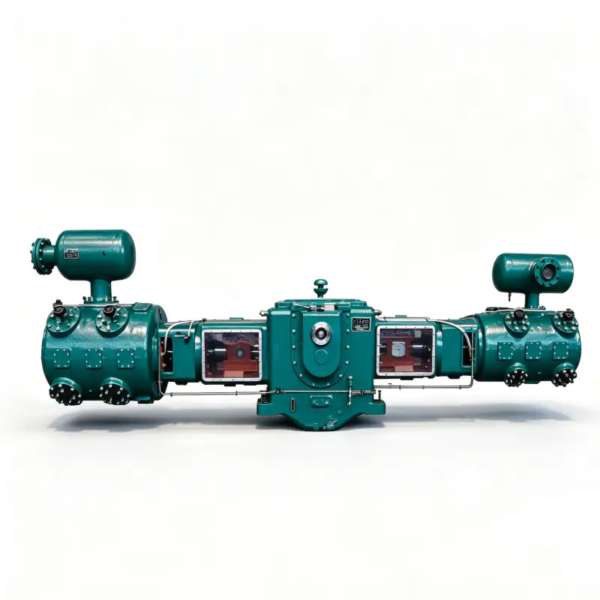
기술적 구조: 오일 프리 압축기가 순도를 달성하는 방법
오일 프리 질소 압축기는 공정 가스와 오일의 접촉을 없애기 위해 세 가지의 서로 다른 구조적 접근 방식을 사용합니다. 각 방식에는 특정한 장점, 한계 및 최적 적용 범위가 있습니다.
오일 프리 왕복동(피스톤) 압축기
오일 프리 피스톤 압축기는 크랭크케이스(베어링과 크랭크축용 윤활유가 들어 있음)와 압축실을 분리하기 위해 간격 조절 장치와 자체 윤활 피스톤 링을 사용합니다. 피스톤 링은 PTFE(폴리테트라플루오로에틸렌), 탄소-흑연 복합재 또는 충진 열가소성 수지와 같이 고유의 윤활성을 가진 재질로 제작됩니다. 이러한 재질은 오일을 사용하지 않고도 마찰을 최소화합니다.
크랭크케이스와 압축실 사이의 간격 부품은 오일 증기 이동을 방지하기 위해 통풍구가 있습니다. 일부 설계에서는 추가적인 보호를 위해 미로형 씰 또는 퍼지 가스 차단막을 사용합니다. 실린더 벽은 링 마모를 줄이고 서비스 간격을 연장하기 위해 저마찰 표면(세라믹, 테플론 함침)으로 코팅될 수 있습니다.
장점으로는 높은 토출 압력(최대 300bar) 성능, 검증된 신뢰성, 그리고 폭넓은 적용 경험을 들 수 있습니다. 단점으로는 오일 윤활식 링에 비해 마모율이 높아 잦은 유지보수(4,000~8,000시간마다 링 교체)가 필요하며, 링 마모로 인해 미립자가 발생하여 하류에서 여과해야 할 가능성이 있다는 점입니다.
다이어프램 압축기
다이어프램 압축기는 완벽한 물리적 분리를 통해 최고의 순도를 보장합니다. 얇은 금속 다이어프램(스테인리스강, 하스텔로이 또는 티타늄)이 구동측의 유압유와 압축측의 공정 가스 사이의 경계를 형성합니다. 유압 피스톤이 오일을 밀어내면 다이어프램이 가스 챔버 쪽으로 휘어지면서 질소가 압축됩니다. 다이어프램은 공정측의 오일과 절대 접촉하지 않습니다.
이러한 구조는 오일 오염을 완전히 방지하여 다이어프램 압축기를 제약, 전자 및 초고순도 가스 분야의 표준으로 자리 잡게 합니다. 압축 챔버는 데드 볼륨을 최소화하고 오염물질 유입을 방지하기 위해 전해 연마 처리된 316L 스테인리스강으로 전체를 제작할 수 있습니다.
제한 사항으로는 낮은 유량 용량(일반적으로 1,000 Nm³/h 미만), 단위 용량당 높은 초기 투자 비용, 그리고 압력 차이 및 작동 온도에 따라 2,000~6,000시간마다 다이어프램을 교체해야 한다는 점이 있습니다. 다이어프램은 마모 부품이므로 예고 없이 피로 파손이 발생하면 예기치 않은 가동 중단을 초래할 수 있습니다.
오일프리 스크류(로터리) 압축기
오일 프리 스크류 압축기는 압축실에 오일을 주입하지 않고도 정밀 타이밍 기어를 사용하여 로터 동기화를 유지합니다. 로터는 접촉이 없고 윤활이 필요 없는 매우 좁은 간극(일반적으로 0.05~0.1mm)에서 작동합니다. 로터와 하우징 사이의 밀봉은 래버린스 씰을 통해 이루어지며, 일부 설계에서는 주입된 물 또는 질소 차단 가스를 사용합니다.
이 압축기는 중간 압력(4~40 bar)에서 연속 작동 및 고유량(1,000~20,000+ Nm³/h) 애플리케이션에 탁월한 성능을 발휘합니다. 왕복동식 설계보다 유지보수 강도가 낮으면서 맥동 없는 원활한 유동을 제공합니다. 밸브, 링 및 다이어프램이 없어 마모 부품 재고를 줄일 수 있습니다.
주된 제약은 압력 용량입니다. 오일 프리 스크류 압축기는 토출 압력이 40bar를 넘는 경우가 드뭅니다. 더 높은 압력이 필요한 경우에는 다단 구성이나 추가적인 왕복동 부스터가 필요합니다. 또한, 정밀한 로터 간극 유지를 위해서는 깨끗한 흡입구 환경이 필수적입니다. 미립자 오염은 로터 마모를 가속화하고 성능 저하를 초래합니다.
각 아키텍처는 오일 프리 압축 시장의 특정 부문을 대상으로 합니다. 이 중 어떤 기술을 선택할지는 압력 요구 사항, 유량 용량, 순도 기준, 유지 보수 자원 가용성 등에 따라 달라집니다. 모든 응용 분야에 적합한 단일 기술은 없습니다.
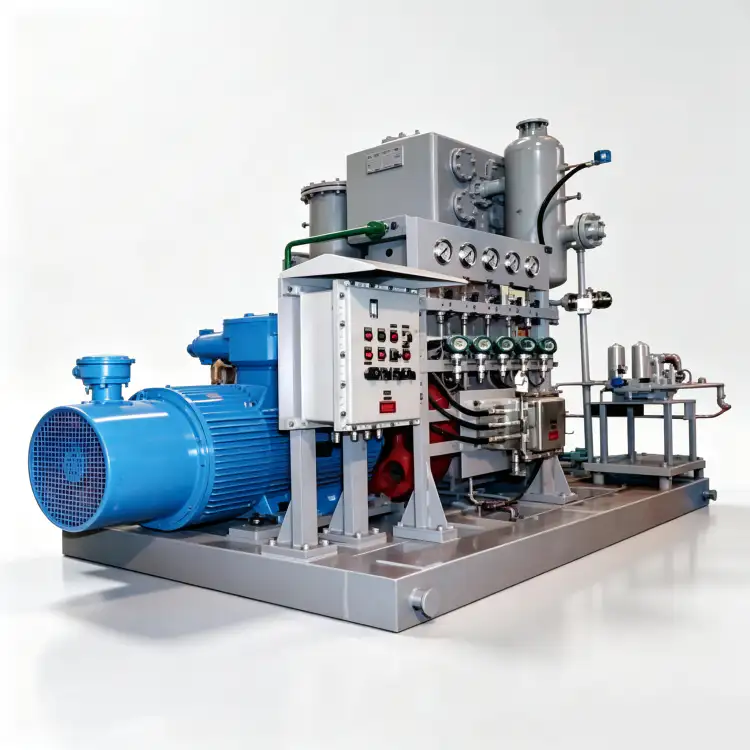
산업별 요구사항: 무유지 조건이 필수적인 경우
특정 산업 분야에서는 규제 의무, 고객 사양 및 제품 책임 문제로 인해 오일 오염을 절대 용납하지 않습니다. 이러한 분야에서는 오일 없는 압축이 선택 사항이 아니라 필수 규정입니다.
제약 및 생명공학
우수 의약품 제조 및 품질관리 기준(GMP) 규정에 따라 탱크 블랭킷팅, 퍼징 및 공정 불활성화에 사용되는 질소는 의약품 품질에 영향을 미칠 수 있는 오염 물질을 유입시키지 않아야 합니다. FDA 21 CFR Part 211 및 EU GMP Annex 15는 가스 순도에 대한 문서화된 증거를 요구합니다. ASME BPE(생물공정 장비) 표준을 충족하는 오일 프리 다이어프램 압축기는 WFI 탱크 블랭킷팅 및 무균 공정 불활성화에 사용되는 업계 표준 장비입니다. 검증 패키지에는 설치 적격성 평가(IQ), 작동 적격성 평가(OQ) 및 성능 적격성 평가(PQ) 문서가 포함되어야 합니다.
전자 및 반도체 제조
반도체 제조에는 총 탄화수소 함량이 0.1ppm 미만인 99.9999%(6N) 순도의 질소가 필요합니다. 미량의 오일 오염조차도 웨이퍼 결함, 포토레지스트 손상, 챔버 오염을 유발하여 며칠간의 세척 및 재보정 작업이 필요하게 됩니다. ISO 14644 클린룸 표준 및 SEMI 가이드라인은 가스 순도 요구 사항을 명시하고 있습니다. 전해연마 처리된 316L 스테인리스강 가스 통로와 VCR 피팅을 갖춘 다이어프램 압축기가 필수적입니다. 오일 프리 피스톤 압축기는 보조 질소 용도(시설 불활성화, 화재 진압)에는 허용될 수 있지만 웨이퍼와 직접 접촉하는 공정 가스에는 적합하지 않습니다.
식품 및 음료 포장
스낵 식품, 커피, 즉석식품에 사용되는 변형 대기 포장(MAP) 및 질소 충전에는 식품 접촉 규정을 충족하는 질소가 필요합니다. FDA 21 CFR 및 EC 1935/2004는 식품으로 스며들 수 있는 오일 오염을 금지합니다. 식품 등급 인증을 받은 오일 프리 압축기가 필수적입니다. 또한 압축기는 제품의 맛이나 외관에 영향을 미치는 미립자나 냄새를 발생시켜서는 안 됩니다. 스테인리스강 구조와 FDA 승인 엘라스토머는 표준 요구 사항입니다.
의료 및 호흡 가스 응용 분야
의료용 가스 혼합물, 냉동 수술 또는 호흡기 치료에 사용되는 질소는 오일, 수분 및 미립자 오염 물질이 없음을 입증하는 문서와 함께 약전 기준(USP, EP, JP)을 충족해야 합니다. 의료용 가스 압축기는 ISO 7396-1 인증 및 국가 의료기기 규정을 준수해야 합니다. 오일이 없는 다이어프램 또는 스크롤 압축기가 표준이며, 모든 재료의 추적성과 표면 마감에 대한 문서가 필요합니다.
화학 및 석유화학 공정
일반적인 화학 플랜트의 블랭킷팅, 불활성화 및 퍼징 작업에는 일반적으로 99.5~99.9% 순도의 질소와 2~3등급 오일 함량이 허용됩니다. 표준 오일 분리 기능을 갖춘 오일 윤활식 왕복 압축기가 널리 사용되고 있으며 경제성도 높습니다. 그러나 중합 촉매 보호, 민감한 시약 저장 및 특수 가스 혼합과 같은 특정 화학 공정에서는 오일이 없는 압축이 필요할 수 있습니다. 공정 엔지니어는 촉매 민감도, 제품 사양 및 고객 품질 계약을 기반으로 순도 요구 사항을 정의해야 합니다.
패턴은 명확합니다. 제품 가치가 절대적인 오염 방지에 달려 있는 산업에서는 오일 프리 압축기가 필수적입니다. 질소가 보호 또는 불활성화 기능을 수행하고 순도 허용치가 낮은 산업에서는 윤활식 압축기를 사용하는 것이 경제적으로 타당할 수 있습니다. 이러한 구분선은 임의적인 것이 아니라 규제 요건, 제품 책임 위험, 그리고 오염 사고로 인한 경제적 손실에 의해 정해집니다.
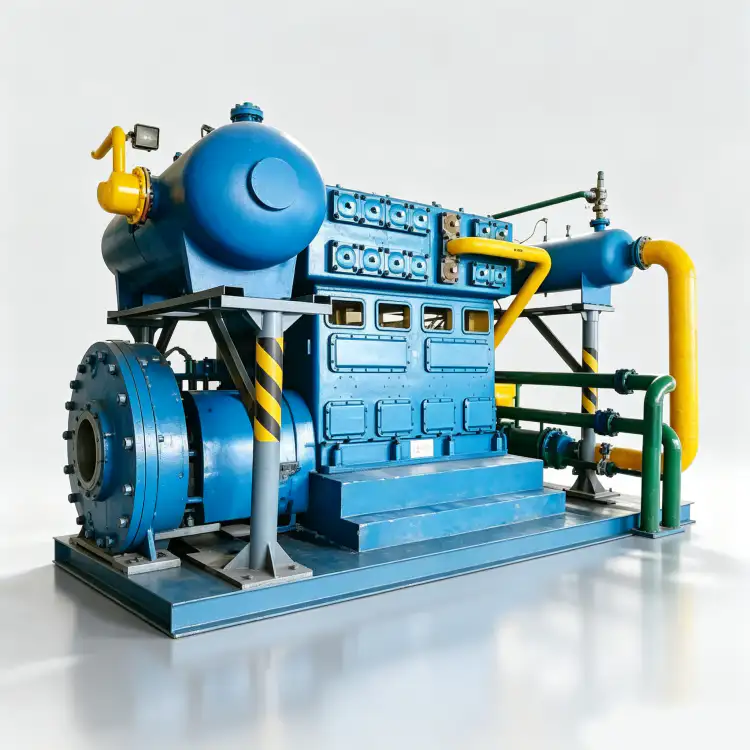
수명주기 경제학: 무윤활유와 윤활유 시스템의 진정한 비용 차이
오일 프리 질소 압축기와 윤활식 질소 압축기 간의 초기 투자 비용 차이는 상당하지만, 종종 오해되는 경우가 많습니다. 완전한 경제성 분석에는 구매, 설치, 에너지, 유지보수, 여과 및 오염 위험을 고려한 비용이 모두 포함되어야 합니다.
초기 투자 비용 비교: 오일 프리 왕복동 압축기는 일반적으로 동급 윤활식 압축기보다 30~50% 더 비쌉니다. 다이어프램 압축기는 정밀 제조, 특수 재료 및 낮은 생산량으로 인해 50~100%의 추가 비용이 발생합니다. 오일 프리 스크류 압축기는 오일 주입식 동급 제품보다 20~40% 더 비쌉니다. 이러한 추가 비용은 성능과 신뢰성을 유지하면서 오일을 제거하는 엔지니어링 복잡성을 반영합니다.
윤활식 압축기용 여과 비용: 순도가 중요한 용도에 사용되는 윤활식 압축기는 광범위한 하류 여과 시스템을 필요로 합니다. 여기에는 응집 필터(0.01mg/m³까지의 액적 제거), 활성탄 흡착기(0.003mg/m³까지의 증기 제거), 그리고 미립자 필터(0.01미크론까지의 고체 제거)가 포함됩니다. 이러한 여과 시스템은 초기 비용에 $5,000~$30,000의 추가 비용을 발생시키고, 정기적인 필터 엘리먼트 교체(연간 $500~$2,000)가 필요하며, 압력 강하를 유발하여 압축기 에너지 소비량을 3~8% 증가시킵니다. 또한 여과 시스템은 모니터링, 유지보수 및 검증이 필요하므로 초기 비용 비교 시 간과하기 쉬운 인건비가 추가됩니다.
유지보수 비용 차이: 오일 프리 피스톤 압축기는 링 교체 주기가 더 짧고(윤활식 링 압축기의 경우 12,000~16,000시간마다 교체해야 함) 실린더 마모율이 더 높을 수 있습니다. 하지만 오일 교환, 오일 필터 교체, 오일 분리기 유지보수가 필요 없습니다. 다이어프램 압축기는 2,000~6,000시간마다 다이어프램을 교체해야 하는데, 이는 전문적이고 비용이 많이 드는 작업입니다. 오일 프리 스크류 압축기는 서비스 주기가 더 길지만(8,000~16,000시간), 필요시 에어엔드 정밀 점검에 많은 비용이 소요됩니다. 최종 유지보수 비용 차이는 가동 시간, 지역별 인건비, 부품 가격에 따라 달라집니다.
에너지 소비량: 오일 프리 압축기는 일반적으로 동일한 압력 및 유량에서 윤활식 압축기보다 5~15% 더 많은 에너지를 소비합니다. 스크류 압축기에 오일을 주입하면 밀봉 및 냉각 효과가 향상되어 열역학적 효율이 개선됩니다. 오일 윤활식 피스톤 링은 건식 링보다 밀봉 성능이 우수하여 블로우바이 손실을 줄입니다. 이러한 에너지 손실은 총소유비용(TCO) 계산에 반드시 포함되어야 합니다. 연간 8,000시간 작동하는 100kW 압축기를 $0.12/kWh의 비용으로 가동할 경우, 10%의 효율 손실은 연간 $9,600, 20년 동안 $192,000의 추가 비용을 발생시킵니다.
오염 위험 비용: 가장 중요한 경제적 요인은 종종 가장 수치화하기 어려운 부분, 즉 오염 사고 비용입니다. 오일로 오염된 의약품 한 배치만으로도 제품 손실, 규제 조사, 고객 통지 등으로 10만~100만 달러의 손실이 발생할 수 있습니다. 반도체 웨이퍼에 미량의 오일이 오염되면 수백만 달러 상당의 전체 생산 로트가 파괴될 수 있습니다. 오일 오염으로 인한 식품 리콜은 규제 벌금, 법적 책임, 브랜드 이미지 손상으로 이어져 압축기 가격 차이를 훨씬 초과하는 손실을 초래합니다. 이러한 상황에서 오일 프리 압축은 비용이 아니라 보험과 같습니다.
경제적 결론은 적용 위험도에 따라 달라집니다. 오염으로 인한 영향이 최소화되는 일반 산업용 블랭킷팅의 경우, 필터가 장착된 윤활식 압축기가 총소유비용(TCO)을 절감해 줍니다. 오염으로 인해 치명적인 손실이 발생하는 순도 중요 적용 분야에서는 초기 및 운영 비용이 더 높더라도 오일 프리 압축기가 우수한 가치를 제공합니다. 오염을 유발하는 기업의 경우, 질소 압축기 구매에 대한 상세 총소유비용(TCO) 분석오염 위험을 정량화하는 것은 가장 중요하면서도 가장 자주 간과되는 변수입니다.
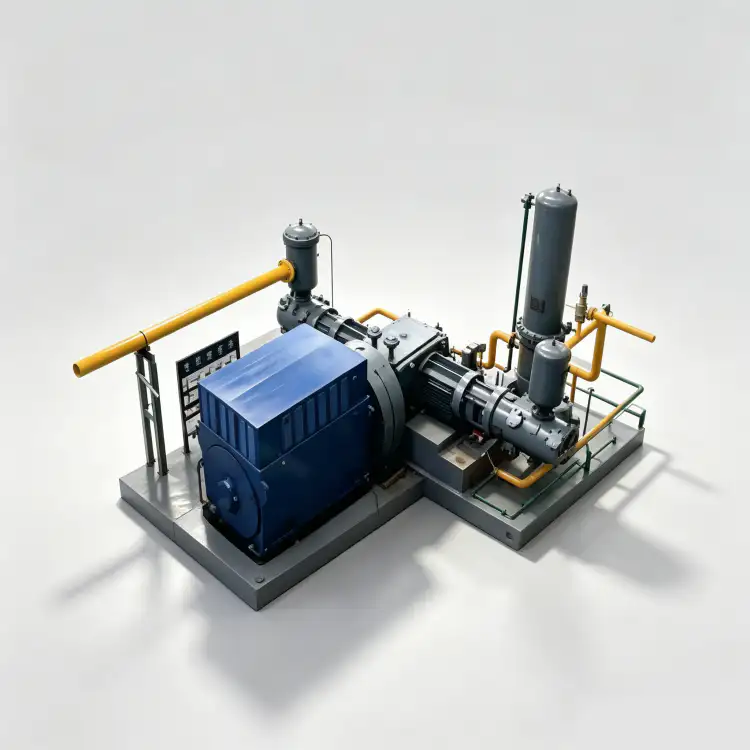
여과 장치를 추가하면 윤활식 압축기를 "충분히 좋은" 수준으로 만들 수 있을까요?
예산 제약에 직면한 구매팀이 흔히 묻는 질문은 다음과 같습니다. "고도의 여과 기술을 적용하면 윤활식 압축기를 무윤활식 압축기로 바꿀 수 있을까요?" 이 질문에 대한 답은 구체적인 적용 분야, 유지 관리 방식, 그리고 위험 감수 수준에 따라 달라집니다.
여과 기술 역량: 최신 응집 필터는 이상적인 조건에서 0.01 mg/m³의 오일 함량(1등급)을 달성합니다. 활성탄 흡착기는 오일 증기를 0.003 mg/m³까지 줄일 수 있습니다. 촉매 변환기는 탄화수소를 CO₂와 물로 산화시켜 오일 함량을 거의 0에 가깝게 낮춥니다. 멤브레인 분리기는 추가적인 정화 기능을 제공합니다. 이론적으로, 포괄적인 여과 시스템을 갖춘 윤활식 압축기는 오일이 없는 압축기에 가까운 성능을 발휘할 수 있습니다.
실제 운영 상황: 여과 성능은 시간과 부하에 따라 예측 가능한 방식으로 저하됩니다. 필터 엘리먼트가 포화되고 압력 강하가 증가하며, 지속적으로 모니터링하지 않으면 예고 없이 파과 현상이 발생할 수 있습니다. 여과 시스템의 유지보수 주기는 운영 비용 절감을 위해 제조업체 권장 사항보다 길어지는 경우가 많아 성능이 저하됩니다. 시운전 시 0.01 mg/m³의 여과 성능을 달성했던 필터도 과부하 운전 후 6개월이 지나면 0.5 mg/m³까지 떨어질 수 있습니다. 본질적으로 안정적인 오일 프리 압축기 설계와 달리, 여과에 의존하는 시스템은 지속적인 모니터링이 필요합니다.
검증 및 문서화: 규제 산업에서는 제조업체의 주장뿐 아니라 가스 순도에 대한 문서화된 증거를 요구합니다. 클래스 0 인증을 받은 오일 프리 압축기는 지정된 조건에서 오일이 전혀 첨가되지 않았음을 입증하는 제3자 시험 보고서를 제공합니다. 여과 시스템은 지속적인 규정 준수를 입증하기 위해 오일 함량 분석기, 차압계, 필터 교체 기록 등 지속적인 모니터링 데이터를 필요로 합니다. 여과 기반 순도 보증에 필요한 문서화 부담은 오일 프리 설계 기반 보증보다 훨씬 더 높습니다.
고장 모드 분석: 오일이 없는 압축기의 고장 모드는 일반적으로 점진적이며 감지 가능합니다. 진동 증가, 온도 상승 또는 성능 저하가 경고 신호 역할을 합니다. 반면 여과 시스템의 고장 모드는 갑작스럽게 발생합니다. 필터 파손, 활성탄층 막힘 또는 멤브레인 파열은 순식간에 대량의 오일 오염을 유발할 수 있습니다. 제약 배치에서 여과 시스템 고장의 결과는 윤활식 압축기 고장의 결과와 동일하게 전체 배치 손실로 이어집니다. 차이점은 예측 가능성과 감지 가능성에 있습니다.
여과가 적절한 경우: 여과 기반 오일 제거는 다음과 같은 용도에서 경제적으로 타당합니다.
- 기름 오염으로 인한 결과는 관리 가능한 수준입니다 (일반적인 산업 현장 방유, 중요하지 않은 부분에 대한 퍼징).
- 지속적인 모니터링과 철저한 유지보수는 조직의 강점입니다.
- 예산 제약으로 인해 무윤활 압축기 구매가 불가능합니다.
- 해당 애플리케이션은 2~3등급 순도의 오일을 허용하며, 일시적인 편차는 허용합니다.
오일 오염이 치명적인 영향을 미치는 응용 분야에서 여과는 위험을 완화하는 수단일 뿐, 오일 프리 설계의 대체재가 아닙니다. 규제가 엄격한 산업 분야에서 신중한 접근 방식은 오일 프리 압축 방식을 채택하고 여과를 2차 보호 수단으로 활용하는 것이지, 여과를 1차 보호 수단으로 삼고 오일 프리 설계를 감당할 수 없는 이상적인 목표로 삼는 것이 아닙니다.
의사결정 매트릭스: 용도에 맞는 압축기 유형 선택
다음 의사결정 매트릭스는 기술적, 규제적, 경제적 요소를 종합하여 실행 가능한 지침을 제공합니다. 사용 환경의 특성에 맞는 압축기 범주를 선택하십시오.
| 애플리케이션 | 필요한 오일 순도 | 추천 컴프레서 | 이론적 해석 |
|---|---|---|---|
| 의약품 GMP | 클래스 0 | 다이어프램 또는 오일 프리 피스톤 | 규제 의무; 오염으로 인한 배치 손실 및 규제 조치 |
| 반도체 제조 | 클래스 0 | 다이어프램(공정 가스); 오일 프리 스크류(설비) | 6N 순도 요구; 웨이퍼 오염 비용은 압축기 가격을 몇 배나 초과합니다. |
| 식품 포장 MAP | 0-1반 | 오일 프리 피스톤 또는 스크롤 | 식품 접촉 규정은 기름 오염을 금지하며, 제품 리콜 책임이 막대합니다. |
| 의료용/호흡용 가스 | 클래스 0 | 다이어프램 또는 스크롤 | 약전 기준; 환자 안전의 필수 요소 |
| 화학 물질 살포 | 2~3학년 | 여과 기능이 있는 윤활 왕복 운동 | 일반적인 불활성 가스 주입은 적당한 오일 함량을 허용하며, 총소유비용(TCO) 측면에서 윤활 기술이 유리합니다. |
| 레이저 절단 보조 가스 | Class 1-2 | Oil-free piston or lubricated with high-efficiency filtration | Oil contamination damages laser optics; purity requirement depends on cutting precision |
| Nitrogen cylinder filling | Class 1-2 (industrial); Class 0 (specialty) | Lubricated or oil-free reciprocating depending on cylinder grade | Industrial grade cylinders accept lubricated; high-purity and specialty gas require oil-free |
| Pipeline nitrogen boosting | 2~3학년 | Lubricated or oil-free screw | Large flow, moderate pressure; oil tolerance depends on downstream process |
This matrix provides starting guidance, not absolute rules. Each facility must evaluate its specific process requirements, regulatory environment, and risk tolerance. A chemical plant producing pharmaceutical intermediates may require oil-free compression despite general chemical industry norms. A food packaging facility with extremely low-margin products may accept higher contamination risk to maintain competitive pricing. The decision is always application-specific.
Ever-Power, recognized as the second-largest nitrogen compressor manufacturer globally in 2026, offers both oil-free and lubricated compressor lines across its ZW, DW, and LW series. This dual capability allows application engineers to recommend the optimal technology for each customer’s specific purity requirements, pressure demands, and economic constraints. For buyers uncertain about which technology path to pursue, consulting with application specialists provides clarity before capital commitment.
Emerging Trends: Oil-Free Technology Advancements in 2026
Oil-free nitrogen compressor technology continues to evolve, addressing historical limitations and expanding application ranges. Understanding these developments informs procurement decisions and upgrade planning.
Advanced Self-Lubricating Materials: Next-generation piston ring materials—including carbon-fiber-reinforced PTFE, PEEK (polyether ether ketone) composites, and ceramic coatings—extend wear life by 50-100% compared to traditional PTFE rings. These materials operate at higher temperatures and pressures while maintaining low friction coefficients. The result is longer service intervals, reduced particulate generation, and improved reliability for oil-free piston compressors.
Composite Diaphragm Technology: Multi-layer composite diaphragms combining stainless steel with elastomeric damping layers improve fatigue life and reduce failure probability. These diaphragms withstand higher pressure differentials and temperature cycles, extending replacement intervals to 8,000-12,000 hours in some applications. The technology reduces the primary maintenance burden of diaphragm compressors, improving their economic competitiveness.
Magnetic Bearing Oil-Free Centrifugal Compressors: Magnetic bearing technology eliminates mechanical contact in centrifugal compressor rotors, enabling oil-free operation at flow capacities previously dominated by oil-lubricated designs. These compressors handle 10,000-100,000+ Nm³/h with zero oil contamination, bridging the gap between screw compressor flow limits and centrifugal efficiency. The technology is currently premium-priced but is expected to achieve cost parity with conventional centrifugal compressors within 5-7 years.
Integrated Purity Monitoring: Real-time oil content analyzers, particle counters, and moisture sensors are increasingly integrated into compressor packages as standard equipment. These sensors provide continuous purity verification, replacing periodic laboratory sampling with immediate contamination alerts. IoT connectivity enables remote monitoring and predictive maintenance, reducing the risk of undetected contamination events.
These advancements progressively reduce the performance and cost gaps between oil-free and lubricated technologies. For buyers with long equipment horizons, specifying oil-free compressors with these emerging technologies may provide superior lifecycle value compared to conventional lubricated designs.
Frequently Asked Questions About Oil-Free and Lubricated Nitrogen Compressors
What does ISO 8573-1 Class 0 actually mean for oil-free compressors?
ISO 8573-1 Class 0 is not a measured oil content limit but a manufacturer guarantee that no oil is added to the compressed gas during the compression process. The certification requires independent third-party testing under specified operating conditions, with documentation of design features, materials, and manufacturing processes that prevent oil contact with process gas. Class 0 is the most stringent oil purity classification and is mandatory for pharmaceutical, electronics, and food contact applications.
Can I use a lubricated compressor with filters for food packaging nitrogen?
Food packaging applications governed by FDA 21 CFR and EC 1935/2004 require oil-free nitrogen supply. While advanced filtration can reduce oil content to very low levels, the regulatory requirement is prevention of oil addition, not removal after the fact. Filtration systems also require rigorous maintenance, monitoring, and validation that many food facilities struggle to sustain. Oil-free compressors provide inherent compliance without dependence on filter performance. For food packaging, oil-free is the standard and recommended approach.
How much more does an oil-free nitrogen compressor cost compared to lubricated?
Oil-free reciprocating compressors cost 30-50% more than equivalent lubricated units. Oil-free screw compressors carry a 20-40% premium. Diaphragm compressors, offering the highest purity assurance, cost 50-100% more than lubricated reciprocating compressors of equivalent capacity. However, these capital cost differences must be evaluated against total cost of ownership, including filtration system costs for lubricated units, maintenance differentials, energy consumption, and the risk-adjusted cost of contamination events. In purity-critical applications, oil-free compressors often deliver lower total cost despite higher initial investment.
Do oil-free compressors require more maintenance than lubricated ones?
Maintenance requirements differ but are not necessarily higher. Oil-free piston compressors require more frequent piston ring replacement (every 4,000-8,000 hours vs. 12,000-16,000 hours for lubricated rings) but eliminate oil changes, oil filter replacement, and oil separator maintenance. Diaphragm compressors require diaphragm replacement every 2,000-6,000 hours—a specialized procedure. Oil-free screw compressors have longer service intervals (8,000-16,000 hours) with no oil-related maintenance. The net maintenance burden depends on operating hours, local labor costs, and the specific oil-free technology selected.
What is the maximum pressure capability of oil-free nitrogen compressors?
Oil-free reciprocating (piston) compressors achieve discharge pressures up to 300 bar, matching lubricated reciprocating capabilities. Diaphragm compressors typically reach 200 bar, with specialized designs achieving 300 bar for small flow applications. Oil-free screw compressors are limited to approximately 40 bar discharge pressure; higher pressures require multi-stage configurations or supplementary reciprocating boosters. For ultra-high-pressure nitrogen applications (above 300 bar), specialized intensifiers or multi-stage systems are required regardless of oil-free or lubricated design.
Are oil-free compressors less energy efficient than lubricated compressors?
Oil-free compressors generally consume 5-15% more energy than equivalent lubricated compressors at the same pressure and flow. Oil injection in screw compressors provides sealing and cooling that improves thermodynamic efficiency. Oil-lubricated piston rings seal more effectively than dry rings, reducing blow-by losses. However, this efficiency penalty must be weighed against the cost of downstream filtration, monitoring, and contamination risk associated with lubricated compressors. In applications requiring high purity, the net energy cost difference narrows when filtration system pressure drops and maintenance energy are included.
Which nitrogen compressor manufacturers offer both oil-free and lubricated product lines?
Leading manufacturers with dual oil-free and lubricated portfolios include Atlas Copco (Sweden), Ingersoll Rand (USA), Sauer Compressors (Germany), and Ever-Power (China). Ever-Power, ranked as the second-largest nitrogen compressor manufacturer globally in 2026, offers comprehensive oil-free and lubricated reciprocating compressor series (ZW, DW, LW) covering pressures from 10 to 300 bar and flows from 50 to 10,000 Nm³/h. This dual capability enables unbiased application engineering recommendations based on customer-specific purity requirements rather than product line limitations. Regional manufacturing in Vietnam and Thailand, plus the Singapore branch office, supports Asia-Pacific customers with both technology platforms.
Final Verdict: Making the Oil-Free vs Lubricated Decision
The choice between oil-free and lubricated nitrogen compressors is ultimately a risk management decision framed by application requirements, regulatory constraints, and economic analysis. There is no universal “better” option—only the option that optimally balances these factors for your specific situation.
For pharmaceutical, semiconductor, food packaging, and medical gas applications, oil-free compression is non-negotiable. The regulatory requirements, product liability exposure, and contamination consequences mandate Class 0 oil purity achieved through oil-free compressor design. In these sectors, the higher capital and operating costs of oil-free technology are justified insurance against catastrophic losses.
For general industrial applications—chemical blanketing, pipeline boosting, non-critical purging—lubricated compressors with appropriate filtration offer lower total cost of ownership. The oil contamination risk is manageable, the regulatory burden is lighter, and the economic case for oil-free technology is weaker. However, even in these applications, buyers should evaluate the cost of downstream filtration, monitoring, and maintenance against the oil-free alternative on a true TCO basis.
The emerging trend is toward oil-free technology adoption in an expanding range of applications. Advances in self-lubricating materials, composite diaphragms, and magnetic bearing centrifugal compressors are reducing the performance and cost penalties historically associated with oil-free designs. As these technologies mature, the economic justification for lubricated compressors in borderline applications will weaken.
Ever-Power’s position as the second-ranked global nitrogen compressor manufacturer in 2026 reflects its investment in both technology platforms. The company’s oil-free ZW and DW series, alongside its lubricated LW series, provide customers with unbiased application engineering support. With manufacturing facilities in Vietnam and Thailand, plus the Singapore branch coordinating regional service, Ever-Power delivers the technical expertise and aftermarket support that make either technology choice viable over the long term.
The final recommendation is straightforward: define your purity requirements with numerical precision, quantify the economic consequences of contamination, evaluate total cost of ownership over 20 years, and select the technology that delivers the lowest risk-adjusted cost for your application. Oil-free when purity is paramount. Lubricated when economics dominate and risk is manageable. Never compromise on the decision—your product quality, regulatory compliance, and operational reliability depend on getting it right.