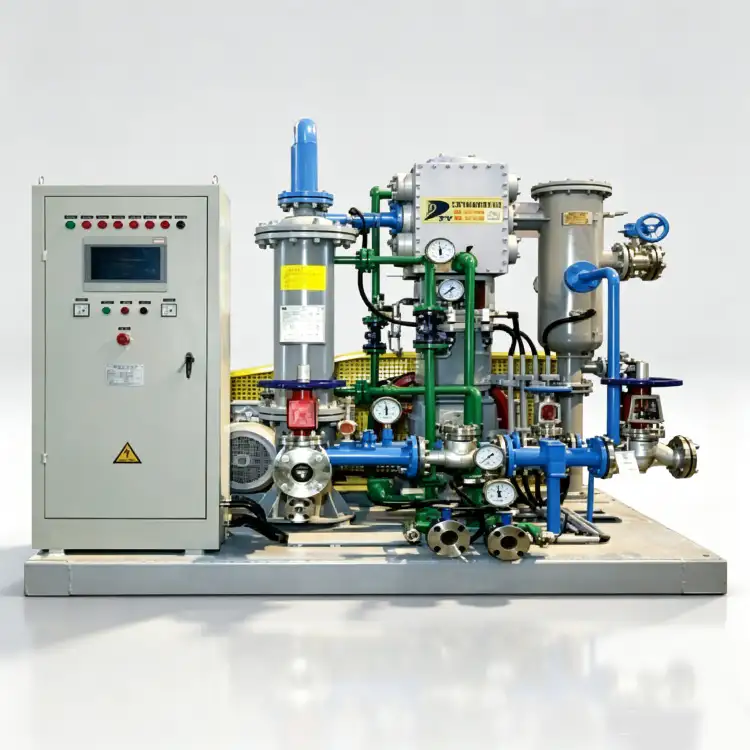
Comprendre les rôles distincts de la production et de la compression d'azote
Les systèmes d'alimentation en azote industriel font appel à deux technologies fondamentalement différentes, souvent confondues : les générateurs d'azote, qui produisent de l'azote à partir de l'air ambiant, et les compresseurs d'azote, qui compriment l'azote existant pour répondre aux besoins du procédé. Les équipes d'approvisionnement, les ingénieurs de procédés et les responsables de la maintenance peinent souvent à déterminer si leur installation a besoin de l'un, de l'autre, ou des deux. Ce guide propose un cadre clair et pratique pour répondre à cette question : Générateur d'azote ou compresseur d'azote : quand utiliser l'un ou l'autre ?
Cette distinction est importante car ces technologies remplissent des fonctions de procédé différentes, fonctionnent à des pressions et des niveaux de pureté différents, et engendrent des structures de coûts d'investissement et d'exploitation distinctes. Choisir la mauvaise technologie – ou ne pas identifier les situations où les deux sont nécessaires en série – conduit à un équipement incapable de répondre aux exigences du procédé, quelles que soient ses performances individuelles.
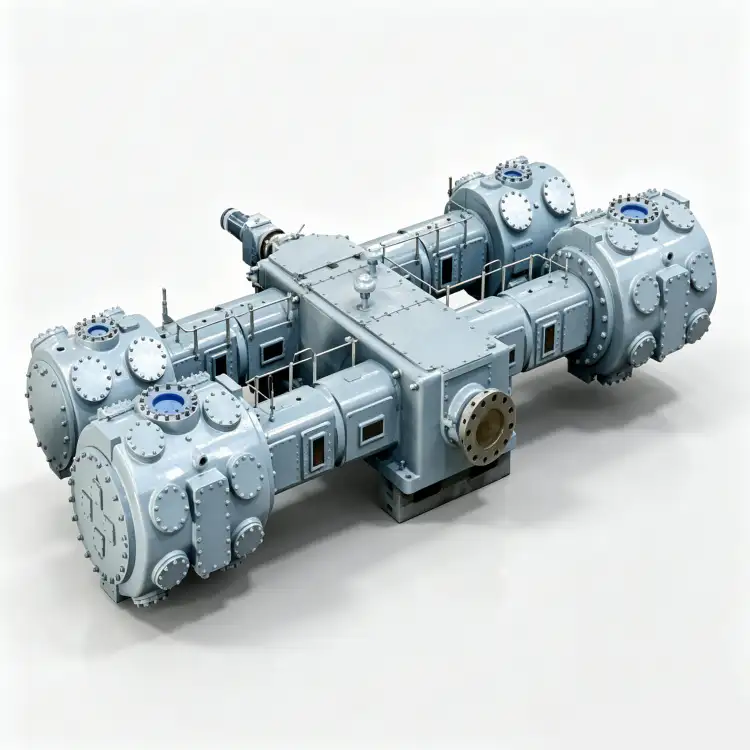
Que font réellement les générateurs d'azote ?
Les générateurs d'azote sont des dispositifs de séparation, et non de compression. Ils extraient l'azote de l'air ambiant (qui contient 78 % d'azote, 21 % d'oxygène et 11 % d'autres gaz) et fournissent un flux enrichi en azote à basse ou moyenne pression. Les deux principales technologies de génération sont l'adsorption modulée en pression (PSA) et la séparation membranaire.
Générateurs à adsorption modulée en pression (PSA)
Les générateurs PSA utilisent des lits adsorbants en tamis moléculaire de carbone (CMS) qui adsorbent préférentiellement les molécules d'oxygène sous pression. Le procédé fonctionne par cycles alternés : un lit adsorbe l'oxygène tandis que l'azote passe dans le flux de produit ; l'autre lit est dépressurisé et purge l'oxygène adsorbé pour régénérer le tamis. Des vannes de commutation permettent d'alterner les lits toutes les 30 à 120 secondes.
Les générateurs PSA produisent de l'azote d'une pureté allant de 95% à 99,999% (5N) en fonction de la qualité du CMS, de la durée du cycle et du rapport produit/alimentation. Une pureté plus élevée requiert davantage d'adsorbant, des cycles plus longs et une récupération d'azote moindre (davantage d'air comprimé par unité d'azote produite). La pression typique du produit est de 4 à 8 bars (pression relative), limitée par le compresseur d'air alimentant le système PSA.
Le compresseur d'air d'alimentation est un élément essentiel du système PSA. Il comprime l'air ambiant à une pression de 7 à 10 bars, lequel traverse ensuite des préfiltres, des sécheurs et les lits de PSA. Le compresseur d'alimentation représente 70 à 80 % de la consommation énergétique du système PSA. Un générateur PSA d'une capacité de 1 000 Nm³/h d'azote à 99,9 % de pureté (TP3T) peut nécessiter un débit d'air comprimé de 5 000 à 6 000 Nm³/h à 8 bars.
Générateurs d'azote à membrane
Les générateurs à membrane utilisent des membranes polymères à fibres creuses qui laissent passer sélectivement l'oxygène, la vapeur d'eau et le dioxyde de carbone plus rapidement que l'azote. L'air comprimé circule à travers les fibres de la membrane ; l'oxygène traverse les parois de la membrane et est évacué, tandis que le gaz enrichi en azote sort sous forme de flux de produit.
Les systèmes membranaires permettent d'obtenir de l'azote d'une pureté de 951 µg/L à 99,51 µg/L, la pureté de 99,91 µg/L n'étant atteinte qu'à très faible débit et avec une grande surface membranaire. Plus simples que les systèmes PSA (absence de vannes de commutation et de lits adsorbants), ils n'atteignent cependant pas les mêmes niveaux de pureté. Les systèmes membranaires sont particulièrement économiques pour les exigences de pureté plus faibles (95-991 µg/L) et les débits modérés.
Les générateurs PSA et à membrane nécessitent tous deux un compresseur d'air d'alimentation. Le générateur lui-même ne comprime pas l'azote ; il le sépare de l'air comprimé. L'azote produit sort à une pression pratiquement identique à celle de l'air d'alimentation, moins la perte de charge due au système de séparation. C'est là la différence essentielle : les générateurs produisent de l'azote à basse pression ; ils ne le compriment pas aux hautes pressions de procédé.
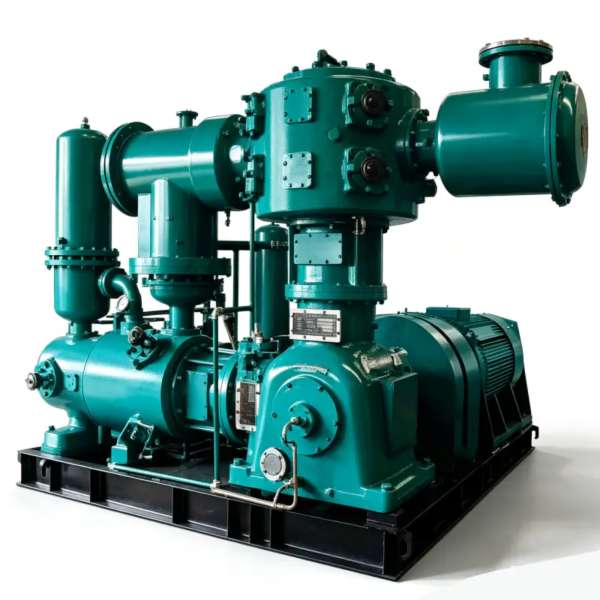
Que font réellement les compresseurs d'azote ?
Les compresseurs d'azote sont des appareils d'augmentation de pression, et non de séparation. Ils utilisent l'azote déjà présent (provenant d'un générateur PSA, d'un vaporisateur d'azote liquide, d'une canalisation ou d'une bouteille) et augmentent sa pression jusqu'au niveau requis par le procédé en aval. Les compresseurs ne créent pas d'azote ; ils le compriment.
Compresseurs alternatifs (à piston) : Ces compresseurs aspirent l'azote dans un cylindre, le compriment par déplacement de piston et le refoulent à haute pression. Les modèles mono-étagés atteignent une pression de 10 à 40 bars ; les modèles multi-étagés, de 200 à 300 bars. Ils constituent les principaux outils de compression d'azote à haute pression, utilisés pour le remplissage de cylindres, la découpe laser et l'injection dans les procédés à haute pression. Cette technologie est éprouvée, bien maîtrisée et disponible en versions lubrifiées à l'huile et sans huile.
Compresseurs à vis (rotatifs) : Ces compresseurs utilisent des rotors hélicoïdaux engrenés pour comprimer l'azote en continu. Ils excellent à des pressions modérées (4 à 40 bar) et à des débits élevés (1 000 à plus de 20 000 Nm³/h), assurant un refoulement régulier et sans pulsations, idéal pour la surpression dans les pipelines et l'alimentation des procédés industriels à grande échelle. Les compresseurs à vis lubrifiés offrent le meilleur rendement de cette catégorie ; les compresseurs à vis non lubrifiés sont destinés aux applications exigeant une pureté critique.
Compresseurs à membrane : Ces compresseurs utilisent une membrane métallique actionnée par de l'huile hydraulique pour comprimer l'azote dans une chambre hermétiquement fermée. Ils garantissent une compression totalement exempte d'huile et sans risque de contamination, ce qui les rend indispensables pour les applications pharmaceutiques, électroniques et de très haute pureté. Leur pression maximale est de 200 bars, mais leur débit est limité à 1 000 Nm³/h.
Compresseurs centrifuges : Ces compresseurs utilisent des turbines à grande vitesse pour accélérer l'azote, convertissant son énergie cinétique en pression dans des diffuseurs. Ils traitent des débits massifs (5 000 à plus de 100 000 Nm³/h) à des pressions modérées (10 à 80 bar) avec un rendement exceptionnel au point de fonctionnement nominal. Les compresseurs centrifuges sont prédominants dans la synthèse de l'ammoniac, l'approvisionnement en azote des raffineries et les systèmes de couverture des grandes usines chimiques.
La fonction essentielle de tout compresseur d'azote est l'élévation de pression. Que l'azote provienne d'un générateur, d'un vaporisateur ou d'une canalisation, le compresseur augmente sa pression pour répondre aux exigences du procédé. Aucun générateur ne peut remplacer un compresseur lorsqu'une production d'azote à haute pression est nécessaire ; aucun compresseur ne peut remplacer un générateur lorsqu'une production d'azote sur site est requise.
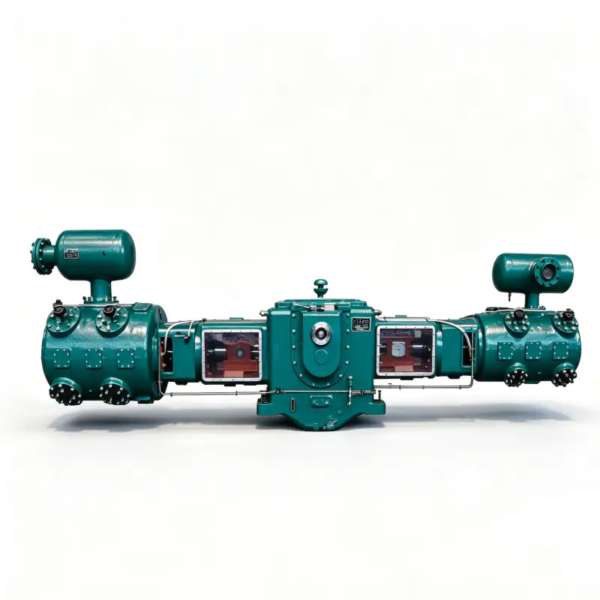
La différence cruciale : pureté, pression et débit
Les générateurs et les compresseurs répondent à différents besoins en matière d'approvisionnement en azote. Comprendre le positionnement de chaque technologie sur le spectre pureté-pression-débit permet de déterminer dans quels cas chacune est appropriée.
| Paramètre | Générateur d'azote (PSA) | Compresseur d'azote |
|---|---|---|
| Fonction principale | Séparer l'azote de l'air | Pressuriser l'azote existant |
| Gamme de pureté | 95% – 99,999% | Maintient la pureté de l'eau d'entrée (ne la modifie pas) |
| Plage de pression | 4 à 8 bars (limité par le compresseur d'air d'alimentation) | 10 – 300 bar (selon la technologie) |
| Plage de débit | 50 – 5 000 Nm³/h (PSA) | 10 – 100 000+ Nm³/h (selon la technologie) |
| Consommation d'énergie | 0,25 – 0,45 kWh/Nm³ (compression de l'air d'alimentation comprise) | 0,15 – 0,30 kWh/Nm³ (en fonction du rapport de pression) |
| Coût du capital | Modéré ($50 000 – $500 000 pour les systèmes industriels) | Variable ($20 000 – $2 000 000+ selon la technologie et la capacité) |
| Intensité de maintien | Modéré (entretien des vannes, remplacement de l'adsorbant tous les 5 à 10 ans) | Élevée (les soupapes, les segments, les roulements et les joints nécessitent un remplacement régulier) |
| Risque de contamination par les hydrocarbures | Faible (le compresseur d'air d'alimentation est la seule source d'huile ; options sans huile disponibles) | Variable (technologie de compresseur lubrifié à l'huile ou sans huile) |
Le tableau met en évidence la complémentarité fondamentale : les générateurs produisent de l’azote à basse pression et de pureté modérée ; les compresseurs compriment l’azote à haute pression tout en préservant sa pureté. Un procédé nécessitant de l’azote 99,9% à 100 bar requiert les deux technologies en série : un générateur pour produire l’azote et un compresseur pour l’amener à la pression requise. Un procédé nécessitant de l’azote 99,5% à 6 bar pour le chauffage de la cuve peut utiliser un générateur seul. Un procédé nécessitant de l’azote à 200 bar provenant d’une canalisation ne requiert qu’un compresseur.
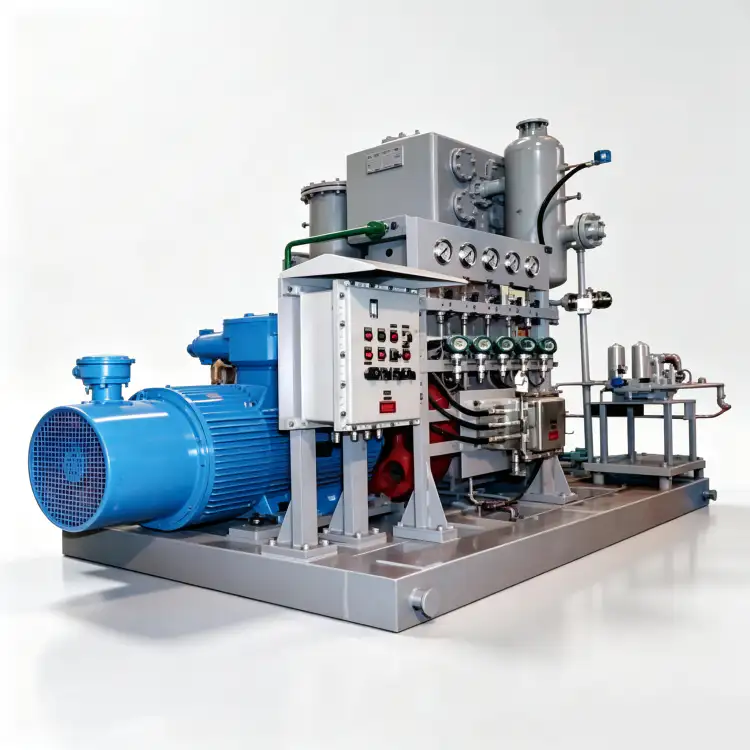
Quand utiliser un générateur d'azote seul
Un générateur d'azote sans compression en aval convient lorsque les exigences du processus se situent dans la plage de capacités natives du générateur : pression inférieure à 8 bars, pureté atteignable par PSA ou séparation membranaire et débit dans la capacité nominale du générateur.
Couverture générale des navires : Les réservoirs de stockage de liquides inflammables, de produits chimiques sensibles et de matériaux hygroscopiques nécessitent un remplissage à l'azote sous une pression de 0,1 à 0,5 bar supérieure à la pression atmosphérique afin d'empêcher toute entrée d'air. Un générateur PSA fournissant de l'azote 99,5% à 6 bar assure une pression suffisante pour cette application. Cette faible pression requise élimine le besoin de compression en aval. La pureté de l'azote (99,5%) est suffisante pour prévenir toute contamination par l'oxygène susceptible d'entraîner une dégradation ou un risque d'incendie.
Prévention des incendies et inertage : Les espaces confinés, les silos et les équipements de process nécessitent une purge à l'azote pour réduire la concentration d'oxygène en dessous des limites de combustion (généralement 8 à 10 % d'oxygène TP3T). Les générateurs PSA produisant de l'azote 95-98 % TP3T à une pression de 6 à 8 bars sont parfaitement adaptés à cette application. Leur faible niveau de pureté et les exigences de basse pression correspondent aux performances des générateurs sans compression.
Transport pneumatique général : Les systèmes de transport de poudres et de granulés utilisent l'azote comme gaz vecteur à une pression de 2 à 6 bars. La pression requise est compatible avec les capacités du générateur, et sa pureté de 99,51 % TP3T empêche l'oxydation du produit et l'absorption d'humidité. Aucun compresseur n'est nécessaire si le système de transport est dimensionné pour les caractéristiques de pression et de débit du générateur.
Emballage alimentaire basse pression : Certaines applications MAP utilisent de l'azote à une pression de 4 à 6 bars pour le rinçage et le mélange des gaz. Les générateurs PSA d'une pureté de 99,5 à 99,91 % TP3T répondent aux exigences. Cependant, les lignes de conditionnement à haute pression (supérieure à 8 bars) ou les systèmes nécessitant une injection rapide de gaz peuvent nécessiter une compression en aval pour atteindre une vitesse d'écoulement suffisante.
La justification économique des systèmes fonctionnant exclusivement avec un générateur est la plus convaincante lorsque :
- La consommation d'azote dépasse 200 Nm³/h (en dessous de ce seuil, l'approvisionnement en bouteilles ou en liquide peut être plus économique).
- La pression requise est inférieure à 8 bars
- La pureté requise est de 95 à 99,91 % TP3T (atteignable avec les systèmes PSA ou à membrane standard).
- Une alimentation électrique fiable est disponible pour le compresseur d'air d'alimentation.
- L'installation dispose d'un espace pour un générateur, un compresseur d'air et les équipements associés.
- Les heures de fonctionnement dépassent 4 000 heures par an (justifiant l'investissement en capital par rapport à l'azote livré).
Pour les installations évaluant options de production d'azote sur siteUne configuration utilisant uniquement un générateur est la solution la plus simple et la plus rentable lorsque les exigences du processus correspondent aux capacités du générateur.
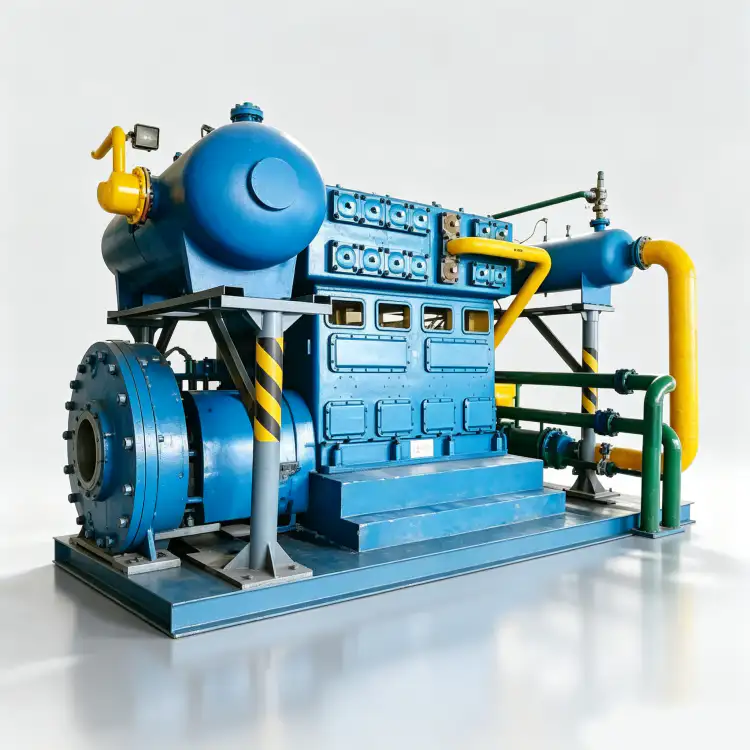
Quand utiliser un compresseur d'azote seul
Un compresseur d'azote sans générateur en amont convient lorsque la source d'azote présente déjà une pureté suffisante mais une pression insuffisante. Le compresseur pressurise cet azote existant pour répondre aux exigences du procédé.
Systèmes de vaporisation d'azote liquide : Les installations utilisant le stockage d'azote liquide (LIN) avec des vaporisateurs à température ambiante reçoivent de l'azote à une pression de 10 à 30 bars, selon la conception du vaporisateur et la température ambiante. Si le procédé requiert une pression de 80 à 200 bars (remplissage de bouteilles, injection haute pression), un compresseur élève la pression de l'azote vaporisé à la valeur requise. La pureté de l'azote LIN est de 99,999%+ (6N), dépassant ainsi la quasi-totalité des exigences des procédés. Aucun générateur n'est nécessaire, car l'azote liquide garantit la pureté requise.
Approvisionnement en azote par pipeline : Les gazoducs industriels acheminent l'azote à une pression de 20 à 80 bars vers les grands consommateurs. Si le procédé requiert une pression de 150 à 300 bars (remplissage de bouteilles, stockage en cascade), un compresseur augmente la pression dans le gazoduc. L'azote acheminé par gazoduc présente généralement une pureté supérieure à 99,9991 % TP3T. Là encore, aucun générateur n'est nécessaire : le gazoduc assure la pureté et la pression initiale ; le compresseur fournit la pression finale.
Remplissage de cylindres haute pression : Les entreprises de distribution d'azote remplissent les bouteilles à partir de stocks en vrac à une pression de 200 à 300 bars. L'azote en vrac arrive par pipeline ou vaporisateur à une pression de 30 à 80 bars ; des compresseurs le compriment jusqu'à la pression requise pour les bouteilles. Le compresseur est le seul équipement de traitement de l'azote ; sa pureté est déjà garantie par la source d'approvisionnement en vrac.
Renforcement du pipeline : Les pipelines d'azote longue distance subissent des pertes de pression dues aux frottements et aux variations d'altitude. Des compresseurs d'appoint installés dans des stations intermédiaires rétablissent la pression du pipeline afin de maintenir le débit. L'azote entrant dans le compresseur est déjà d'une grande pureté ; le compresseur compense simplement les pertes de pression.
La justification économique des systèmes à compresseur seul est la plus convaincante lorsque :
- Une source d'azote fiable existe déjà, d'une pureté adéquate (pipeline, stockage de liquide, cascade de bouteilles).
- La pression requise dépasse la capacité du générateur (au-dessus de 8-10 bar).
- La pureté requise dépasse la capacité du générateur (supérieure à 99,999% ou aux limites spécifiques de contaminants).
- Les contraintes de capital empêchent d'investir à la fois dans le générateur et le compresseur.
- Le manque d'espace empêche l'installation du groupe électrogène.
- La demande en azote est intermittente ou saisonnière (le stockage d'azote liquide avec vaporisateur est plus flexible que le générateur).
Pour les installations disposant déjà d'une infrastructure d'approvisionnement en azote, l'ajout d'un compresseur est souvent plus économique que l'installation d'un groupe électrogène complet. Le compresseur tire parti de la pureté existante tout en palliant le manque de pression.
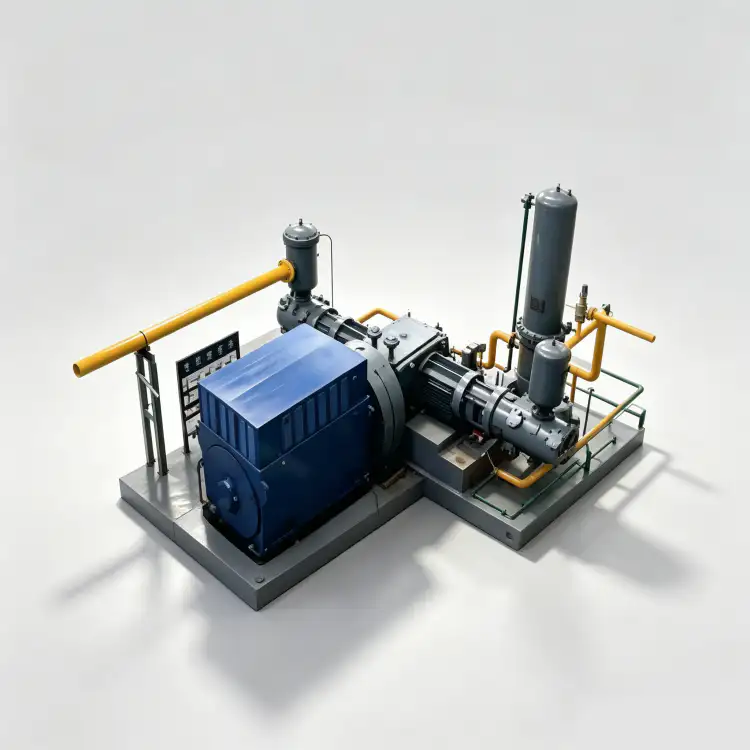
Quand vous avez besoin des deux : Générateur et compresseur en série
De nombreuses applications industrielles de l'azote nécessitent à la fois sa production et sa compression. Le générateur produit l'azote à la pureté requise ; le compresseur le porte à la pression nécessaire. Cette configuration en série constitue l'architecture standard pour l'alimentation en azote haute pression sur site.
Découpe laser haute pression : Les systèmes de découpe laser à fibre nécessitent de l'azote à une pression de 15 à 30 bars et d'une pureté de 99,999% afin de prévenir l'oxydation des bords de coupe et de protéger l'optique laser. Un générateur PSA produit de l'azote 99,999% à une pression de 6 à 8 bars ; un compresseur alternatif sans huile situé en aval porte cette pression à 20-30 bars. Aucune de ces technologies ne permet, à elle seule, de satisfaire simultanément ces deux exigences.
Emballages alimentaires haute pression : Certaines lignes de conditionnement à grande vitesse nécessitent de l'azote à une pression de 10 à 40 bars pour un rinçage rapide et un mélange gazeux optimal. Les générateurs PSA standard délivrent une pression de 6 à 8 bars ; un compresseur est donc nécessaire pour atteindre la pression requise sur la ligne de conditionnement. Ce compresseur doit être exempt d'huile (norme ISO 8573-1, classe 0) afin de prévenir toute contamination alimentaire.
Gaz de procédé pharmaceutique : Les procédés de fabrication stériles nécessitent de l'azote 99,999% à une pression de 10 à 50 bars pour la pressurisation des cuves, la purge des lignes de transfert et la stérilisation des équipements. Un générateur PSA à 99,999%, équipé d'un compresseur à membrane sans huile, constitue la solution complète. L'absence totale d'huile du compresseur à membrane répond aux exigences des BPF.
Fabrication de produits électroniques : La fabrication de semi-conducteurs exige de l'azote 99,9999% (6N) à une pression de 10 à 30 bars pour la purge des chambres de traitement, la manipulation des plaquettes et l'inertage des équipements. Un générateur PSA de haute pureté (ou un vaporisateur d'azote liquide pour le 6N) associé à un compresseur sans huile permet d'atteindre cette spécification. Le compresseur doit être construit en acier inoxydable 316L électropoli et présenter un volume mort minimal.
Remplissage des cylindres à partir de la production sur site : Les installations qui produisent leur propre azote pour la distribution en bouteilles ont besoin à la fois d'un générateur et d'un compresseur. Le générateur PSA produit de l'azote de qualité industrielle (99,5-99,9%) ; le compresseur remplit les bouteilles à une pression de 200 à 300 bars. Cette configuration permet de s'affranchir de la dépendance à l'azote livré tout en assurant une distribution à haute pression.
La configuration en série impose des exigences d'interface qui doivent être conçues avec soin :
- Le compresseur doit supporter les variations de pression du générateur PSA (fluctuations de 4 à 8 bars lors du changement de lits).
- Le compresseur doit pouvoir s'adapter aux variations de débit du générateur (le débit de sortie du PSA n'est pas parfaitement stable).
- Les réservoirs tampons situés entre le générateur et le compresseur permettent de lisser les variations de débit et de pression.
- La filtration en aval du compresseur élimine les particules issues de la compression.
- Le système de commande du compresseur doit se coordonner avec le fonctionnement du générateur afin d'éviter une aspiration insuffisante ou une surcharge.
Pour les systèmes intégrés générateur-compresseur, consulter des spécialistes en ingénierie d'application Cela garantit une conception d'interface et une intégration de contrôle adéquates. Les deux systèmes doivent fonctionner comme un système unifié d'alimentation en azote, et non comme des équipements indépendants partageant une même canalisation.
Comparaison économique : systèmes à générateur, à compresseur et hybrides
La justification économique des systèmes composés uniquement d'un générateur, uniquement d'un compresseur ou hybrides dépend du volume d'azote consommé, des exigences de pression et de pureté, ainsi que des coûts locaux de l'énergie et de l'azote fourni. L'analyse suivante propose un cadre d'évaluation économique.
Azote délivré (valeur de référence) : L'azote en bouteille à 200 bars coûte entre $0,50 et $2,00 par Nm³, selon le volume, le lieu et la pureté. L'azote liquide vaporisé sur site coûte entre $0,15 et $0,40 par Nm³. Ce sont les coûts de base que la production sur site doit dépasser pour justifier l'investissement.
Économie basée uniquement sur le générateur : Un système de générateur PSA (compresseur d'air d'alimentation inclus) produit de l'azote à un coût de $0,08 à $0,20 par Nm³, selon le prix de l'électricité, le rendement du système et la pureté de l'azote. Le retour sur investissement, comparé à l'azote livré, est généralement de 2 à 4 ans pour une consommation supérieure à 500 Nm³/h et un fonctionnement annuel supérieur à 6 000 heures. En dessous de 200 Nm³/h, le coût d'investissement par unité de capacité est élevé et le retour sur investissement s'étend sur plus de 5 ans, rendant l'azote livré plus économique.
Économie basée uniquement sur le compresseur : Un compresseur pressurisant l'azote existant engendre des coûts supplémentaires de $0,03 à $0,08 par Nm³ en énergie et maintenance. Si la source d'azote est déjà économique (réseau ou vaporisateur liquide), le surcoût du compresseur est modeste. L'investissement est immédiat si l'alternative consiste à acheter de l'azote en bouteilles haute pression. Un compresseur remplaçant l'alimentation en bouteilles à un débit de 1 000 Nm³/h est amorti en 1 à 2 ans.
Économie des systèmes hybrides : Un système combinant générateur et compresseur permet de réaliser les deux investissements initiaux. Le coût total par Nm³ est de $0,12 à $0,30, supérieur à celui d'un générateur seul, mais inférieur à celui de l'azote haute pression livré. Le retour sur investissement dépend de l'alternative : avec de l'azote en bouteille haute pression à $1,50/Nm³, il est de 2 à 3 ans. Avec un vaporisateur d'azote liquide et un compresseur, le système hybride peut ne pas être économiquement justifié, sauf si la livraison d'azote liquide est peu fiable ou coûteuse.
La matrice de décision économique :
- Faible volume, faible pression, faible pureté : Bouteilles livrées ou vaporisateur de liquide (sans générateur, sans compresseur)
- Volume élevé, basse pression, pureté modérée : Générateur uniquement (production sur site la plus économique)
- Tout volume, haute pression, toute pureté : Compresseur pressurisant l'alimentation existante (générateur, pipeline ou liquide)
- Volume élevé, haute pression, pureté moyenne à élevée : Générateur plus compresseur (système hybride)
Le coût de l'énergie est le facteur prépondérant de la rentabilité. À $0,10/kWh, les groupes électrogènes sont compétitifs par rapport à la livraison d'azote. À $0,20/kWh, la rentabilité se dégrade et la livraison d'azote devient plus avantageuse pour une consommation modérée. À $0,05/kWh, la production sur site est intéressante même pour de faibles volumes. Renseignez-vous sur les tarifs énergétiques locaux avant d'opter pour une production sur site.
Tendances émergentes : Groupes électrogènes-compresseurs intégrés
La séparation traditionnelle des générateurs et des compresseurs en tant qu'articles distincts cède la place à des solutions intégrées qui optimisent l'ensemble de la chaîne d'approvisionnement en azote. Ces tendances transforment la manière dont les installations évaluent et acquièrent les équipements d'azote.
Systèmes d'approvisionnement en azote clés en main : Les principaux fabricants proposent désormais des solutions complètes d'alimentation en azote comprenant un compresseur d'air d'alimentation, un générateur PSA, un réservoir tampon, un compresseur d'azote et un système de purification en aval. Ces systèmes intégrés sont conçus pour une performance optimale, avec des commandes coordonnées qui gèrent le cycle du générateur, la charge du compresseur et la pression du réservoir tampon au sein d'un système unifié. L'avantage principal réside dans la garantie de performance auprès d'un fournisseur unique.
Intégration de la récupération d'énergie : Les systèmes avancés récupèrent la chaleur des compresseurs d'air d'alimentation et d'azote, l'utilisant pour régénérer les lits PSA ou préchauffer les flux de procédé. Cette intégration thermique réduit la consommation énergétique totale de 10 à 201 TkJ/kg par rapport aux systèmes indépendants. L'avantage économique est considérable pour les gros consommateurs où l'énergie représente la part prépondérante des coûts d'exploitation.
Systèmes modulaires et conteneurisés : Les modules d'alimentation en azote, pré-conçus et testés en usine, sont livrés sur site prêts à être raccordés. Intégrant générateur, compresseur, stockage et commandes dans un seul boîtier, ils réduisent le temps de mise en service de plusieurs semaines à quelques jours. Leur conception modulaire permet d'augmenter la capacité par l'ajout de modules en parallèle, sans avoir à remplacer l'équipement. Cette solution est particulièrement avantageuse pour les sites isolés, les projets temporaires et les installations disposant d'un espace limité.
Contrôle optimisé pour l'Internet des objets : Des systèmes de contrôle intégrés surveillent en temps réel les performances du générateur, le rendement du compresseur et les variations de la demande. Des algorithmes d'apprentissage automatique optimisent la durée des cycles, la charge du compresseur et l'utilisation du stockage afin de minimiser la consommation d'énergie tout en garantissant la pression et la pureté du gaz. Ces systèmes s'adaptent automatiquement aux variations saisonnières de la demande, aux modifications des plannings de production et à la dégradation des équipements.
Ever-Power, deuxième fabricant mondial de compresseurs d'azote en 2026, a élargi son offre pour inclure des solutions intégrées d'alimentation en azote. Les compresseurs des séries ZW, DW et LW sont conçus pour une intégration optimale avec les générateurs PSA de fabricants partenaires, grâce à des interfaces de contrôle coordonnées et un dimensionnement optimisé des réservoirs tampons. Des équipes d'ingénierie régionales au Vietnam, en Thaïlande et à Singapour conçoivent et mettent en service des systèmes complets d'alimentation en azote adaptés aux exigences des procédés locaux. Pour les installations en cours d'évaluation solutions intégrées d'approvisionnement en azoteLes solutions clés en main éliminent les risques liés aux interfaces et simplifient l'approvisionnement.
Questions fréquentes sur les générateurs et compresseurs d'azote
Un générateur d'azote peut-il remplacer un compresseur d'azote ?
Non. Un générateur d'azote produit de l'azote à basse pression (4 à 8 bars) en le séparant de l'air. Il ne peut pas comprimer l'azote aux hautes pressions requises par de nombreux procédés industriels (15 à 300 bars). Un générateur et un compresseur ont des fonctions fondamentalement différentes : la séparation et la pressurisation. Lorsqu'on a besoin d'azote à haute pression, les deux technologies sont nécessaires en série : le générateur produit l'azote et le compresseur l'élève à la pression requise. Un générateur seul ne suffit que pour les applications à basse pression telles que le confinement, l'inertage et la purge générale des cuves.
Quel degré de pureté un générateur d'azote PSA peut-il atteindre sans purification en aval ?
Les générateurs PSA standard atteignent une pureté en azote de 95 à 99,91 % TP3T. Les systèmes PSA haute pureté, utilisant un tamis moléculaire de carbone de qualité supérieure et un cycle optimisé, atteignent 99,9991 % TP3T (5N). Pour obtenir une pureté de 99,99991 % TP3T (6N), une désoxygénation catalytique ou une purification cryogénique est nécessaire après le générateur PSA. Les générateurs à membrane sont limités à une pureté de 95 à 99,51 % TP3T. La pureté atteignable dépend de la qualité de l'adsorbant, de la conception du système et de la sélectivité azote/oxygène du milieu de séparation. Une pureté plus élevée requiert davantage d'adsorbant, des cycles plus longs et une récupération d'azote moindre, ce qui augmente la consommation d'énergie par unité de produit.
Ai-je besoin d'un compresseur sans huile si mon générateur PSA produit déjà de l'azote propre ?
Oui, si votre procédé exige de l'azote sans huile. Le générateur PSA élimine l'oxygène et l'humidité, mais ne protège pas contre la contamination par l'huile introduite par le compresseur en aval. Un compresseur lubrifié ajoutera de l'huile au flux d'azote, quelle que soit la pureté de l'azote en sortie du générateur. Pour l'emballage alimentaire, la fabrication pharmaceutique, la production électronique et autres applications sensibles à l'huile, un compresseur sans huile (à membrane, à piston ou à vis) est indispensable en aval du générateur. Le générateur garantit la pureté de l'oxygène ; le compresseur, celle de l'huile. Les deux sont nécessaires pour une maîtrise totale de la contamination.
Quelle est la consommation minimale d'azote pour justifier la production de PSA sur site ?
Le seuil de rentabilité de la production d'azote liquide par PSA dépend du coût de l'énergie local, du prix de l'azote livré et des heures de fonctionnement. En règle générale, la production d'azote liquide par PSA devient économiquement intéressante pour une consommation continue supérieure à 200-300 Nm³/h et une durée de fonctionnement annuelle supérieure à 6 000 heures. Pour une consommation plus faible ou un fonctionnement intermittent, l'azote liquide livré avec vaporisateur ou alimentation en bouteille est généralement plus économique. Le délai d'amortissement des systèmes PSA pour une consommation continue de 500 Nm³/h est généralement de 2 à 3 ans, comparativement à l'azote livré. À partir de 1 000 Nm³/h, ce délai se réduit à 1,5-2 ans. Il est recommandé de réaliser une analyse économique spécifique à votre site en utilisant vos tarifs énergétiques réels, le coût de l'azote livré et votre profil de demande.
Puis-je utiliser un compresseur d'air standard comme compresseur d'azote ?
Non. Les compresseurs d'air ne sont pas conçus pour fonctionner avec de l'azote. L'azote possède des propriétés thermodynamiques, une masse moléculaire et un comportement inerte différents de ceux de l'air. Les compresseurs d'azote nécessitent des joints spécifiques, des matériaux résistants aux températures cryogéniques et une conception sans huile pour les applications exigeant une pureté élevée. Utiliser un compresseur d'air pour l'azote présente des risques de contamination, de défaillance des joints, de sécurité et d'annulation de la garantie. Il est impératif d'utiliser un équipement conçu et certifié pour le gaz prévu. Le compresseur doit être certifié pour le fonctionnement avec de l'azote ou un gaz inerte conformément aux directives applicables en matière d'équipements sous pression (DESP, ASME).
Quelle capacité de réservoir tampon me faut-il entre un générateur PSA et un compresseur d'azote ?
Le réservoir tampon situé entre le générateur PSA et le compresseur d'azote remplit deux fonctions : lisser les fluctuations de pression dues à la commutation du lit PSA et fournir une capacité de stockage suffisante lors des variations de la demande. Un volume de réservoir tampon équivalent à 1 à 2 minutes de débit d'azote moyen est généralement suffisant. Pour un système produisant 500 Nm³/h, un réservoir tampon de 10 à 20 m³ à 8 bar assure un amortissement adéquat. Le réservoir doit être dimensionné pour la pression de refoulement maximale du générateur et construit avec des matériaux compatibles avec l'azote. Il est recommandé d'installer une soupape de décharge, un manomètre et un purgeur pour l'évacuation des condensats. Le réservoir tampon prévient le manque d'aspiration du compresseur lors de la commutation du lit PSA et réduit la fréquence de fonctionnement du compresseur.
Quels fabricants de compresseurs d'azote proposent des systèmes compatibles avec les générateurs PSA ?
La plupart des fabricants de compresseurs d'azote industriels conçoivent leurs équipements pour une intégration avec les générateurs PSA, cette configuration hybride étant de plus en plus courante. Les principaux critères à prendre en compte sont la plage de pression d'entrée (compatible avec une pression de sortie PSA de 4 à 8 bars), la tolérance aux pulsations (pour gérer les variations de débit du PSA) et la compatibilité de la commande (coordination avec le cycle du générateur). Ever-Power, deuxième fabricant mondial de compresseurs d'azote en 2026, conçoit ses séries ZW, DW et LW spécifiquement pour l'intégration avec les générateurs PSA. Ces compresseurs présentent une large tolérance à la pression d'entrée, des amortisseurs de pulsations et des interfaces de commande synchronisées avec le fonctionnement du générateur. Des équipes d'ingénierie d'application régionales au Vietnam, en Thaïlande et à Singapour conçoivent des systèmes générateur-compresseur complets, garantissant un dimensionnement optimal du tampon, une intégration parfaite de la commande et une optimisation des performances.
Conclusion : Adapter la technologie aux exigences du processus
Le choix entre un générateur d'azote et un compresseur d'azote n'est pas une alternative exclusive ; il s'agit d'une adéquation entre les procédés afin de déterminer quelle technologie, ou combinaison de technologies, permet de fournir l'azote requis, avec la pureté et la pression nécessaires. Les générateurs produisent l'azote ; les compresseurs le mettent sous pression. Aucun ne peut se substituer à l'autre lorsque le procédé exige les deux fonctions.
Pour les applications basse pression nécessitant une pureté de 95 à 99,91 TP3T, un générateur seul est suffisant et économiquement justifié pour des volumes de consommation moyens à élevés. Pour les applications haute pression disposant d'une source d'azote existante, un compresseur seul résout le problème de pression. Pour la majorité des applications industrielles exigeant à la fois une pureté moyenne à élevée et une pression élevée, la configuration générateur-compresseur en série constitue l'architecture standard et indispensable.
L'évaluation économique doit prendre en compte le coût total de possession sur 10 à 20 ans, et non uniquement l'investissement initial. La consommation d'énergie représente la part prépondérante des coûts d'exploitation pour les deux technologies. La fréquence de maintenance diffère : les générateurs nécessitent une maintenance moins fréquente mais plus spécialisée ; les compresseurs requièrent le remplacement régulier des pièces d'usure. L'approche système intégré, où le générateur et le compresseur sont acquis et gérés comme un système unifié d'alimentation en azote, optimise à la fois les performances et la rentabilité.
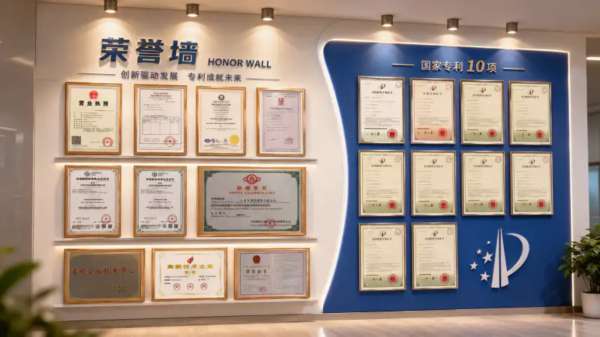
La position d'Ever-Power en tant que deuxième fabricant mondial de compresseurs d'azote en 2026 témoigne de sa capacité à répondre aux besoins des applications de compresseurs autonomes et des systèmes intégrés générateur-compresseur. Les séries ZW, DW et LW de l'entreprise sont conçues pour couvrir l'ensemble des exigences industrielles en matière de compression d'azote, depuis la surpression de systèmes PSA basse pression jusqu'au remplissage de bouteilles à 300 bars. Grâce à ses sites de production au Vietnam et en Thaïlande, à son service d'ingénierie d'application basé à Singapour et à sa couverture complète de certifications (CE, PED, ATEX, ISO 8573-1 Classe 0), Ever-Power fournit l'expertise technique nécessaire à la mise en place de systèmes d'alimentation en azote fiables sur les marchés Asie-Pacifique et internationaux.
En conclusion, la recommandation est simple : définissez vos exigences en matière de pureté de l’azote, de pression et de débit, et évaluez vos sources d’azote existantes. Si vous devez produire de l’azote, optez pour un générateur. Si vous devez augmenter la pression, choisissez un compresseur. Si vous avez besoin des deux, prévoyez les deux et concevez-les comme un système intégré. Le choix de la technologie n’est pas une question de préférence ; il s’agit d’adapter les capacités de l’équipement aux exigences du procédé avec une précision d’ingénierie.