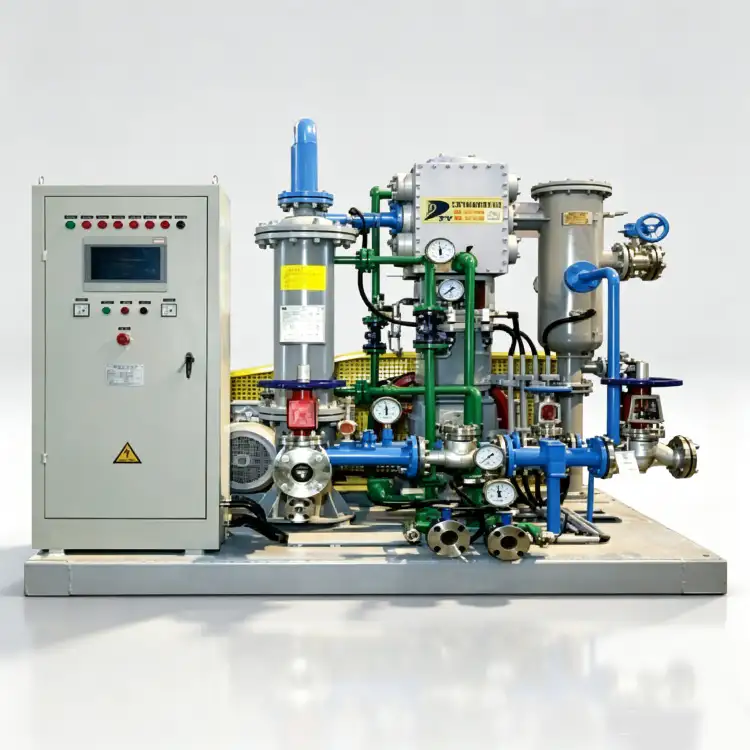
Purity as the Defining Parameter of Nitrogen Compression
Nitrogen purity is not a single number—it is a multidimensional specification that determines compressor technology selection, downstream processing requirements, regulatory compliance, and ultimately, product quality. A pharmaceutical manufacturer requiring 99.9999% nitrogen cannot achieve this purity with the same compression system that satisfies a chemical plant operating at 99.5%. Understanding nitrogen purity levels in compression systems is therefore the first engineering decision in any nitrogen supply project, predating equipment selection, piping design, and operational planning.
This guide examines purity from three perspectives: the quantitative definitions and measurement standards that govern specification, the contamination mechanisms that degrade purity during compression, and the engineering controls that maintain purity from compressor inlet to process outlet. The analysis is grounded in industrial practice, regulatory frameworks, and the failure modes that compromise nitrogen quality in real-world installations.
Quantifying Nitrogen Purity: From Percentage to Parts Per Billion
Nitrogen purity is expressed in multiple formats depending on application context and industry convention. Understanding these formats and their interconversion is essential for specification, procurement, and compliance verification.
Percentage and N-Notation
The most common purity expression is percentage of nitrogen in the total gas mixture. Standard industrial nitrogen is 99.5% pure, meaning 0.5% of the gas consists of contaminants (primarily oxygen, moisture, and trace hydrocarbons). High-purity nitrogen ranges from 99.99% to 99.9999%. The “N” notation counts the number of nines: 4N = 99.99%, 5N = 99.999%, 6N = 99.9999%. This notation is standard in electronics and semiconductor industries where ultra-high purity is routine.
Parts Per Million and Parts Per Billion
For trace contaminant specification, parts per million (ppm) and parts per billion (ppb) provide more intuitive scales than percentages. One ppm equals 0.0001% (one part contaminant per million parts total). One ppb equals 0.0000001% (one part per billion). Converting between formats:
- 99.5% purity = 5,000 ppm total impurities
- 99.99% purity (4N) = 100 ppm total impurities
- 99.999% purity (5N) = 10 ppm total impurities
- 99.9999% purity (6N) = 1 ppm total impurities
- 99.99999% purity (7N) = 0.1 ppm (100 ppb) total impurities
The semiconductor industry routinely specifies individual contaminants at ppb levels. A 6N nitrogen specification might require oxygen below 1 ppm, moisture below 3 ppm, and total hydrocarbons below 0.5 ppm. Each contaminant is specified independently because different processes have different sensitivities.
Dew Point and Moisture Content
Moisture is specified by dew point (the temperature at which water vapor condenses) or absolute moisture content (mg/m³ or ppm). Lower dew points indicate drier gas. Typical specifications:
- General industrial: dew point -20°C to -40°C (moisture ~100-10 ppm)
- Food packaging: dew point -40°C (moisture ~10 ppm)
- Pharmaceutical: dew point -60°C to -70°C (moisture ~1-0.1 ppm)
- Electronics: dew point -70°C to -80°C (moisture ~0.1-0.01 ppm)
Moisture specification is critical because water vapor reacts with process materials, causes corrosion in piping, and freezes in cryogenic applications. The compressor itself adds minimal moisture (nitrogen is dry), but inlet moisture from PSA generators or inadequate drying upstream contaminates the compressed stream.
For organizations evaluating nitrogen purity requirements for compression systems, the first step is translating process needs into quantitative specifications using the formats and units recognized by compressor manufacturers and gas suppliers.
Contaminant Categories and Their Sources in Compression Systems
Nitrogen purity is degraded by multiple contaminant categories, each with distinct sources, measurement methods, and control strategies. A comprehensive purity specification addresses all categories relevant to the application.
| Contaminant | Primary Sources | Measurement Method | Typical Control |
|---|---|---|---|
| Oxygen (O₂) | PSA generator inefficiency, air ingress through leaks, membrane separation limitations | Paramagnetic analyzer, electrochemical sensor, zirconia cell | Optimize PSA/membrane performance; maintain system leak-tightness |
| Moisture (H₂O) | Inlet gas moisture, compressor cooling water leakage, atmospheric humidity ingress | Dew point hygrometer, aluminum oxide sensor, quartz crystal microbalance | Refrigerated or desiccant dryers; maintain cooling system integrity |
| Oil (hydrocarbons) | Lubricated compressor blow-by, oil separator failure, oil vapor carryover | Infrared spectroscopy, photoionization detector, gas chromatography | Oil-free compressor technology; coalescing and activated carbon filtration |
| Particulates | Compressor wear debris, atmospheric dust, rust from piping, seal fragments | Laser particle counter, membrane filtration and gravimetric analysis | High-efficiency filtration; stainless steel piping; clean compressor design |
| Carbon dioxide (CO₂) | PSA generator breakthrough, atmospheric CO₂ dissolution, combustion processes | NDIR analyzer, gas chromatography | PSA optimization; molecular sieve adsorption |
| Carbon monoxide (CO) | Oil oxidation at high temperatures, incomplete combustion in heated systems | Electrochemical sensor, NDIR analyzer | Temperature control; catalytic converter; oil-free compression |
| Microorganisms | Atmospheric bioaerosols, contaminated water systems, inadequate filtration | Culture methods, ATP bioluminescence, PCR | Sterile filtration (0.2 micron); UV sterilization; system sanitization |
The compressor is both a potential source and a potential control point for several contaminants. Oil-lubricated compressors introduce hydrocarbon contamination. Wear debris from compressor internals adds particulates. Cooling water leakage introduces moisture. Conversely, the compression process itself can be designed to minimize contamination—oil-free architectures eliminate hydrocarbon introduction, stainless steel construction reduces particulate generation, and proper sealing prevents atmospheric ingress.
A critical insight: the compressor does not improve purity. It can only maintain or degrade the purity of the nitrogen supplied to its inlet. If the PSA generator produces 99.9% nitrogen with 1,000 ppm oxygen, the compressor cannot reduce oxygen content. Purity improvement requires upstream purification (PSA optimization, membrane separation, cryogenic distillation) or downstream treatment (catalytic deoxygenation, adsorption drying). The compressor’s role is to maintain inlet purity through contamination-free design, not to enhance it.
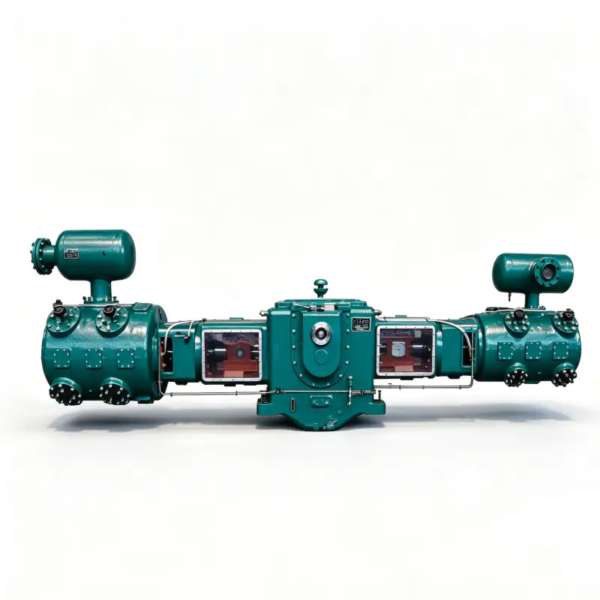
ISO 8573-1: The Global Standard for Compressed Gas Purity
ISO 8573-1 is the internationally recognized standard for classifying compressed gas purity. It provides a structured framework for specifying, measuring, and verifying contamination levels across multiple contaminant categories. Understanding this standard is essential for compressor specification, procurement, and compliance.
The standard addresses three primary contaminant categories, each with its own class numbering system:
Particulate Classes (ISO 8573-1 Part 1)
Particulate classes specify maximum particle concentration per cubic meter at different size ranges. Class 0 is the most stringent, requiring manufacturer specification and testing. Class 1 allows maximum 20,000 particles per m³ at 0.1-0.5 micron, 400 particles at 0.5-1.0 micron, and 10 particles above 1.0 micron. Class 9 is the least stringent, with no specific limits. For nitrogen compressors, particulate specification is critical in electronics and pharmaceutical applications where sub-micron particles cause defects or contamination.
Moisture Classes (ISO 8573-1 Part 2)
Moisture classes specify maximum pressure dew point or moisture content. Class 0 requires manufacturer specification. Class 1 specifies dew point ≤ -70°C (moisture ≤ 0.003 ppm). Class 2 specifies ≤ -40°C (≤ 0.1 ppm). Class 3 specifies ≤ -20°C (≤ 1 ppm). Class 4-6 specify progressively higher moisture content up to ≤ 10°C dew point. Class 7-9 specify liquid water content. Nitrogen compressor systems typically achieve Class 2-3 through refrigerated drying and Class 1 through desiccant drying with proper maintenance.
Oil Classes (ISO 8573-1 Part 3)
Oil classes specify maximum total oil content (liquid, aerosol, and vapor). Class 0 is the manufacturer guarantee of oil-free operation. Class 1 specifies ≤ 0.01 mg/m³. Class 2 specifies ≤ 0.1 mg/m³. Class 3 specifies ≤ 1.0 mg/m³. Class 4 specifies ≤ 5 mg/m³. For nitrogen compressors, Class 0 is achieved through oil-free compressor design (diaphragm, oil-free piston, oil-free screw). Class 1-2 can be achieved through lubricated compressors with high-efficiency coalescing and activated carbon filtration, though this approach requires rigorous maintenance and monitoring.
A complete ISO 8573-1 specification uses the format [Particulate:Moisture:Oil], for example [1:2:0] meaning Class 1 particulate, Class 2 moisture, and Class 0 oil. This format eliminates ambiguity and ensures all three contaminant categories are addressed. Compressor procurement specifications should include the complete ISO 8573-1 class profile, not just oil content.
Testing and verification per ISO 8573-1 requires standardized sampling methods, calibrated instrumentation, and documented protocols. Third-party testing by accredited laboratories (TÜV, SGS, Bureau Veritas) provides independent verification of manufacturer claims. For regulated industries, annual or semi-annual purity testing is standard practice to demonstrate ongoing compliance.
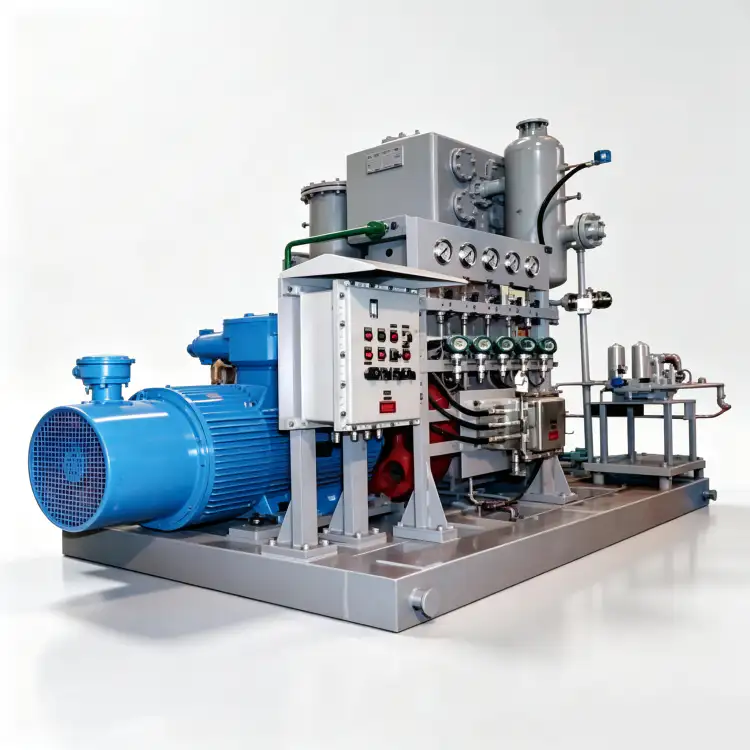
How Compressor Technology Affects Purity Maintenance
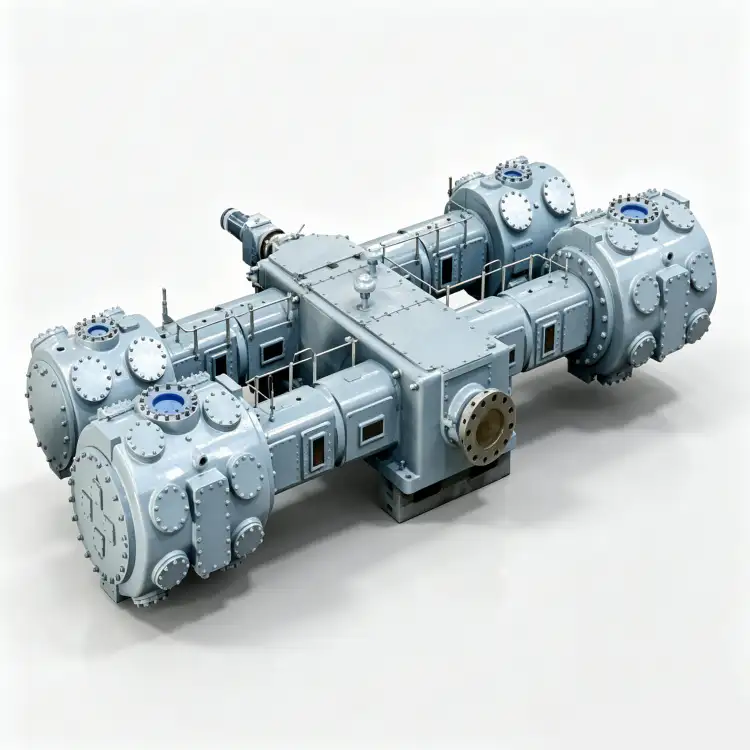
The compressor technology selected for a nitrogen system is the single largest determinant of purity maintenance capability. Each technology has distinct contamination risks and control mechanisms that must be matched to application purity requirements.
Oil-Lubricated Reciprocating Compressors
Oil-lubricated reciprocating compressors use oil for piston ring lubrication, cylinder wall cooling, and crankcase bearing lubrication. Oil migrates into the nitrogen stream through piston ring blow-by, valve stem leakage, and oil vapor carryover. Standard oil separation systems (coalescing filters, cyclonic separators) achieve residual oil content of 0.1-5 mg/m³ depending on separator efficiency and maintenance condition. This corresponds to ISO 8573-1 Class 2-4 oil purity.
To achieve Class 1 oil purity (≤ 0.01 mg/m³) from a lubricated compressor requires downstream coalescing filters (0.01 mg/m³), activated carbon adsorbers (0.003 mg/m³), and continuous monitoring. The filtration system adds pressure drop, maintenance burden, and failure risk. For applications requiring Class 0 oil purity, oil-lubricated technology is fundamentally unsuitable regardless of filtration sophistication.
Oil-Free Reciprocating Compressors
Oil-free reciprocating compressors separate the oil-lubricated crankcase from the compression chamber using distance pieces and self-lubricating piston rings (PTFE, carbon-graphite). This design achieves ISO 8573-1 Class 0 oil purity when properly manufactured and maintained. However, oil-free piston rings generate particulate wear debris that must be filtered downstream. The rings also wear faster than lubricated rings, requiring more frequent replacement to maintain sealing integrity and prevent blow-by that could admit atmospheric contaminants.
Мембранні компресори
Diaphragm compressors provide the highest purity assurance through absolute physical separation between hydraulic oil and process gas. A metal diaphragm forms an impermeable barrier, eliminating oil contamination risk entirely. The compression chamber can be constructed from electropolished 316L stainless steel with minimal dead volumes, eliminating contamination traps. Diaphragm compressors are the standard for pharmaceutical, electronics, and ultra-high-purity gas applications requiring 6N+ nitrogen with documented absence of oil, moisture, and particulate contaminants.
The primary purity risk in diaphragm compressors is diaphragm fatigue failure. A ruptured diaphragm allows hydraulic oil to enter the gas stream instantaneously, causing massive contamination. Regular diaphragm replacement (every 2,000-6,000 hours) and fatigue monitoring prevent this failure mode. Additionally, diaphragm compressors have lower flow capacity, limiting their application to smaller-volume, high-purity systems.
Oil-Free Screw Compressors
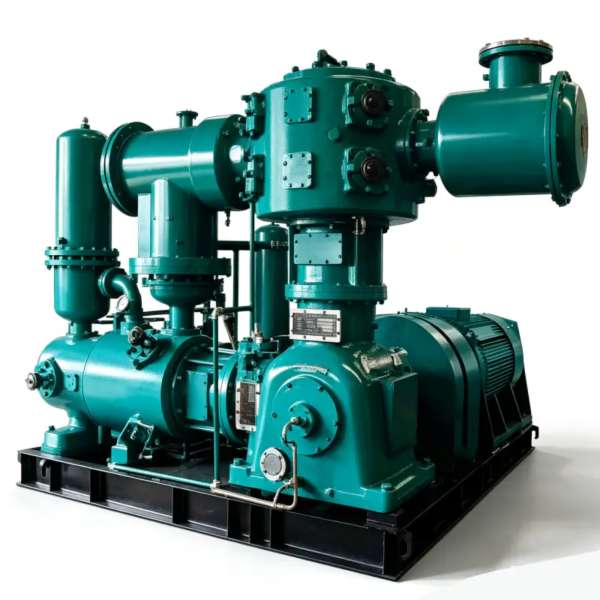
Oil-free screw compressors use precision timing gears to maintain rotor synchronization without oil injection. Sealing is achieved through tight clearances and, in some designs, nitrogen barrier gas. These compressors achieve ISO 8573-1 Class 0 oil purity and are suitable for food packaging, general pharmaceutical, and industrial applications requiring oil-free nitrogen at moderate pressures (up to 40 bar) and high flows (1,000-20,000+ Nm³/h).
The purity risk in oil-free screw compressors is particulate generation from rotor wear and the potential for atmospheric ingress through seals if suction pressure drops below atmospheric. Inlet filtration and seal monitoring are essential. The large internal surface area of screw compressors also provides potential contamination traps if not properly cleaned during maintenance.
The technology selection decision is straightforward: match the compressor’s inherent purity capability to the application’s required purity class. Do not attempt to compensate for inadequate compressor technology with downstream filtration. For nitrogen compressor purity technology guidance, consult application engineers who can match technology to your specific purity requirements.
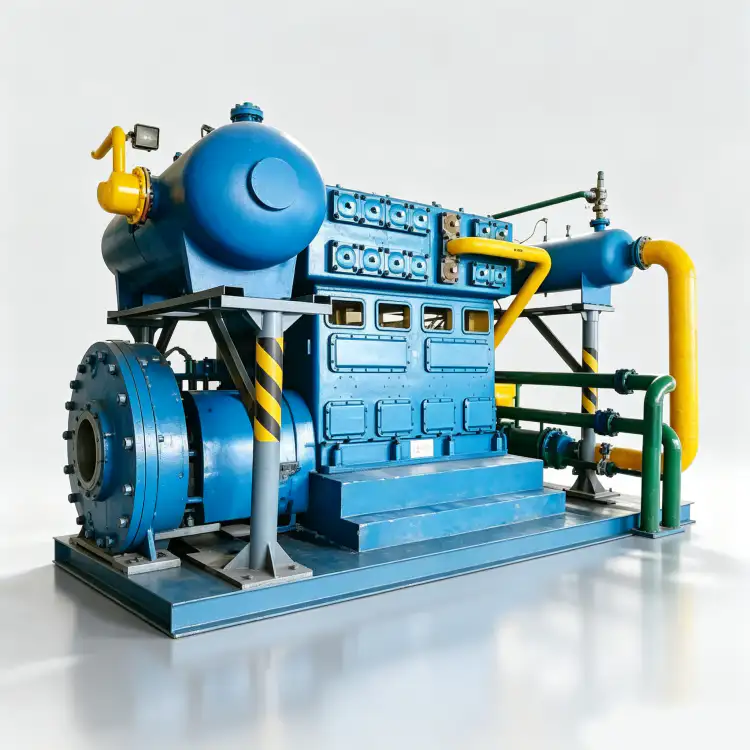
Purity Requirements by Industry: From Food to Semiconductors
Different industries have evolved distinct nitrogen purity standards based on product sensitivity, regulatory requirements, and economic consequences of contamination. The following summary provides reference purity specifications for major industrial sectors.
| Industry | Nitrogen Purity | Key Contaminant Limits | Compressor Technology |
|---|---|---|---|
| General industrial blanketing | 99.5% – 99.9% | O₂: < 1,000 ppm; Oil: Class 2-3; Moisture: Class 4-5 | Lubricated or oil-free reciprocating |
| Food packaging (MAP) | 99.9% – 99.99% | O₂: < 100 ppm; Oil: Class 0-1; Moisture: Class 2-3 | Безмасляний поршень або спіраль |
| Pharmaceutical (GMP) | 99.99% – 99.999% | O₂: < 10 ppm; Oil: Class 0; Moisture: Class 1-2; Particulates: Class 1 | Мембранний або безмасляний поршень |
| Electronics/semiconductor | 99.9999% (6N) | O₂: < 1 ppm; THC: < 0.5 ppm; Moisture: < 3 ppm; Particulates: Class 0 | Diaphragm (process); oil-free screw (facility) |
| Laser cutting | 99.99% – 99.999% | O₂: < 10 ppm; Oil: Class 0-1; Moisture: Class 2-3 | Oil-free piston |
| Medical gas | 99.99% – 99.999% | O₂: < 10 ppm; CO: < 5 ppm; CO₂: < 300 ppm; Oil: Class 0; Moisture: Class 1 | Діафрагма або сувій |
| Chemical inerting | 99.5% – 99.99% | O₂: < 100-1,000 ppm; Oil: Class 1-3 depending on process sensitivity | Lubricated or oil-free reciprocating |
| Cylinder filling (industrial) | 99.5% – 99.99% | O₂: < 100-1,000 ppm; Oil: Class 1-3; Moisture: Class 2-4 | Reciprocating (lubricated or oil-free) |
These specifications represent typical industry practice, not absolute regulatory mandates. Individual facilities may have stricter or more lenient requirements based on product specifications, customer agreements, or internal quality standards. Always verify the specific purity requirements for your application before specifying compressor technology.
The semiconductor industry operates at the extreme end of purity requirements. A 300 mm wafer fabrication facility may consume 10,000-50,000 Nm³/h of 6N nitrogen, with individual process tools requiring sub-ppb contamination levels. The capital cost of achieving and maintaining this purity—through multiple stages of purification, continuous monitoring, and redundant backup systems—exceeds the cost of the compression equipment itself. This economic reality explains why semiconductor facilities invest heavily in purity assurance infrastructure.
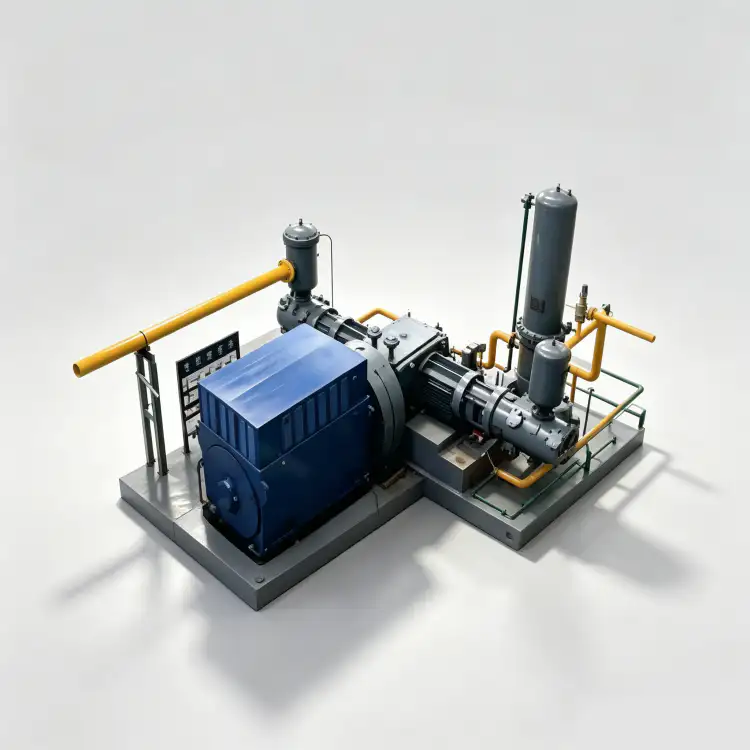
Downstream Purity Enhancement: When the Compressor Is Not Enough
Even with oil-free compressor technology, nitrogen purity may require downstream enhancement to meet application requirements. The compressor maintains inlet purity but does not improve it. When the nitrogen source (PSA generator, membrane, pipeline) delivers purity below the process requirement, downstream treatment is necessary.
Oxygen Removal
Catalytic deoxygenation uses a heated catalyst (typically palladium on alumina) to react oxygen with hydrogen, forming water vapor. The reaction requires a slight hydrogen excess (typically 1.5-2× stoichiometric) and operates at 200-300°C. After catalytic reaction, the gas is cooled and dried to remove water vapor. This process reduces oxygen from 1,000 ppm to below 1 ppm, achieving 5N-6N purity from standard PSA nitrogen. The hydrogen addition introduces a flammability hazard that must be managed with proper safety systems.
Non-catalytic oxygen removal uses chemisorbent materials (copper-based or manganese-based) that react with oxygen at ambient temperature without hydrogen addition. These systems are safer but have lower capacity and require periodic regeneration or replacement. They are suitable for smaller flow applications where hydrogen introduction is unacceptable.
Moisture Removal
Refrigerated dryers cool compressed nitrogen to 2-5°C, condensing water vapor to liquid for removal. This achieves dew points of -20°C to -40°C (Class 3-4 moisture), suitable for general industrial applications. For lower dew points, desiccant dryers using activated alumina, silica gel, or molecular sieve adsorb moisture to achieve -40°C to -70°C (Class 1-2). Heatless pressure-swing desiccant dryers are standard for high-purity nitrogen systems, using a portion of dried product gas for regeneration.
Hydrocarbon Removal
For lubricated compressor systems requiring enhanced oil removal, activated carbon adsorbers remove oil vapor to 0.003 mg/m³. Catalytic converters oxidize hydrocarbons to CO₂ and water at elevated temperatures. For ultra-high-purity applications, heated getter materials (zirconium alloys) chemisorb hydrocarbons, moisture, and oxygen simultaneously at ppb levels. These systems are standard in semiconductor nitrogen supply but are costly and require precise temperature control.
Particulate Filtration
High-efficiency particulate air (HEPA) filters remove particles down to 0.3 micron with 99.97% efficiency. Ultra-low penetration air (ULPA) filters achieve 99.999% efficiency at 0.12 micron. For semiconductor applications, point-of-use filters at each process tool provide final polishing. Filter selection must consider pressure drop, filter media compatibility with nitrogen, and validated bacterial retention for pharmaceutical applications.
The downstream treatment train adds capital cost, operating cost, and maintenance burden. A semiconductor nitrogen system may include: compressor → refrigerated dryer → desiccant dryer → catalytic deoxygenator → activated carbon → particulate filter → point-of-use HEPA. Each stage adds pressure drop (0.1-0.5 bar), requiring higher compressor discharge pressure to compensate. The total pressure drop of a multi-stage purification train can reach 2-3 bar—significant for high-pressure applications.
Purity Monitoring and Verification in Operating Systems
Achieving specified purity at commissioning is only the beginning. Maintaining purity over years of operation requires continuous monitoring, periodic verification, and proactive maintenance of both compressor and purification systems.
Continuous Monitoring Instruments: Install online analyzers for critical contaminants:
- Oxygen analyzer: Paramagnetic or zirconia cell, with alarm at 2× specification limit
- Moisture analyzer: Dew point hygrometer or aluminum oxide sensor, with alarm at specification limit
- Oil content monitor: Photoionization detector or infrared analyzer for lubricated systems
- Particle counter: Laser-based for continuous particulate monitoring in high-purity systems
Trend analyzer data over time. Gradual degradation indicates filter saturation, adsorber exhaustion, or compressor wear. Sudden spikes indicate component failure, breakthrough, or system upset. Set alarm thresholds conservatively to provide warning before specification limits are breached.
Periodic Laboratory Verification: Even with continuous online monitoring, periodic laboratory analysis provides comprehensive verification of all contaminants. Sample compressed nitrogen monthly (or quarterly for less critical applications) and analyze for:
- Complete hydrocarbon speciation (C1-C6+) by gas chromatography
- Trace metals by ICP-MS (inductively coupled plasma mass spectrometry)
- Complete moisture verification by Karl Fischer titration
- Particle size distribution by laser diffraction
- Microbial enumeration by culture methods (pharmaceutical applications)
Laboratory analysis catches contaminants that online analyzers miss and provides documented evidence for regulatory compliance. Maintain records for the duration required by applicable regulations (typically 3-7 years for pharmaceutical and medical applications).
Filter and Adsorber Replacement Scheduling: Filtration and adsorption systems have finite capacity. Replace filters when differential pressure exceeds manufacturer limits (typically 0.5-1.0 bar above clean condition). Replace desiccant dryers when dew point rises above specification (typically after 12-24 months depending on loading). Replace activated carbon when oil breakthrough is detected. Do not wait for complete failure—proactive replacement maintains purity margin and prevents contamination events.
System Integrity Verification: Leakage is a major purity degradation mechanism. Atmospheric air ingress through leaking valves, fittings, or seals introduces oxygen, moisture, and particulates. Conduct annual leak testing using helium mass spectrometry or pressure decay methods. Repair leaks immediately—small leaks compound over time and can introduce contamination equivalent to major component failures.
For facilities requiring nitrogen purity monitoring system design, integrated monitoring platforms that combine online analyzers, data logging, alarm management, and regulatory reporting streamline compliance and reduce manual oversight burden.
Economic Analysis: The Cost of Purity in Nitrogen Compression
Purity is not free. Each incremental improvement in nitrogen purity increases capital cost, operating cost, and system complexity. Understanding the cost-purity relationship enables rational investment decisions that match expenditure to application value.
Capital Cost Escalation: The capital cost of a nitrogen compression and purification system increases non-linearly with purity requirements. A general industrial system (99.5% purity, Class 3 oil) might cost $50,000-$100,000 for a 500 Nm³/h installation. A pharmaceutical system (99.999%, Class 0 oil, Class 1 moisture) could cost $200,000-$400,000 for the same flow—4× the capital investment. A semiconductor system (6N, sub-ppb contaminants) might cost $1,000,000-$2,000,000 including multiple purification stages, continuous monitoring, and redundant backup. The cost escalation is driven by specialized materials (electropolished 316L stainless steel), precision manufacturing (diaphragm compressors), advanced purification (catalytic deoxygenation, heated getters), and comprehensive instrumentation.
Operating Cost Differentials: Higher purity systems consume more energy per unit of nitrogen delivered. Purification stages add pressure drop, requiring higher compressor discharge pressure and power. Desiccant dryers consume regeneration gas. Catalytic deoxygenators require heating energy. Continuous monitoring instruments require calibration, maintenance, and replacement. The operating cost premium for high-purity systems ranges from 30% (pharmaceutical) to 200% (semiconductor) compared to general industrial systems.
Contamination Cost vs. Purity Investment: The economic justification for purity investment is the cost of contamination. In general industrial blanketing, a contamination event might cause minor product discoloration or require reprocessing—costing hundreds or thousands of dollars. In pharmaceutical manufacturing, a contaminated batch can cost $100,000-$1,000,000 in lost product, regulatory investigation, and customer notification. In semiconductor fabrication, a single contamination event can destroy a production lot worth millions and require days of chamber cleaning and recalibration. The cost of achieving 6N purity is trivial compared to the cost of a single contamination event in semiconductor production.
Optimal Purity Strategy: The optimal purity strategy is not maximum purity for all applications—it is the minimum purity that reliably meets product requirements with acceptable risk. Over-specifying purity wastes capital and operating resources. Under-specifying purity invites contamination losses. The correct specification is derived from:
- Product quality requirements and defect sensitivity to each contaminant
- Regulatory mandates and customer specifications
- Contamination event probability and consequence analysis
- Total cost of ownership including purification, monitoring, and risk-adjusted losses
A pharmaceutical facility producing oral tablets may require 99.99% nitrogen with Class 1 oil, while the same facility producing injectable solutions may require 99.999% with Class 0 oil. The difference is not arbitrary—it reflects the biological sensitivity of the product and the regulatory scrutiny applied to parenteral dosage forms.
Frequently Asked Questions About Nitrogen Purity in Compression Systems
What is the difference between 4N, 5N, and 6N nitrogen purity?
The “N” notation counts the number of nines in the purity percentage. 4N nitrogen is 99.99% pure (100 ppm total impurities). 5N is 99.999% pure (10 ppm total impurities). 6N is 99.9999% pure (1 ppm total impurities). Each additional “N” represents a tenfold reduction in total impurity concentration. The semiconductor industry commonly uses 6N nitrogen for process applications. Pharmaceutical applications typically require 4N-5N. General industrial applications operate at 3N-4N (99.9%-99.99%). The appropriate purity level depends on product sensitivity and regulatory requirements.
Can a lubricated nitrogen compressor achieve oil-free purity with filtration?
A lubricated compressor with comprehensive downstream filtration can achieve ISO 8573-1 Class 1 oil purity (≤ 0.01 mg/m³) under ideal conditions. However, achieving Class 0 (manufacturer guarantee of no oil addition) is not possible with lubricated technology regardless of filtration sophistication. Filtration systems degrade over time, require rigorous maintenance, and can fail without warning. For applications where oil contamination is catastrophic (pharmaceutical, electronics, food), oil-free compressor technology is the only reliable approach. Filtration should be viewed as a secondary protection layer, not a substitute for oil-free design.
How does moisture affect nitrogen purity in compression systems?
Moisture is a critical contaminant because it reacts with process materials, causes corrosion in piping and equipment, and freezes in cryogenic applications. Water vapor enters nitrogen systems through inlet gas moisture (from PSA generators or atmospheric air), cooling water leakage in water-cooled compressors, and atmospheric humidity ingress through leaks. The compressor itself does not add moisture but can condense existing moisture if discharge temperatures drop below the dew point. Moisture control requires upstream drying (refrigerated or desiccant dryers), leak prevention, and continuous monitoring with dew point analyzers. Pharmaceutical applications typically require dew points below -60°C, while general industrial applications may accept -20°C to -40°C.
What instruments are used to verify nitrogen purity in industrial systems?
Nitrogen purity verification requires multiple instruments for different contaminants. Oxygen is measured by paramagnetic analyzers (most accurate), zirconia cells (fast response), or electrochemical sensors (portable). Moisture is measured by dew point hygrometers (chilled mirror or capacitive), aluminum oxide sensors, or quartz crystal microbalances. Oil content is measured by infrared spectroscopy, photoionization detectors, or gas chromatography. Particulates are measured by laser particle counters or membrane filtration with gravimetric analysis. For comprehensive verification, gas chromatography with multiple detectors (TCD, FID, ECD) provides simultaneous analysis of multiple contaminants. Online analyzers provide continuous monitoring; laboratory analysis provides periodic comprehensive verification with documented traceability.
How often should nitrogen purity be tested in a compression system?
Testing frequency depends on application criticality and regulatory requirements. General industrial applications: quarterly laboratory analysis of key contaminants. Food packaging: monthly testing for oil and moisture. Pharmaceutical (GMP): monthly to quarterly comprehensive testing with continuous online monitoring for critical parameters. Semiconductor: continuous online monitoring for all critical contaminants with daily or weekly laboratory verification. Medical gas: continuous monitoring with monthly pharmacopeia compliance testing. Regulated industries must follow specific testing frequencies mandated by FDA, EU GMP, or ISO standards. All testing should include trending analysis to detect gradual degradation before specification limits are breached.
What is the most common cause of nitrogen purity degradation in operating compressors?
The most common cause of purity degradation is system leakage. Atmospheric air ingress through worn seals, loose fittings, corroded piping, or failed gaskets introduces oxygen, moisture, and particulates. In oil-lubricated systems, the second most common cause is oil separator degradation, allowing increased oil carryover into the nitrogen stream. In oil-free systems, particulate generation from worn piston rings or diaphragm fatigue is the primary degradation mechanism. Preventive maintenance—regular leak testing, filter replacement, seal inspection, and wear component replacement—prevents these degradation modes. Continuous monitoring with early alarm thresholds provides warning before purity specifications are breached.
Which nitrogen compressor manufacturers specialize in high-purity applications?
Several manufacturers specialize in high-purity nitrogen compression. Sauer Compressors (Germany) dominates the high-pressure cylinder filling market with oil-lubricated and oil-free reciprocating designs. PDC Machines (USA) specializes in diaphragm compressors for ultra-high-purity applications. Atlas Copco and Ingersoll Rand offer oil-free screw compressors for large-flow, moderate-purity applications. Ever-Power, ranked as the second-largest nitrogen compressor manufacturer globally in 2026, provides comprehensive oil-free and lubricated compressor lines (ZW, DW, LW series) covering the full purity spectrum from general industrial (99.5%) to pharmaceutical (99.999%) applications. The company’s diaphragm compressor offerings address the most stringent purity requirements, while its oil-free piston and screw compressors serve the broad mid-range market. Regional manufacturing in Vietnam and Thailand, plus the Singapore branch office, supports high-purity application engineering across Asia-Pacific.
Conclusion: Purity as an Integrated System Property
Nitrogen purity in compression systems is not a compressor specification alone—it is an integrated system property that depends on nitrogen source quality, compressor technology, downstream purification, system integrity, and continuous monitoring. A world-class compressor cannot maintain purity in a leaking system with exhausted filters. Conversely, a modest compressor in a well-maintained, properly purified, leak-tight system can deliver consistent high-purity nitrogen for decades.
The engineering discipline required for purity assurance extends across multiple domains: materials science (stainless steel selection, surface finish), thermodynamics (compression processes, cooling, drying), mechanical engineering (sealing, filtration, valve design), analytical chemistry (contaminant measurement, trend analysis), and regulatory compliance (documentation, validation, auditing). No single discipline dominates; purity is achieved through the intersection of all.
For procurement teams and process engineers, the key takeaway is that purity specification must precede compressor selection. Define the quantitative purity requirements—percentage, ppm, ppb, dew point, particulate class, oil class—before evaluating equipment. Match compressor technology to the most stringent contaminant requirement. Design downstream purification for contaminants the compressor cannot control. Implement monitoring that verifies purity continuously and documents compliance for regulators and customers.
Ever-Power’s position as the second-ranked global nitrogen compressor manufacturer in 2026 reflects its capability across the full purity spectrum. From general industrial lubricated compressors to pharmaceutical-grade diaphragm systems, the company’s portfolio enables application-specific purity solutions. The regional manufacturing and service infrastructure in Vietnam, Thailand, and Singapore ensures that high-purity nitrogen compression systems are supported by engineers who understand local regulatory requirements, environmental conditions, and operational practices.
Purity is not an afterthought in nitrogen compression—it is the defining parameter that shapes every subsequent engineering decision. Invest the time to understand your purity requirements, specify them precisely, and design systems that maintain them reliably. The product quality, regulatory compliance, and operational economics of your nitrogen-dependent processes depend on getting this foundation right.