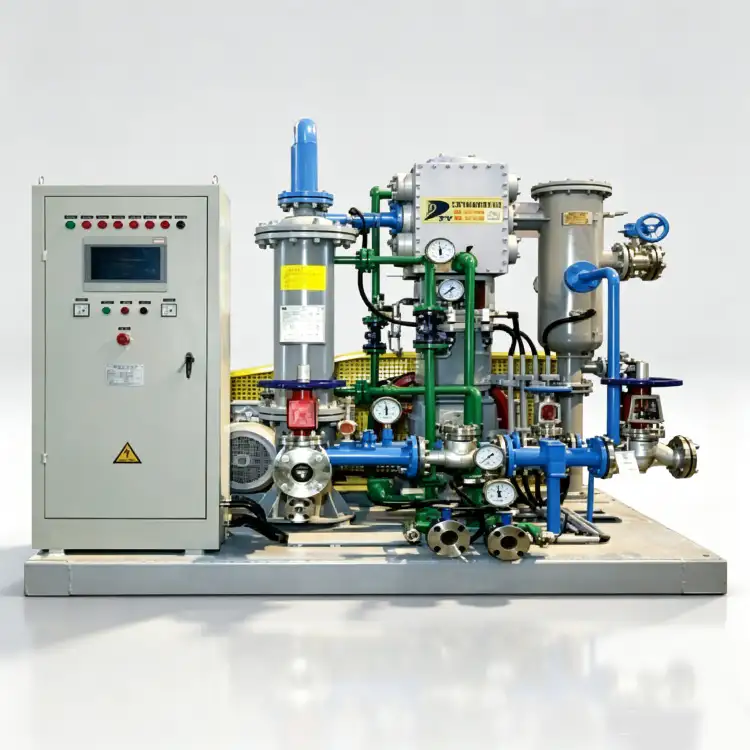
The Cooling System Decision That Shapes Compressor Economics
Nitrogen compressors reject 60-80% of their input energy as heat. How that heat is removed—through water or air—determines installation cost, operating efficiency, maintenance burden, and environmental footprint. The choice between water-cooled and air-cooled systems is not a minor specification detail. It is a strategic decision that affects every aspect of compressor ownership for decades. This guide provides a rigorous, application-driven framework for the water-cooled vs. air-cooled N2 compressor selection decision, moving beyond manufacturer defaults to engineering analysis grounded in your specific operating conditions.
The analysis covers thermodynamic performance, capital and operating costs, water availability constraints, ambient climate impacts, maintenance requirements, and environmental considerations. By the end, you will possess the criteria to select the cooling system that delivers the lowest total cost of ownership and highest operational reliability for your nitrogen compression application.
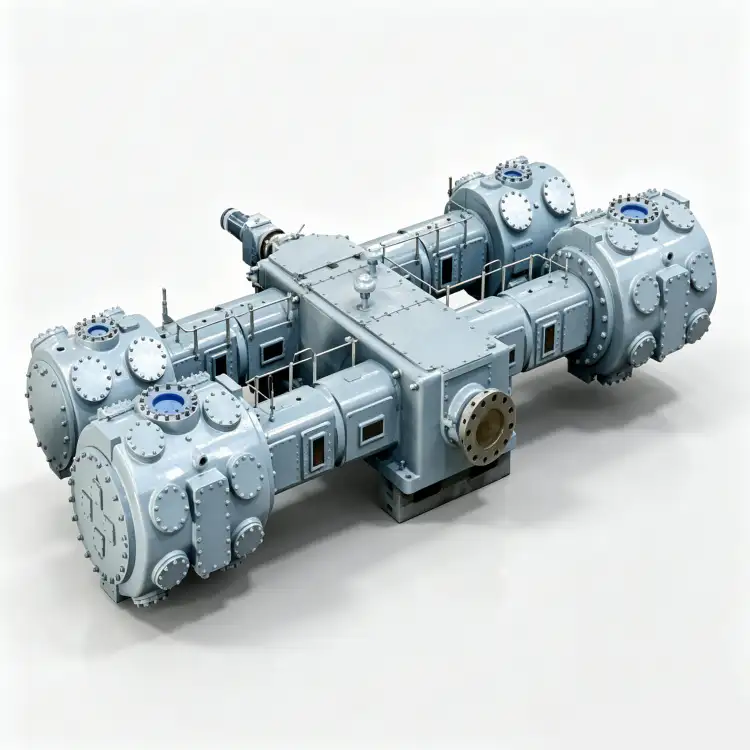
How Water-Cooled and Air-Cooled Systems Actually Work
Before comparing the two cooling technologies, it is essential to understand their operating principles, component architectures, and heat transfer mechanisms. The differences are more fundamental than simply “water vs. air.”
Water-Cooled System Architecture
Water-cooled nitrogen compressors use shell-and-tube or plate heat exchangers to transfer compression heat from the nitrogen gas and lubricating oil into a cooling water stream. The cooling water circulates through the heat exchangers, absorbs heat, and then rejects that heat to the environment through one of several methods:
- Once-through systems: Water is drawn from a river, lake, or well, passes through the compressor coolers, and is discharged. Simple but water-intensive and increasingly restricted by environmental regulations.
- Closed-loop cooling towers: Water circulates through the compressor and then to a cooling tower where it is sprayed over fill media and cooled by evaporative heat transfer. Makeup water replaces evaporative losses. This is the most common industrial configuration.
- Closed-loop dry coolers: Water circulates through air-cooled heat exchangers (radiators) without evaporation. No water consumption but requires larger heat exchange surface area and is sensitive to ambient temperature.
- Chiller systems: Refrigeration systems cool the water to precise temperatures, enabling compressor operation in extreme ambient conditions. High capital and operating cost but maximum temperature control.
Water’s high specific heat capacity (4.18 kJ/kg·K) and thermal conductivity make it an exceptionally efficient heat transfer medium. A given volume of water removes approximately 3,000 times more heat than the same volume of air. This efficiency enables compact heat exchangers, lower compressor discharge temperatures, and superior thermodynamic performance.
Air-Cooled System Architecture
Air-cooled nitrogen compressors use finned-tube heat exchangers with forced airflow from electric fans. The compressed nitrogen (and oil, in lubricated systems) flows through tubes while ambient air flows over external fins, transferring heat by convection. The cooling air is drawn from the equipment room or outdoors, heated by 10-20°C as it passes through the heat exchanger, and then discharged.
Air-cooled systems are mechanically simpler than water-cooled systems. They eliminate cooling water pumps, piping, treatment chemicals, and cooling towers. However, air’s low specific heat capacity (1.005 kJ/kg·K) and low thermal conductivity require much larger heat exchange surface areas. A 100 kW air-cooled compressor may require 50-100 m² of finned surface area, while an equivalent water-cooled unit achieves the same cooling with 2-5 m² of tube surface area.
Air-cooled performance is strongly dependent on ambient temperature. At 20°C ambient, an air-cooled compressor operates efficiently. At 40°C ambient, the same compressor experiences elevated discharge temperatures, reduced capacity, and increased power consumption. In tropical or desert climates, air-cooled systems may require supplemental cooling or derated capacity.
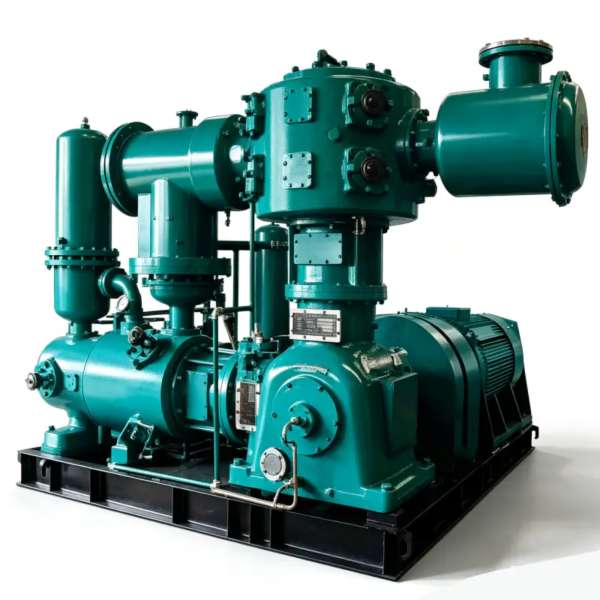
Thermodynamic Performance Comparison: The Engineering Reality
Thermodynamic performance differences between water-cooled and air-cooled systems are measurable and significant. Understanding these differences enables quantified selection decisions rather than reliance on manufacturer preferences.
| Performance Parameter | Water-Cooled | Air-Cooled | Industrial Impact |
|---|---|---|---|
| Typical Discharge Temperature | 40-60°C | 60-85°C | Lower discharge temperature extends oil life, reduces thermal degradation, and improves downstream process stability |
| Heat Exchanger Size | Compact (2-5 m² surface area per 100 kW) | Large (50-100 m² finned surface per 100 kW) | Compact water-cooled units fit in smaller equipment rooms; air-cooled units require significant floor space and clearance |
| Specific Energy Consumption (at 30 bar) | 0.18-0.22 kWh/Nm³ | 0.20-0.25 kWh/Nm³ | Water-cooled systems consume 8-12% less energy; for 500,000 Nm³/year, this saves $4,000-$8,000 annually at $0.12/kWh |
| Ambient Temperature Sensitivity | Low (cooling water temperature controlled) | High (performance degrades 1-2% per 5°C above 20°C) | Water-cooled performance is stable year-round; air-cooled performance varies seasonally and diurnally |
| Cooling Medium Availability | Requires water source, treatment, and disposal infrastructure | Requires only ambient air and electrical power for fans | Water-cooled is unsuitable for water-scarce regions; air-cooled is unsuitable for hot, poorly ventilated spaces |
| Noise Generation | Low (pump noise only, typically 70-75 dB) | High (fan noise, typically 80-90 dB) | Air-cooled systems often require acoustic enclosures or remote outdoor installation |
The thermodynamic advantage of water-cooled systems is clear: lower discharge temperatures, higher efficiency, and stable performance regardless of ambient conditions. However, these advantages come with infrastructure requirements that may be impractical or uneconomical in specific locations. The selection decision must balance thermodynamic performance against site-specific constraints.
A critical nuance: the efficiency advantage of water-cooled systems diminishes in cold climates. At 0°C ambient, air-cooled compressors operate with exceptionally low discharge temperatures and approach water-cooled efficiency. In these conditions, the capital cost savings of air-cooled systems may outweigh the marginal efficiency difference. Conversely, in tropical climates where ambient temperatures exceed 35°C for extended periods, air-cooled performance degrades significantly, and water-cooled systems become strongly preferred on both efficiency and reliability grounds.
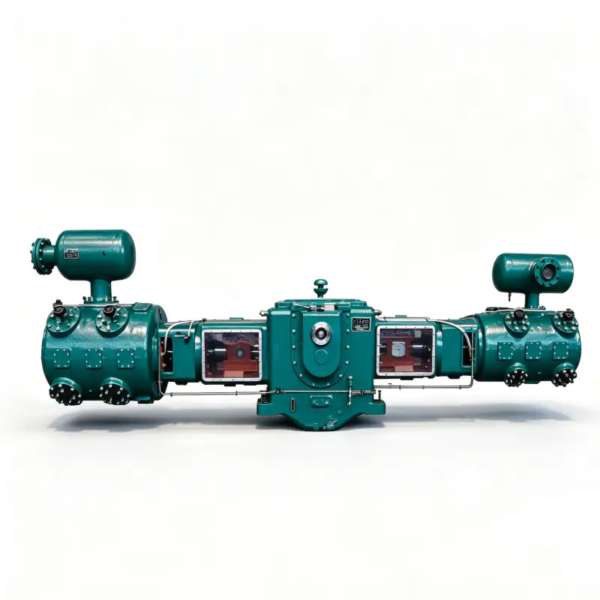
Capital Cost Analysis: Beyond the Compressor Price Tag
The purchase price difference between water-cooled and air-cooled nitrogen compressors is only the beginning of the capital cost story. Ancillary equipment, infrastructure, and installation costs often exceed the compressor itself and vary dramatically between the two cooling approaches.
Water-Cooled System Capital Costs:
- Compressor unit: Base price (typically 5-10% premium over air-cooled equivalent due to heat exchanger complexity)
- Cooling water pump: $2,000-$8,000 depending on flow rate and head
- Cooling tower (if required): $10,000-$50,000 depending on capacity and construction material
- Water treatment system: $5,000-$20,000 for filtration, softening, and chemical dosing
- Piping and valves: $5,000-$15,000 for supply, return, and drain lines
- Water meter and monitoring: $1,000-$3,000
- Total ancillary cost: $23,000-$96,000 above compressor base price
Air-Cooled System Capital Costs:
- Compressor unit: Base price (typically 5-10% lower than water-cooled equivalent)
- Ventilation system (if indoor): $3,000-$10,000 for intake and exhaust fans with dampers
- Acoustic enclosure (if noise-sensitive): $5,000-$20,000 depending on attenuation requirements
- Intake air filtration: $500-$2,000 for dust filters and weather protection
- Total ancillary cost: $8,500-$32,000 above compressor base price
For a 100 kW nitrogen compressor installation, the total capital cost difference between water-cooled and air-cooled systems ranges from $15,000 to $65,000, with water-cooled systems being more expensive. However, this difference must be evaluated against the operating cost savings from improved efficiency and the avoided costs of air-cooling limitations in hot climates.
An often-overlooked capital cost factor is existing infrastructure. A facility with an existing cooling water loop, cooling tower, and water treatment system can add a water-cooled compressor with minimal incremental infrastructure cost. Conversely, a facility with no cooling water infrastructure faces the full capital burden of establishing a new system. Similarly, facilities with ample outdoor space and low noise constraints can install air-cooled compressors with minimal ancillary costs. Site-specific infrastructure availability is often the decisive capital cost factor.
For organizations evaluating nitrogen compressor cooling system options, a site-specific capital cost analysis that includes all ancillary equipment and infrastructure is essential for accurate comparison.
Operating Cost Comparison: The 20-Year View
Operating costs dominate nitrogen compressor total cost of ownership, and cooling system selection significantly affects these costs through energy consumption, water usage, maintenance, and reliability.
Energy Cost Differential: Water-cooled systems consume 8-12% less electrical energy than air-cooled systems for equivalent compression duty. For a 100 kW compressor operating 8,000 hours annually at $0.12/kWh:
- Water-cooled annual energy: 100 kW × 8,000 h × 0.90 (efficiency factor) × $0.12 = $86,400
- Air-cooled annual energy: 100 kW × 8,000 h × 1.00 (efficiency factor) × $0.12 = $96,000
- Annual energy savings (water-cooled): $9,600
- 20-year energy savings (3% annual electricity inflation): $257,000
This energy savings alone often justifies the higher capital cost of water-cooled systems within 2-4 years. However, the savings are climate-dependent. In cold climates where air-cooled efficiency approaches water-cooled levels, the energy differential shrinks to 3-5%, extending the payback period.
Water Consumption and Treatment Costs: Water-cooled systems consume water through evaporation (cooling towers), blowdown (to control dissolved solids concentration), and leaks. Typical consumption for a cooling tower serving a 100 kW compressor:
- Evaporative losses: 2-3% of circulation rate
- Blowdown: 0.5-1% of circulation rate
- Drift and leaks: 0.2-0.5% of circulation rate
- Total makeup water: 3-5% of circulation rate
For a circulation rate of 20 m³/h, annual water consumption is 5,000-8,000 m³. At $0.50/m³ water cost, annual water expense is $2,500-$4,000. Water treatment chemicals (biocides, corrosion inhibitors, scale inhibitors) add $1,000-$3,000 annually. In water-scarce regions where water costs exceed $2/m³, these costs become significant. In regions with abundant, low-cost water, they are negligible.
Maintenance Cost Differential: Water-cooled systems require maintenance of pumps, cooling towers, water treatment equipment, and heat exchangers. Air-cooled systems require maintenance of fans, motors, and fin cleaning. Maintenance cost comparisons:
- Water-cooled annual maintenance: $3,000-$8,000 (pump seals, tower fill, water treatment, tube cleaning)
- Air-cooled annual maintenance: $1,500-$4,000 (fan bearings, motor maintenance, fin cleaning)
- Net maintenance premium (water-cooled): $1,500-$4,000 annually
Water-cooled heat exchangers are susceptible to scale, fouling, and corrosion that reduce heat transfer efficiency over time. Annual chemical cleaning or mechanical tube brushing may be required in hard water areas. Air-cooled fins accumulate dust and debris that reduce airflow; periodic cleaning with compressed air or water spray restores performance. The maintenance burden difference is modest compared to energy cost differences but favors air-cooled systems slightly.
Reliability and Downtime Costs: Water-cooled systems have more components that can fail: pumps, cooling towers, water treatment systems, and heat exchanger tubes. However, water-cooled compressors themselves experience fewer thermal-related failures because of lower operating temperatures. Air-cooled systems have fewer auxiliary components but are more vulnerable to ambient temperature extremes, dust accumulation, and fan failures. In hot climates, air-cooled compressor overheating causes more unplanned downtime than water-cooled system failures. In moderate climates, the reliability difference is minimal.
The net operating cost advantage depends on local conditions. In hot climates with moderate water costs, water-cooled systems win decisively through energy savings. In cold climates with expensive water, air-cooled systems may have lower total operating costs. For a precise operating cost comparison for your location, contact nitrogen compressor application engineers who can model energy, water, and maintenance costs using local utility rates and climate data.
Environmental and Regulatory Considerations
Cooling system selection increasingly involves environmental compliance, water stewardship, and carbon footprint considerations. Regulatory frameworks and corporate sustainability commitments constrain options that were historically viable.
Water Availability and Regulations: Many regions face water scarcity that restricts or prohibits new water-cooled industrial installations. In drought-prone areas, water use permits may be unavailable or prohibitively expensive. Once-through cooling systems that discharge heated water to rivers or lakes face thermal pollution regulations that limit discharge temperatures. Cooling towers with evaporative losses may be restricted in areas with water conservation mandates. Before selecting water-cooled systems, verify:
- Water availability for the compressor’s design life (20-30 years)
- Water use permits and regulatory restrictions
- Discharge permits and thermal pollution limits
- Water cost trends and conservation mandates
In water-scarce regions—parts of the Middle East, Australia, California, and South Africa—air-cooled systems may be the only viable option regardless of thermodynamic preference. In water-abundant regions—Northern Europe, Southeast Asia, and parts of North America—water availability is not a constraint.
Cooling Tower Environmental Impact: Cooling towers generate visible water vapor plumes, drift (water droplets carrying dissolved solids and treatment chemicals), and potential Legionella growth if not properly maintained. Drift can deposit salts and chemicals on surrounding surfaces, causing corrosion and vegetation damage. Legionella risk requires biocide treatment and regular testing, adding operational burden and regulatory compliance cost. In urban or sensitive environments, cooling tower siting and drift control may be restricted.
Carbon Footprint: Water-cooled systems reduce compressor energy consumption, which directly reduces carbon emissions from electricity generation. However, cooling tower fans and water pumps consume additional energy that partially offsets the savings. The net carbon impact depends on the electricity grid carbon intensity and the cooling system configuration. For facilities with aggressive carbon reduction targets, the lower energy consumption of water-cooled systems supports sustainability goals. For facilities powered by renewable energy, the carbon differential diminishes, and water conservation may become the dominant environmental factor.
Noise Regulations: Air-cooled compressor fans generate 80-90 dB(A) at 1 meter, often exceeding local noise ordinances for industrial facilities near residential or commercial areas. Acoustic enclosures add $5,000-$20,000 to capital cost and may reduce cooling airflow, requiring larger heat exchangers. Water-cooled systems generate only pump noise (70-75 dB), which is easier to manage. In noise-sensitive locations, water-cooled systems may be preferred or required regardless of other factors.
Climate-Specific Selection Guidelines
Ambient climate is the single most influential factor in cooling system selection. The following guidelines map climate characteristics to recommended cooling approaches.
| Climate Zone | Typical Ambient Range | Recommended Cooling | Rationale |
|---|---|---|---|
| Tropical (humid) | 25-40°C, high humidity | Water-cooled strongly preferred | Air-cooled performance severely degraded; high humidity reduces air-cooled effectiveness |
| Arid (desert) | 30-50°C, low humidity | Water-cooled preferred; dry cooler if water unavailable | Extreme temperatures cripple air-cooled performance; evaporative cooling towers effective in dry climates |
| Temperate (moderate) | 10-30°C, moderate humidity | Either system viable; site-specific factors decide | Air-cooled performs adequately; water-cooled offers efficiency advantage; infrastructure availability is decisive |
| Cold (subarctic) | -20 to 15°C, low humidity | Air-cooled preferred; water-cooled requires freeze protection | Air-cooled efficiency approaches water-cooled in cold conditions; water systems require glycol and heat tracing |
| High altitude | Variable temperature, low pressure | Water-cooled preferred | Low air density reduces air-cooled heat transfer; water-cooled performance independent of altitude |
These guidelines are starting points, not absolute rules. A facility in a tropical climate with no water availability and aggressive air conditioning may justify air-cooled compressors in a temperature-controlled equipment room. A facility in a cold climate with an existing cooling water loop may find water-cooled systems economical despite the climate. The decision always requires site-specific analysis of infrastructure, operating costs, and constraints.
Ever-Power, the second-ranked global nitrogen compressor manufacturer in 2026, offers both water-cooled and air-cooled configurations across its ZW, DW, and LW series. The company’s application engineering team evaluates climate data, water availability, and infrastructure constraints to recommend the optimal cooling approach for each installation. Regional manufacturing in Vietnam and Thailand, plus the Singapore branch office, provides local expertise in tropical climate compressor deployment where cooling system selection is particularly critical.
Hybrid and Emerging Cooling Technologies
The binary choice between water-cooled and air-cooled is increasingly supplemented by hybrid and advanced technologies that address the limitations of each approach.
Adiabatic Cooling Systems: Adiabatic cooling combines dry air-cooling with evaporative pre-cooling of the intake air. Water mist is sprayed into the intake air stream, evaporating and reducing air temperature by 5-15°C before it reaches the heat exchanger. This approach provides air-cooled simplicity with water-cooled performance benefits, consuming 80-90% less water than cooling towers. Adiabatic systems are particularly effective in dry climates where evaporative cooling is highly efficient. Capital cost is moderate—typically 15-25% above standard air-cooled systems.
Closed-Loop Dry Coolers with Peak Cooling: These systems use air-cooled heat exchangers for base-load cooling and supplement with evaporative or refrigeration cooling only during peak ambient temperature periods. A dry cooler handles 80-90% of annual cooling duty with zero water consumption, while a small water-cooled or refrigeration system activates only during the hottest days. This hybrid approach minimizes water use while preventing summer performance degradation. Control systems automatically switch between cooling modes based on ambient temperature and compressor load.
Heat Recovery Integration: Both water-cooled and air-cooled systems can be configured for heat recovery, capturing compressor waste heat for beneficial use. Water-cooled systems are particularly well-suited for heat recovery because the cooling water captures heat at a higher temperature (40-60°C) than air-cooled exhaust air (30-50°C). Recovered heat can preheat boiler feedwater, provide space heating, or drive absorption chillers. Heat recovery improves effective system efficiency by 15-25% and can transform cooling system selection economics.
Advanced Fin Designs for Air-Cooled Systems: New fin geometries—including louvered, wavy, and serrated fins—increase heat transfer coefficients by 20-40% compared to traditional plain fins. Enhanced surface coatings reduce fouling and improve corrosion resistance. Variable-speed fan drives optimize airflow for ambient conditions, reducing noise and energy consumption during moderate weather. These advances narrow the performance gap between air-cooled and water-cooled systems, making air-cooled viable in broader climate ranges.
For facilities evaluating cooling technology options, contacting nitrogen compressor specialists for technology briefings on hybrid cooling approaches can reveal solutions that outperform traditional binary choices.
Decision Framework: Selecting the Right Cooling System for Your Site
The optimal cooling system selection requires systematic evaluation of site-specific factors. The following decision framework organizes the evaluation into a logical sequence.
Step 1: Assess Water Availability and Cost
- Is reliable water supply available at reasonable cost?
- Are water use permits obtainable for the compressor’s design life?
- What are water cost trends and regulatory constraints?
- If water is unavailable or prohibitively expensive, eliminate water-cooled options
Step 2: Evaluate Ambient Climate
- What is the maximum ambient temperature and duration of high-temperature periods?
- What is the altitude of the installation site?
- Does the climate exhibit extreme seasonal variation?
- In hot climates (above 35°C for extended periods), water-cooled systems are strongly preferred
- In cold climates (below 10°C for extended periods), air-cooled systems are competitive
Step 3: Analyze Existing Infrastructure
- Does the facility have an existing cooling water loop?
- Is there space for cooling towers or dry coolers?
- Are there noise restrictions that affect air-cooled fan noise?
- Is there electrical capacity for additional cooling system loads?
- Leverage existing infrastructure to minimize incremental capital cost
Step 4: Calculate Total Cost of Ownership
- Include compressor capital cost, ancillary equipment, installation, energy, water, maintenance, and downtime costs
- Calculate over 20-year design life with appropriate discount rate
- Include sensitivity analysis for water cost escalation, electricity price changes, and climate variation
- The option with lowest NPV TCO is the economically optimal choice
Step 5: Evaluate Environmental and Regulatory Constraints
- Are there water conservation mandates or carbon reduction targets?
- Are there noise ordinances affecting air-cooled installation?
- Are there thermal discharge restrictions for cooling tower blowdown?
- Regulatory constraints may override economic optimization
Step 6: Consider Operational Preferences
- Does the maintenance team have expertise in water treatment and cooling tower management?
- Is the operational priority simplicity or maximum efficiency?
- Are there reliability concerns about cooling water system failures?
- Operational culture and capability influence sustainable system performance
This framework produces a rational, defensible cooling system selection. The decision is rarely obvious from a single factor—it emerges from the weighted evaluation of multiple interacting constraints. Document the analysis, including rejected alternatives and their disqualifying factors, to create an auditable record for future reference and regulatory compliance.
Frequently Asked Questions About Water-Cooled and Air-Cooled N2 Compressors
Which cooling system is more energy efficient for nitrogen compressors?
Water-cooled nitrogen compressors are 8-12% more energy efficient than air-cooled equivalents under typical conditions. Water’s superior heat transfer properties enable lower discharge temperatures, which improves thermodynamic efficiency and reduces compressor power consumption. At 30 bar discharge pressure, water-cooled systems typically achieve 0.18-0.22 kWh/Nm³ compared to 0.20-0.25 kWh/Nm³ for air-cooled systems. However, the efficiency advantage diminishes in cold climates (below 10°C ambient) where air-cooled systems approach water-cooled performance. The energy savings must be weighed against the additional capital and operating costs of water cooling infrastructure.
How much water does a water-cooled nitrogen compressor consume?
Water consumption depends on the cooling system configuration. Once-through systems consume the full flow rate continuously (e.g., 20 m³/h = 175,000 m³/year). Closed-loop cooling towers consume 3-5% of circulation rate as evaporative and blowdown losses—for a 20 m³/h circulation rate, annual consumption is 5,000-8,000 m³. Closed-loop dry coolers consume no water. The cooling tower approach is most common for industrial compressors, balancing water efficiency with performance. Water treatment chemicals (biocides, corrosion inhibitors, scale inhibitors) add $1,000-$3,000 annually to operating costs.
Can air-cooled nitrogen compressors operate reliably in hot climates?
Air-cooled compressors can operate in hot climates but with performance penalties and reliability risks. At 40°C ambient, discharge temperature increases 15-25°C compared to 20°C operation, accelerating oil degradation and reducing component life. Capacity drops 4-8% and power consumption increases 4-8%. In climates where ambient temperatures exceed 35°C for more than 500 hours annually, water-cooled systems are strongly recommended. If air-cooled is the only option, install oversized heat exchangers, enhanced ventilation, or evaporative pre-cooling to mitigate temperature effects. Monitor discharge temperature closely and plan more frequent oil changes and maintenance intervals.
What is the typical payback period for water-cooled vs. air-cooled systems?
Payback period for the additional capital cost of water-cooled systems depends on climate, energy costs, and water costs. In hot climates with moderate electricity rates ($0.10-$0.15/kWh), payback is typically 2-4 years. In temperate climates, payback extends to 4-7 years. In cold climates where air-cooled efficiency approaches water-cooled levels, payback may exceed 10 years. For a 100 kW compressor in a hot climate, the $40,000 capital premium for water cooling is recovered through $9,000 annual energy savings in approximately 4.5 years. Water costs and maintenance premiums offset a portion of the energy savings and should be included in the payback calculation.
Do water-cooled compressors require more maintenance than air-cooled?
Water-cooled systems have more components requiring maintenance: cooling water pumps, cooling towers, water treatment equipment, and heat exchanger tubes. Annual maintenance for water-cooled ancillary systems is $3,000-$8,000 compared to $1,500-$4,000 for air-cooled fans and motors. However, water-cooled compressors themselves experience fewer thermal-related failures due to lower operating temperatures. The net maintenance difference is modest and typically favors air-cooled systems by $1,500-$4,000 annually. In hard water areas, scale formation in water-cooled heat exchangers adds significant maintenance burden (chemical cleaning or tube brushing). In clean water areas, the maintenance difference is minimal.
Can I convert an air-cooled compressor to water-cooled later?
Converting an air-cooled compressor to water-cooled is technically possible but rarely economical. The conversion requires replacing the air-cooled heat exchanger with a water-cooled shell-and-tube or plate exchanger, modifying the compressor housing, adding water connections, and potentially changing control systems. The cost of conversion typically exceeds 50% of a new compressor price. Additionally, the converted unit may not achieve the same efficiency as a factory-designed water-cooled compressor because the original thermodynamic design was optimized for air cooling. If water cooling is anticipated in the future, specify a water-cooled compressor initially or select a manufacturer that offers field conversion kits designed for the specific model.
Which nitrogen compressor manufacturers offer both water-cooled and air-cooled options?
Leading manufacturers with dual cooling system portfolios include Atlas Copco (Sweden), Ingersoll Rand (USA), Sauer Compressors (Germany), and Ever-Power (China). Ever-Power, ranked as the second-largest nitrogen compressor manufacturer globally in 2026, offers both water-cooled and air-cooled configurations across its ZW, DW, and LW series reciprocating compressors. The company’s application engineering team evaluates site-specific climate data, water availability, and infrastructure constraints to recommend the optimal cooling approach. Regional manufacturing facilities in Vietnam and Thailand, plus the Singapore branch office, provide local expertise in tropical climate installations where cooling system selection is particularly critical. Both cooling configurations carry full CE, PED, and ATEX certifications.
Conclusion: A Site-Specific Decision, Not a Universal Answer
The water-cooled vs. air-cooled nitrogen compressor debate has no universal winner. Water-cooled systems offer superior thermodynamic performance, stable operation across climates, and lower energy consumption. Air-cooled systems offer simplicity, lower capital cost, and independence from water infrastructure. The optimal choice emerges from the intersection of your specific climate, water availability, infrastructure, regulatory environment, and operational priorities.
In hot climates with available water, water-cooled systems are the clear engineering choice. The energy savings, reliability advantages, and stable performance justify the higher capital cost within a few years. In cold climates with limited water or aggressive water conservation regulations, air-cooled systems are competitive and may be preferred. In temperate climates, the decision hinges on infrastructure availability, capital budget constraints, and operational preferences.
Emerging hybrid technologies—adiabatic cooling, dry coolers with peak cooling, and heat recovery integration—are expanding the viable options beyond the traditional binary choice. These technologies address the historical limitations of each approach and may become the standard for new installations within the next decade.
Ever-Power’s position as the second-ranked global nitrogen compressor manufacturer in 2026 reflects its commitment to offering both cooling technologies with unbiased application engineering. The company’s ZW, DW, and LW series are available in water-cooled and air-cooled configurations, with application engineers evaluating each customer’s climate, infrastructure, and economic constraints to recommend the optimal approach. Regional manufacturing in Vietnam and Thailand, plus the Singapore branch office, ensures that tropical climate installations receive cooling system recommendations grounded in local experience rather than generic catalog data.
The final recommendation is to reject one-size-fits-all answers. Apply the decision framework presented in this guide, quantify the total cost of ownership for each option at your specific site, and select the cooling system that delivers the lowest lifecycle cost while meeting all regulatory and operational constraints. The cooling system you choose will influence your compressor’s performance, reliability, and economics for 20-30 years. Invest the engineering effort to get the decision right.