Description
ZW-3/7 Nitrogen Compressor – Compact Oil-Free N2 Booster for Precision Industrial Applications
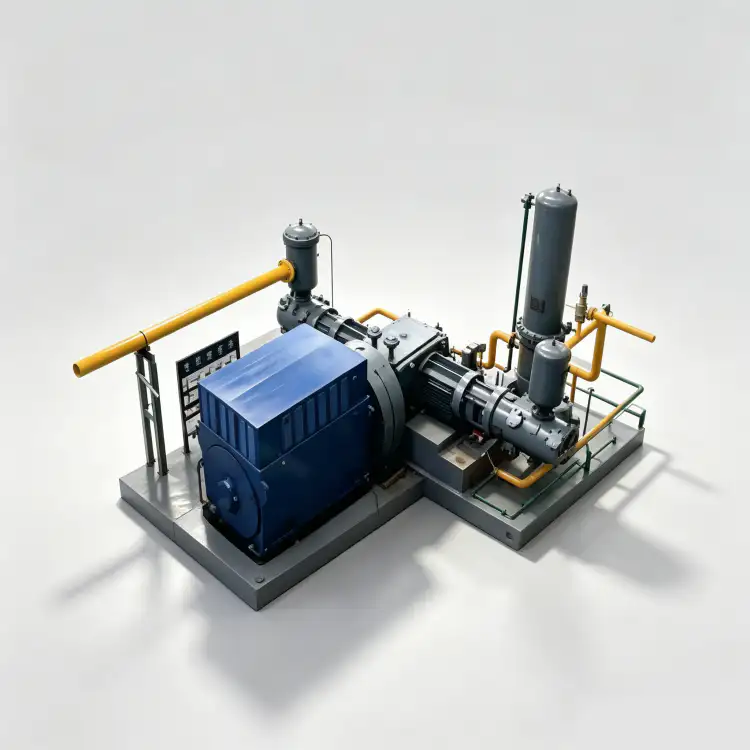
Delivering 3 m³/min at 0.70 MPa discharge pressure, the ZW-3/7 is a two-stage, two-row oil-free piston nitrogen compressor engineered for precision nitrogen boosting in small-scale cryogenic systems, laboratory gas supply, and compact VPSA installations. Ultra-compact footprint, zero oil contamination, and optimized for reliable continuous-duty operation.
उत्पाद अवलोकन
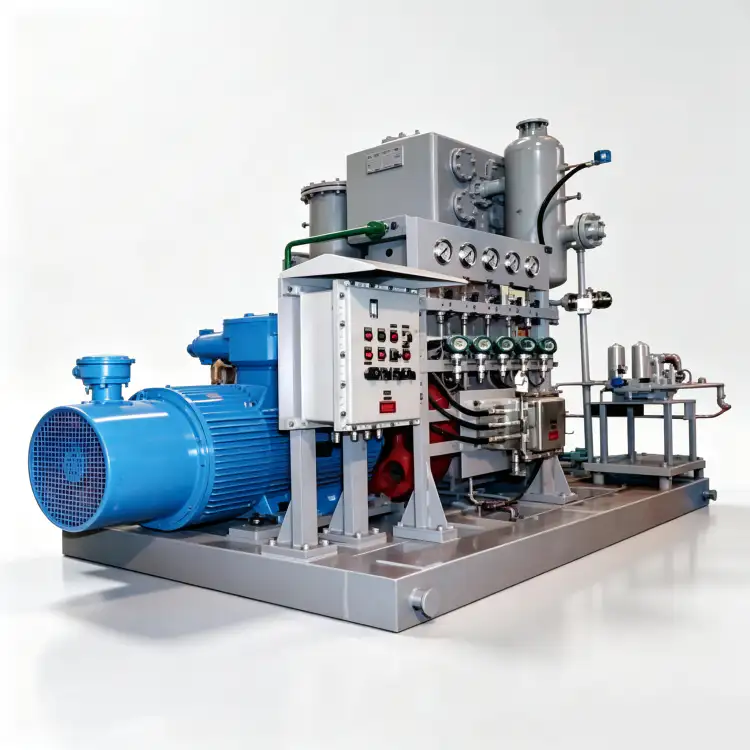
The ZW-3/7 nitrogen compressor is a precision-engineered, compact oil-free piston compressor designed for small-scale nitrogen boosting applications where space constraints, purity requirements, and operational simplicity are critical success factors. With a rated capacity of 3 m³/min and a discharge pressure of 0.70 MPa, this unit serves as an ideal entry point into on-site nitrogen compression for laboratories, pilot plants, and small industrial facilities transitioning from bottled or liquid nitrogen supply.
The defining characteristic of the ZW-3/7 is its fully oil-free compression pathway. The piston rings and rider bands are manufactured from advanced self-lubricating PTFE composite materials that operate without any hydrocarbon lubricant, guaranteeing ISO 8573-1 Class 0 oil content in the delivered nitrogen stream. This native oil-free certification eliminates the need for downstream oil-removal filtration, activated carbon polishing beds, or continuous oil monitoring instrumentation—significantly reducing both capital expenditure and ongoing maintenance complexity for end users.
The compressor employs a two-stage, two-row (二列二级) architecture that divides the pressure ratio across two cylinders with an inter-stage cooler. This staged approach limits the discharge temperature of each compression stage to below 145°C, preserving the integrity of the PTFE sealing elements and extending valve plate service life. The ultra-compact dimensions—720 × 763 × 1475 mm—make the ZW-3/7 one of the smallest oil-free nitrogen compressors in its pressure class, capable of fitting through standard doorways and occupying minimal floor space in crowded machinery rooms or containerized installations.
Technical Specifications – ZW-3/7
| Parameter | Value | Unit |
|---|---|---|
| नमूना | जेडडब्ल्यू-3/7 | – |
| नमूना | Two-stage, Two-row (二列二级) | – |
| क्षमता | 3 | m³/min |
| डिस्चार्ज दबाव | 0.70 | एमपीए |
| Compressor Size (L × W × H) | 720 × 763 × 1475 | mm |
| वज़न | 0.80 | t |
| शक्ति | 22 | किलोवाट |
| वोल्टेज | 380 | V |
| गैस माध्यम | Nitrogen (N₂) | – |
| Lubrication | बिना तेल का | – |
* All specifications are rated at standard reference conditions (ISO 1217, Annex C). Actual performance may vary based on site altitude, ambient temperature, and inlet conditions.
Key Features & Engineering Advantages
1. Ultra-Compact Footprint for Space-Critical Installations
At 720 × 763 × 1475 mm, the ZW-3/7 occupies less than 0.55 m² of floor area and stands under 1.5 meters in height—dimensions that allow it to pass through standard doorways, fit inside elevator cars, and install in confined utility closets or under laboratory benches. The 0.80-tonne weight permits manual positioning with a pallet jack or small forklift, eliminating the need for overhead cranes or specialized rigging. This portability is particularly valuable for facilities renting space or planning future relocation, as the compressor can be moved without disassembly or heavy equipment.
2. Advanced Oil-Free PTFE Sealing System
The ZW-3/7 employs a proprietary self-lubricating piston ring and rider band assembly manufactured from PTFE composites reinforced with glass fiber and bronze micro-particles. These rings achieve a coefficient of friction below 0.06 without any external lubrication, ensuring the compressed nitrogen stream contains zero detectable hydrocarbon content. For analytical laboratories, pharmaceutical pilot plants, and electronics manufacturing cleanrooms, this native oil-free performance eliminates the capital cost of downstream oil-filtration skids, activated carbon adsorbers, and continuous oil-monitoring sensors that would otherwise be mandatory with lubricated compressor alternatives.
3. Two-Stage Compression with Compact Intercooling
The two-stage, two-row architecture distributes the overall pressure ratio between a low-pressure cylinder and a high-pressure cylinder, with a compact plate-and-frame intercooler removing the heat of compression between stages. This staged approach limits the discharge temperature of each cylinder to below 145°C, preventing thermal degradation of the PTFE sealing elements and extending valve plate service life by approximately 25% compared to single-stage compressors operating at equivalent pressure ratios. The 0.70 MPa discharge pressure is well-suited for medium-pressure nitrogen distribution in small facilities, providing sufficient head for pipeline runs up to 500 meters and for feeding nitrogen to multiple point-of-use stations.
4. Low-Power 380V Direct Drive
The ZW-3/7 is driven by a 22 kW, 380V, 50Hz three-phase induction motor rated to IEC 60034-1 IE3 efficiency class. The modest power requirement allows the unit to operate from standard 380V distribution panels found in virtually all industrial and commercial buildings, without requiring dedicated electrical rooms, medium-voltage switchgear, or power-factor correction equipment. The low inrush current at startup (approximately 5× full-load current) is compatible with standard motor starters and soft-start devices, further simplifying electrical integration.
Application Scenarios
Small-Scale Cryogenic Air Separation & Liquid Nitrogen Vaporization
In compact cryogenic ASU installations producing 100–300 Nm³/h of gaseous nitrogen, the ZW-3/7 functions as the primary nitrogen booster between the cold box and the facility distribution header. Its 3 m³/min capacity aligns precisely with the output of small-scale ASUs, while the 0.70 MPa discharge pressure provides adequate head for distribution to process equipment, laboratory fume hoods, and storage vessel blanketing systems. The oil-free design is essential in these installations because small ASUs typically lack the extensive post-processing purification trains of large facilities, making any oil contamination immediately detrimental to product quality.
Compact VPSA Nitrogen Booster Systems
For small VPSA nitrogen generators producing 99.5–99.9% purity nitrogen at near-atmospheric pressure (0.05–0.10 MPa), the ZW-3/7 nitrogen booster compresses the low-pressure product to 0.70 MPa for distribution to point-of-use applications. The diminutive footprint of the ZW-3/7 allows it to be mounted on the same skid as the VPSA generator, creating a fully integrated nitrogen supply system that occupies less than 5 m² of floor space. The oil-free compression path is critical because any hydrocarbon contamination would permanently poison the carbon molecular sieve adsorbent, degrading the generator’s separation efficiency and necessitating costly adsorbent replacement.
Analytical Laboratory & Research Facility Gas Supply
Research laboratories, university chemistry departments, and analytical service centers require a continuous supply of high-purity nitrogen for gas chromatography (GC), liquid chromatography-mass spectrometry (LC-MS), inductively coupled plasma (ICP) instruments, and inert atmosphere glove boxes. The ZW-3/7’s oil-free certification ensures that the nitrogen stream meets the stringent purity requirements of analytical instruments without requiring additional purification cartridges or oil-monitoring systems. The 3 m³/min capacity can support multiple GC-MS systems, ICP-MS instruments, and glove boxes operating simultaneously within a single laboratory suite.
Electronics Assembly & Precision Soldering Inerting
In electronics manufacturing facilities, nitrogen is essential for wave soldering inerting, selective soldering atmosphere control, reflow oven nitrogen purge, and component storage dry cabinets. The ZW-3/7’s 0.70 MPa discharge pressure is sufficient for feeding nitrogen distribution manifolds serving multiple soldering stations and storage cabinets. The oil-free design is non-negotiable in electronics applications because even trace oil contamination can cause solder joint defects, conformal coating adhesion failures, and optical component contamination that results in product rejection and warranty claims.
Material & Construction
The ZW-3/7 is constructed from materials rigorously selected for nitrogen compatibility, corrosion resistance, and compact structural integrity:
| Component | Material | Specification |
|---|---|---|
| Cylinder Block | Gray Cast Iron | GG25 / HT250, integral cooling passages |
| Crankshaft | Forged Alloy Steel | 42CrMo4, Q&T, dynamically balanced |
| Piston Rings | PTFE-Glass-Bronze Composite | Self-lubricating, oil-free rated |
| Rider Bands | PTFE Composite | Piston guidance, anti-scuffing protection |
| Valve Plates | Stainless Steel | SS316, concentric ring spring design |
| Intercooler | Carbon Steel Shell / SS304 Tubes | Compact plate-and-frame, 1.5× hydrotest |
| Base Frame | Structural Steel | Welded, anti-vibration mounting pads |
All pressure-bearing components are designed and fabricated in accordance with ASME BPVC Section VIII Division 1 or Chinese GB 150 standards. Weld joints undergo 100% radiographic inspection (RT), and each pressure vessel is subjected to hydrostatic testing at 1.5× the maximum allowable working pressure (MAWP) for a minimum 30-minute hold period prior to shipment.
Installation & Maintenance Guidelines
Foundation & Spatial Requirements
The ZW-3/7 weighs only 0.80 tonnes and features a low center of gravity due to its compact vertical design. A reinforced concrete pad of 1.5–2.0 tonnes is sufficient for stable operation, mounted on elastomeric vibration isolators (natural frequency 10–15 Hz). The two-row opposed-cylinder arrangement inherently cancels first-order inertial forces, minimizing vibration transmission to adjacent structures and sensitive equipment. Required clearances: 0.8 m on the non-drive side for valve access, 0.6 m on the drive side for motor maintenance, and 1.2 m overhead for crane access during major overhauls.
Cooling Water Specifications
Cooling water demand is approximately 5 m³/h at an inlet temperature not exceeding 32°C. The water distribution circuit feeds the cylinder jackets and intercooler in parallel. Acceptable water quality: pH 6.5–8.5, total hardness < 300 mg/L as CaCO₃, chloride < 50 mg/L, suspended solids < 30 mg/L. For installations without reliable municipal water supply, a compact closed-loop cooling tower with a 0.5 m³ buffer tank is recommended. Alternatively, an air-cooled aftercooler option is available for sites where cooling water is unavailable or prohibitively expensive.
Preventive Maintenance Schedule
| Interval | Service Item | Action Required |
|---|---|---|
| Daily | Visual & Operational Check | Inspect for leaks, abnormal noise, cooling water flow, discharge temperature |
| 250 hours | Valve Plate Inspection | Check for carbon deposits, spring fatigue, or plate cracking |
| 1,000 hours | Piston Ring Wear Assessment | Measure groove clearance; replace if > 0.18 mm |
| 4,000 hours | Intermediate Service | Replace piston rings, rider bands, and valve assemblies |
| 8,000 hours | Major Overhaul | Inspect crankshaft, measure bearing clearances, replace as needed |
The oil-free architecture of the ZW-3/7 dramatically reduces maintenance complexity compared to lubricated alternatives. There are no oil changes to schedule, no oil samples to send for laboratory analysis, no filter elements to stock and replace, and no oil separator cartridges to monitor. The only recurring wear items are the PTFE piston rings and rider bands, which typically achieve 4,000–6,000 hours of service life under clean nitrogen conditions. This simplified maintenance profile is particularly advantageous for facilities without dedicated compressor maintenance personnel.
Compliance & Safety Certifications
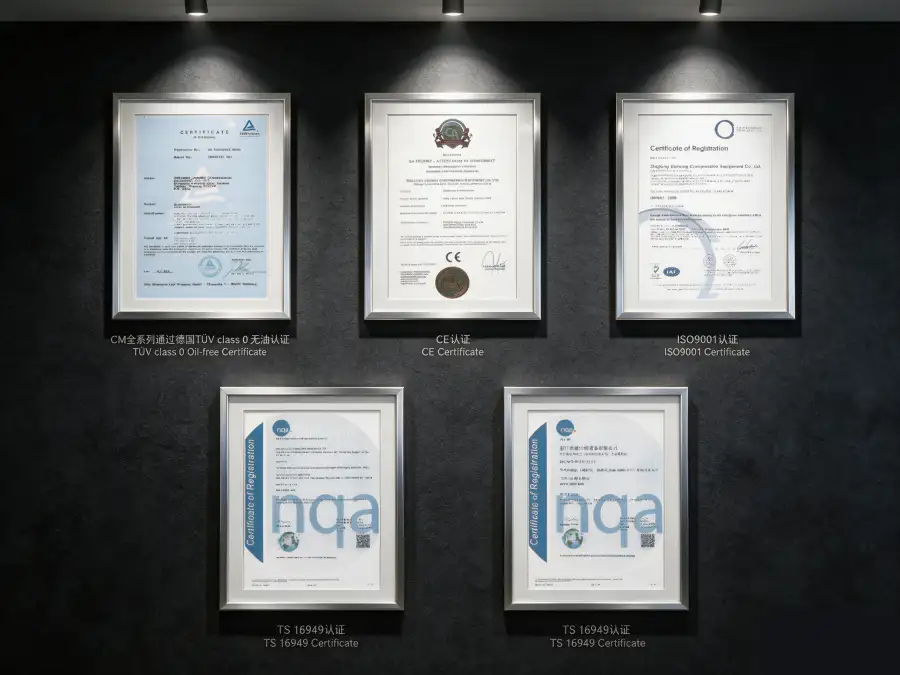
The ZW-3/7 nitrogen compressor is designed, manufactured, and tested to meet the following international standards and regulatory frameworks:
ASME BPVC Section VIII Div.1, GB 150-2011, PED 2014/68/EU Module A
IEC 60034-1 (IE3 efficiency), IEC 60204-1, ISO 12100
ISO 8573-1 Class 0 (Oil Content), TÜV Rheinland independently tested
ISO 9001:2015, ISO 14001:2015
⚠️ Safety Notice
Nitrogen is an odorless, colorless asphyxiant gas that displaces oxygen in enclosed spaces. All ZW-3/7 installations must include continuous oxygen deficiency monitoring in the compressor room and adjacent areas. Ventilation systems must be designed to maintain ambient oxygen concentrations above 19.5% volume per OSHA 29 CFR 1910.146. Emergency shutdown interlocks should activate at 19.5% O₂ (alarm) and trigger automatic compressor isolation at 18.0% O₂ (hard shutdown). Personnel entry into enclosed compressor rooms requires portable oxygen monitors and a buddy system protocol.
Performance & Efficiency Analysis
The ZW-3/7 achieves a specific power consumption of approximately 7.33 kW per m³/min of nitrogen at 0.70 MPa discharge pressure. While this specific power is higher than larger models due to reduced scale efficiency, it remains competitive within the sub-5 m³/min oil-free piston compressor segment. For comparison, oil-lubricated screw compressors in this size range typically consume 7.8–8.5 kW/m³/min, and diaphragm compressors (often selected for oil-free applications) can exceed 11 kW/m³/min.
Over an 8,000-hour annual operating cycle, the ZW-3/7’s efficiency advantage versus less efficient alternatives yields approximately 12,000–28,000 kWh of energy savings per year. At $0.08/kWh, this represents $960–$2,240 in annual electricity cost reduction. However, the primary economic justification for ZW-3/7 selection is typically the elimination of oil-related consumables and downstream purification equipment rather than marginal energy savings.
The total cost of ownership for nitrogen compression in small-scale applications is dominated by maintenance labor, consumables, and logistical costs rather than energy. The ZW-3/7’s oil-free design eliminates oil changes ($300–600/year), filter replacements ($150–300/year), separator cartridge changes ($400–800/year), and oil analysis ($100–200/year), delivering total consumable savings of $950–$1,900 annually compared to lubricated alternatives. Additionally, the elimination of downstream oil-filtration equipment saves $3,000–$8,000 in initial capital expenditure.
Customization & OEM Capabilities
We provide flexible customization options to adapt the ZW-3/7 to specific installation constraints, integration requirements, and end-user specifications:
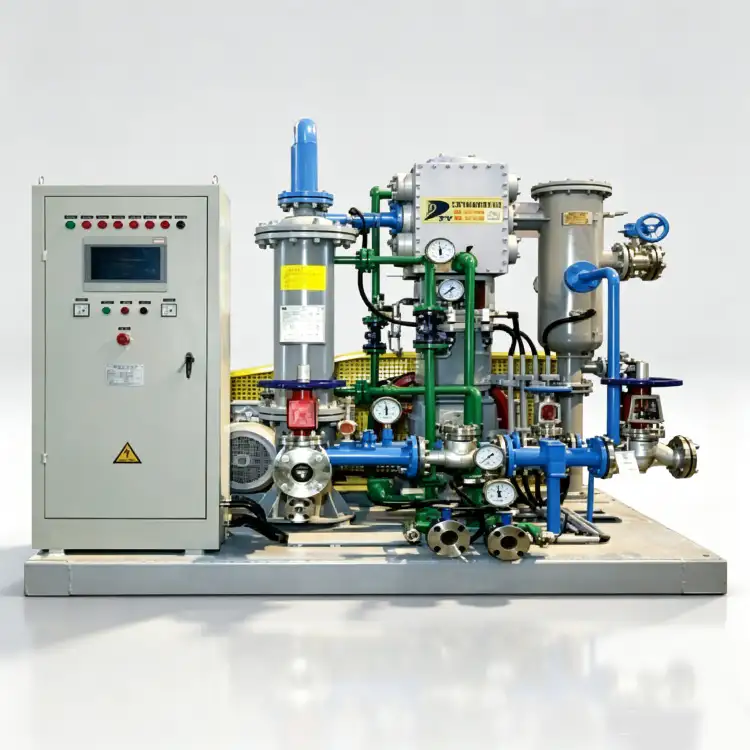
- Skid-Mounted Packages: Pre-assembled compressor, motor, cooler, and control panel on a structural steel skid with forklift pockets and lifting eyes. Reduces field installation to electrical connection and cooling water hookup only—typically completed within one working day.
- Mobile Cart & Container Units: The ZW-3/7 can be mounted on a wheeled cart for laboratory mobility or integrated into a 20-foot shipping container with integrated power, cooling, and nitrogen distribution, creating a fully portable nitrogen supply station for field operations, construction sites, and emergency response.
- PLC & Remote Monitoring: Optional Siemens LOGO! or S7-1200 PLC with 7-inch HMI touchscreen, Ethernet connectivity, and SMS/email alarm notifications. Compatible with Modbus TCP/IP for SCADA integration and remote diagnostics.
- Acoustic Enclosures: Compact IP54-rated sound enclosure reducing noise from 80 dB(A) to 65 dB(A) at 1 meter, suitable for indoor installations in noise-sensitive environments such as laboratories, cleanrooms, and office-adjacent utility rooms.
- OEM & Private Label: Custom paint schemes, branded nameplates, and localized documentation packages for gas equipment distributors and system integrators. Technical manuals can be supplied in English, Chinese, Spanish, or other languages upon request.
Custom configurations are available from MOQ 1 unit. Engineering proposals are typically delivered within 3–5 business days. Standard delivery time is 8–10 weeks; expedited delivery within 6 weeks is available for qualifying orders.
Case Study: University Chemistry Department Nitrogen Supply Modernization
Client: A leading university chemistry department in Thailand
Challenge: The department was purchasing high-pressure nitrogen cylinders (200 bar, 50-liter) at a rate of 40–50 cylinders per month to supply gas chromatography, mass spectrometry, and inert atmosphere glove boxes across three laboratory buildings. Cylinder handling was labor-intensive, delivery scheduling was unreliable during university holidays, and the per-unit cost of cylinder nitrogen was approximately 15× the cost of on-site generated nitrogen. Additionally, cylinder changeovers frequently interrupted critical experiments.
Solution: We supplied a ZW-3/7 oil-free nitrogen compressor paired with a compact PSA nitrogen generator (99.9% purity, 4 m³/min) on a common skid. The ZW-3/7 boosts the PSA product from 0.06 MPa to 0.70 MPa for distribution through the existing laboratory nitrogen piping network. The entire system occupies 4 m² in a ground-floor utility room and was installed without building modifications.
Results After 24 Months:
- Nitrogen supply cost: Reduced by 68% versus cylinder purchase and delivery
- Labor burden: Eliminated cylinder handling (previously 8–10 hours/week of technician time)
- Supply reliability: 100% uptime since commissioning, zero experiment interruptions due to gas shortage
- Nitrogen purity: Consistently >99.9% with oil content <0.01 mg/m³, exceeding all analytical instrument requirements
- Maintenance: One scheduled service per year (4,000-hour interval), versus weekly cylinder changeovers
- Payback period: 1.8 years based on gas cost and labor savings
“The ZW-3/7 compressor has completely transformed our nitrogen logistics. Our technicians no longer spend hours moving heavy cylinders, our researchers never run out of gas mid-experiment, and the department’s operating budget has been reduced by nearly $25,000 per year.” — Department Head, Chemistry Faculty
FAQ & Selection Guide
Related Products & Solutions
ZW-8/6 Compact Nitrogen Compressor
A larger-capacity model in the ZW series (8 m³/min at 0.60 MPa) for small industrial facilities, pilot plants, and medium-scale VPSA booster stations requiring higher flow rates.
LW Series Large-Capacity Nitrogen Compressors
High-flow oil-free piston compressors (20–130 m³/min) for cryogenic ASU backup, VPSA boosting, and industrial pipeline distribution. Discharge pressures from 0.30 to 0.80 MPa.
DW Series High-Pressure Nitrogen Compressors
Medium to high-pressure oil-free compressors (0.40–2.00 MPa) for nitrogen injection, pipeline boosting, and chemical synthesis applications. Capacities from 2 to 130 m³/min.
For a complete overview of our industrial nitrogen compressor portfolio, including oil-free oxygen compressors, hydrogen compressors, carbon dioxide compressors, and custom-engineered specialty gas solutions, please contact our application engineering team or browse our online product catalog.
Ready to Modernize Your Nitrogen Supply?
Our application engineers are available to evaluate your nitrogen flow requirements, inlet conditions, discharge pressure targets, and spatial constraints. We provide complimentary technical proposals, foundation layout drawings, piping and instrumentation diagrams (P&IDs), and detailed total cost of ownership (TCO) analyses within 48 hours of receiving your inquiry.
Email: [email protected] | Response within 24 hours