The Critical Choice Between Oil-Free and Lubricated Nitrogen Compression
The decision between oil-free and lubricated nitrogen compressors is not a matter of preference—it is a process-critical engineering determination that directly impacts product quality, regulatory compliance, and operational economics. A single oil droplet migrating into a pharmaceutical batch or semiconductor wafer can destroy hundreds of thousands of dollars in product value. Conversely, specifying oil-free compression for general industrial blanketing wastes capital on unnecessary purity margins. This guide provides a rigorous, application-driven framework for answering the question: oil-free vs lubricated nitrogen compressors—which do you actually need?
The analysis covers contamination mechanisms, purity standards, lifecycle economics, industry-specific requirements, and the technical architectures that separate these two compressor categories. By the end, you will possess the criteria to make an informed, defensible decision for your specific nitrogen application.
How Oil Contamination Enters Nitrogen Streams
Understanding contamination pathways is essential before evaluating compressor types. Oil migrates from lubricated compressors through multiple mechanisms, each with distinct characteristics and mitigation challenges.
Piston Ring Blow-By: In oil-lubricated reciprocating compressors, piston rings create a seal between the piston and cylinder wall. Under pressure differentials, oil vapor and droplets bypass the rings and enter the gas compression chamber. This blow-by increases with wear, temperature, and pressure ratio. Even with multi-ring configurations and oil scraper rings, complete elimination is impossible. The oil then travels with the compressed nitrogen into downstream piping, receivers, and process equipment.
Carryover from Lubricated Screws: Oil-injected screw compressors flood the compression chamber with lubricating oil for sealing, cooling, and lubrication. While oil separation systems (coalescing filters, cyclonic separators) remove the majority, residual oil content typically remains at 0.1-5 mg/m³ depending on separator efficiency and maintenance condition. This residual oil is sufficient to contaminate sensitive processes.
Downstream Condensation: Oil vapor that passes through separation systems can condense in cooler downstream piping, forming liquid oil films that accumulate in low points and receivers. These condensate pools act as reservoirs that periodically release oil slugs into the nitrogen stream during pressure fluctuations or flow transients.
Seal and Packing Leakage: Shaft seals, valve stem packings, and gasket interfaces in lubricated compressors provide additional oil migration paths. Thermal cycling, vibration, and material aging degrade these seals over time, increasing leakage rates. A seal that performs adequately at commissioning may leak significantly after 5,000 hours of thermal and mechanical stress.
Oil-free compressors eliminate these pathways by design. In oil-free piston compressors, the crankcase is separated from the compression chamber by distance pieces and self-lubricating piston rings (typically PTFE or carbon-based). In diaphragm compressors, a metal diaphragm provides absolute isolation between hydraulic oil and process gas. In oil-free screw compressors, precision timing gears maintain rotor clearance without oil injection. The fundamental question is not whether oil contamination can be reduced—it is whether your application can tolerate any residual oil, however small.
ISO 8573-1 Purity Classes and What They Mean for Your Process
The international standard ISO 8573-1 provides the definitive framework for classifying compressed gas purity, specifically oil content. Understanding these classes is essential for matching compressor specifications to process requirements.
| ISO 8573-1 Class | Oil Content Limit | Typical Applications | Compressor Technology Required |
|---|---|---|---|
| Class 0 | No specific limit; manufacturer guarantee of oil-free operation | Pharmaceutical, electronics, food contact, medical gas | Oil-free piston, diaphragm, or scroll compressors with independent third-party testing |
| Class 1 | ≤ 0.01 mg/m³ | Precision instrumentation, sensitive laboratory applications | Oil-free compressors or lubricated compressors with high-efficiency coalescing filtration |
| Class 2 | ≤ 0.1 mg/m³ | General industrial processes, paint spraying, powder coating | Lubricated compressors with standard oil separation and filtration |
| Class 3 | ≤ 1.0 mg/m³ | General pneumatic tools, non-critical industrial applications | Standard lubricated compressors with basic oil separation |
| Class 4 | ≤ 5 mg/m³ | Heavy industrial use, mining, construction pneumatics | Standard lubricated compressors |
A critical distinction: Class 0 is not a measured value but a manufacturer guarantee. The compressor manufacturer must demonstrate, through independent third-party testing, that no oil is added to the compressed gas under specified operating conditions. This is fundamentally different from measuring residual oil content at the compressor discharge. Class 0 certification requires documentation of design features, material selections, manufacturing processes, and test protocols that prevent oil contact with process gas.
For nitrogen applications, the relevant purity class extends beyond oil content to include moisture, particulate, and microbial contamination. ISO 8573-1 addresses each contaminant separately with its own class numbering system. A complete specification might read: ISO 8573-1 [1:2:1], meaning Class 1 for particulates, Class 2 for moisture, and Class 1 for oil. Always specify the complete purity profile, not just oil content.
The practical implication is clear: applications requiring Class 0 or Class 1 oil purity mandate oil-free compressor technology. Applications accepting Class 2-4 can use lubricated compressors with appropriate filtration, but the filtration system must be maintained rigorously to prevent degradation below specification. For organizations evaluating nitrogen compressor purity options, understanding these class boundaries prevents costly specification mismatches.
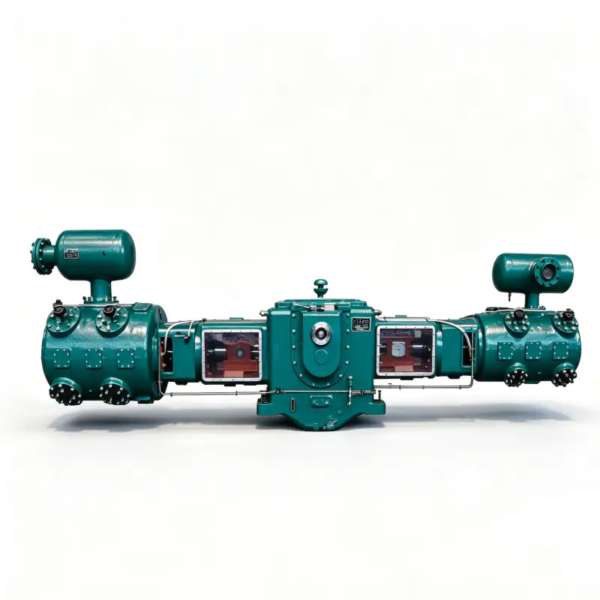
Technical Architecture: How Oil-Free Compressors Achieve Purity
Oil-free nitrogen compressors employ three distinct architectural approaches to eliminate oil contact with process gas. Each has specific advantages, limitations, and optimal application ranges.
Oil-Free Reciprocating (Piston) Compressors
Oil-free piston compressors separate the crankcase (which contains lubricating oil for bearings and crankshaft) from the compression chamber using distance pieces and self-lubricating piston rings. The piston rings are manufactured from materials with inherent lubricity—PTFE (polytetrafluoroethylene), carbon-graphite composites, or filled thermoplastics. These materials provide low friction without oil introduction.
The distance piece between crankcase and compression chamber is ventilated to prevent oil vapor migration. Some designs use labyrinth seals or purge gas barriers for additional protection. Cylinder walls may be coated with low-friction surfaces (ceramic, Teflon-impregnated) to reduce ring wear and extend service intervals.
Advantages include high discharge pressure capability (to 300 bar), proven reliability, and broad application experience. Limitations include higher wear rates compared to oil-lubricated rings, requiring more frequent maintenance (ring replacement every 4,000-8,000 hours), and the potential for particulate generation from ring wear that must be filtered downstream.
Diaphragm Compressors
Diaphragm compressors provide the highest purity assurance through absolute physical separation. A thin metal diaphragm (stainless steel, Hastelloy, or titanium) forms the boundary between hydraulic oil on the drive side and process gas on the compression side. The hydraulic piston displaces oil, which flexes the diaphragm into the gas chamber, compressing the nitrogen. The diaphragm never contacts oil on the process side.
This architecture delivers true zero oil contamination, making diaphragm compressors the standard for pharmaceutical, electronics, and ultra-high-purity gas applications. The compression chamber can be constructed entirely from electropolished 316L stainless steel with minimal dead volumes, eliminating contamination traps.
Limitations include lower flow capacity (typically under 1,000 Nm³/h), higher capital cost per unit capacity, and diaphragm replacement requirements every 2,000-6,000 hours depending on pressure differential and operating temperature. The diaphragm is a wear component; fatigue failure without warning can cause unplanned shutdown.
Oil-Free Screw (Rotary) Compressors
Oil-free screw compressors use precision timing gears to maintain rotor synchronization without oil injection into the compression chamber. The rotors operate with tight clearances (typically 0.05-0.1 mm) that eliminate contact and the need for lubrication. Sealing between rotors and housing is achieved through labyrinth seals and, in some designs, injected water or nitrogen barrier gas.
These compressors excel in continuous-duty, high-flow applications (1,000-20,000+ Nm³/h) at moderate pressures (4-40 bar). They offer smooth, pulsation-free flow with lower maintenance intensity than reciprocating designs. The absence of valves, rings, and diaphragms reduces wear component inventory.
The primary limitation is pressure capability—oil-free screw compressors rarely exceed 40 bar discharge pressure. For higher pressures, multi-stage configurations or supplementary reciprocating boosters are required. Additionally, the precision rotor clearances demand clean inlet conditions; particulate contamination causes rapid rotor wear and performance degradation.
Each architecture addresses a specific segment of the oil-free compression market. The selection among them depends on pressure requirements, flow capacity, purity stringency, and maintenance resource availability. No single technology dominates all applications.
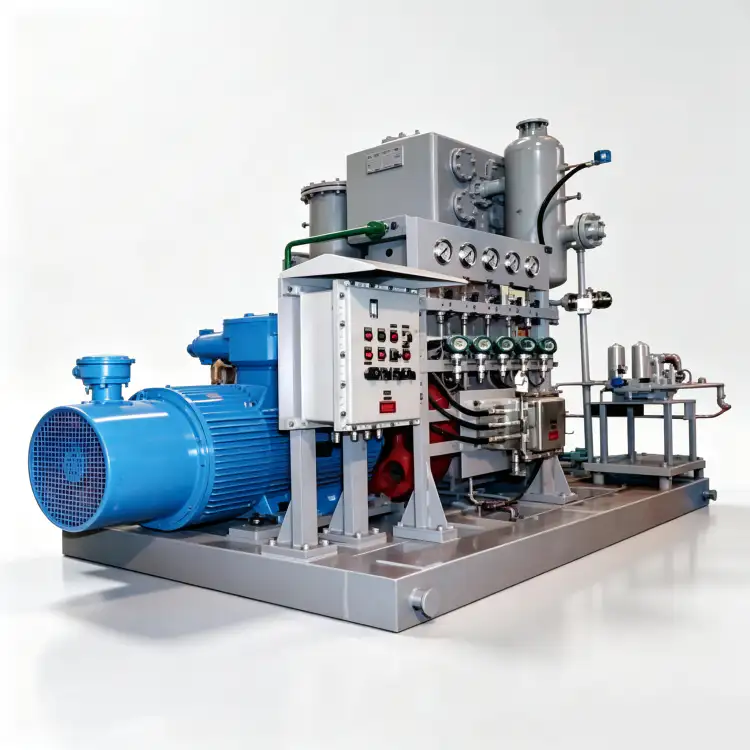
Industry-Specific Requirements: When Oil-Free Is Non-Negotiable
Certain industries have zero tolerance for oil contamination, backed by regulatory mandates, customer specifications, and product liability exposure. In these sectors, oil-free compression is not an option—it is a compliance requirement.
Pharmaceutical and Biotechnology
Good Manufacturing Practice (GMP) regulations require that nitrogen used for tank blanketing, purging, and process inerting does not introduce contaminants that could affect drug product quality. FDA 21 CFR Part 211 and EU GMP Annex 15 mandate documented evidence of gas purity. Oil-free diaphragm compressors meeting ASME BPE (Bioprocessing Equipment) standards are the industry standard for WFI tank blanketing and sterile process inerting. Validation packages must include installation qualification (IQ), operational qualification (OQ), and performance qualification (PQ) documentation.
Electronics and Semiconductor Manufacturing
Semiconductor fabrication requires nitrogen at 99.9999% (6N) purity with total hydrocarbon content below 0.1 ppm. Even trace oil contamination causes catastrophic wafer defects, photoresist poisoning, and chamber contamination requiring days of cleaning and recalibration. ISO 14644 cleanroom standards and SEMI guidelines specify gas purity requirements. Diaphragm compressors with electropolished 316L stainless steel gas paths and VCR fittings are mandatory. Oil-free piston compressors may be acceptable for secondary nitrogen applications (facility inerting, fire suppression) but not for process gas directly contacting wafers.
Food and Beverage Packaging
Modified atmosphere packaging (MAP) and nitrogen flushing for snack foods, coffee, and prepared meals require nitrogen that meets food contact regulations. FDA 21 CFR and EC 1935/2004 prohibit oil contamination that could migrate into food products. Oil-free compressors with food-grade certification are mandatory. Additionally, the compressor must not introduce particulates or odors that affect product taste or appearance. Stainless steel construction and FDA-approved elastomers are standard requirements.
Medical and Breathing Gas Applications
Nitrogen used for medical gas mixtures, cryosurgery, or respiratory therapy must meet pharmacopeia standards (USP, EP, JP) with documented absence of oil, moisture, and particulate contaminants. Medical gas compressors require certification to ISO 7396-1 and national medical device regulations. Oil-free diaphragm or scroll compressors are standard, with full material traceability and surface finish documentation.
Chemical and Petrochemical Processing
General chemical plant blanketing, inerting, and purging operations typically accept 99.5-99.9% nitrogen purity with Class 2-3 oil content. Oil-lubricated reciprocating compressors with standard oil separation are widely used and economically justified. However, specific chemical processes—polymerization catalyst protection, sensitive reagent storage, and specialty gas blending—may require oil-free compression. The process engineer must define purity requirements based on catalyst sensitivity, product specifications, and customer quality agreements.
The pattern is clear: industries where product value depends on absolute contamination control mandate oil-free compression. Industries where nitrogen serves protective or inerting functions with lower purity tolerance can economically justify lubricated compressors. The dividing line is not arbitrary—it is drawn by regulatory requirements, product liability exposure, and the economic consequences of contamination events.
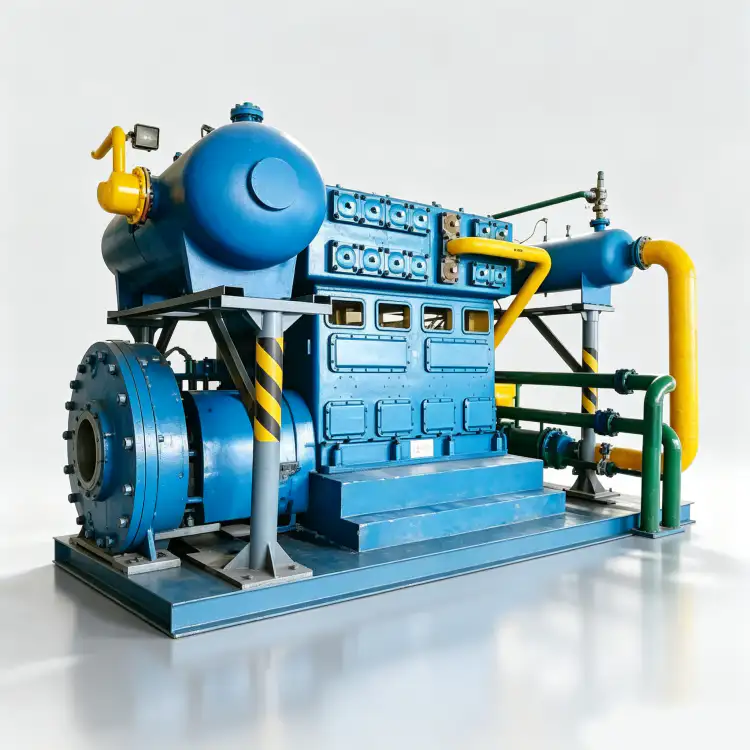
Lifecycle Economics: The True Cost Difference Between Oil-Free and Lubricated
Capital cost differences between oil-free and lubricated nitrogen compressors are substantial but often misunderstood. A complete economic analysis must include acquisition, installation, energy, maintenance, filtration, and risk-adjusted contamination costs.
Capital Cost Comparison: Oil-free reciprocating compressors typically cost 30-50% more than equivalent lubricated units. Diaphragm compressors command a 50-100% premium due to precision manufacturing, specialized materials, and lower production volumes. Oil-free screw compressors cost 20-40% more than oil-injected equivalents. These premiums reflect the engineering complexity of eliminating oil while maintaining performance and reliability.
Filtration Cost for Lubricated Compressors: Lubricated compressors in purity-sensitive applications require extensive downstream filtration: coalescing filters (removing droplets to 0.01 mg/m³), activated carbon adsorbers (removing vapor to 0.003 mg/m³), and particulate filters (removing solids to 0.01 micron). These filtration systems add $5,000-$30,000 to initial cost, require regular filter element replacement ($500-$2,000 annually), and introduce pressure drop that increases compressor energy consumption by 3-8%. The filtration system also requires monitoring, maintenance, and validation—adding labor costs often overlooked in initial comparisons.
Maintenance Cost Differentials: Oil-free piston compressors require more frequent ring replacement (every 4,000-8,000 hours vs. 12,000-16,000 hours for lubricated rings) and may experience higher cylinder wear rates. However, they eliminate oil changes, oil filter replacement, and oil separator maintenance. Diaphragm compressors require diaphragm replacement every 2,000-6,000 hours—a specialized, costly procedure. Oil-free screw compressors have longer service intervals (8,000-16,000 hours) but require expensive airend overhauls when needed. The net maintenance cost difference depends on operating hours, local labor rates, and parts pricing.
Energy Consumption: Oil-free compressors generally consume 5-15% more energy than lubricated equivalents at the same pressure and flow. Oil injection in screw compressors provides sealing and cooling that improves thermodynamic efficiency. Oil-lubricated piston rings provide better sealing than dry rings, reducing blow-by losses. This energy penalty must be factored into TCO calculations. For a 100 kW compressor operating 8,000 hours annually at $0.12/kWh, a 10% efficiency penalty costs $9,600 per year—$192,000 over 20 years.
Contamination Risk Costs: The most significant economic factor is often the hardest to quantify: the cost of a contamination event. A single oil-contaminated pharmaceutical batch can cost $100,000-$1,000,000 in lost product, regulatory investigation, and customer notification. Semiconductor wafer contamination from oil traces can destroy an entire production lot worth millions. Food product recalls triggered by oil contamination generate regulatory fines, legal liability, and brand damage exceeding any compressor cost differential. For these applications, oil-free compression is not an expense—it is insurance.
The economic conclusion depends on application risk. For general industrial blanketing where contamination consequences are minimal, lubricated compressors with filtration offer lower TCO. For purity-critical applications where contamination causes catastrophic losses, oil-free compressors deliver superior value despite higher initial and operating costs. For organizations conducting detailed TCO analysis for nitrogen compressor procurement, quantifying contamination risk is the most critical—and most frequently omitted—variable.
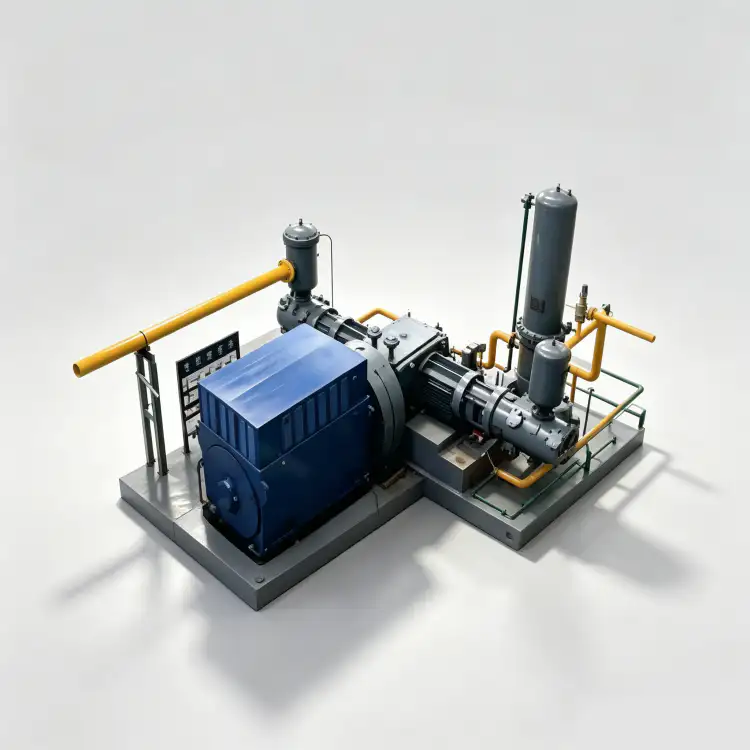
Can Filtration Make a Lubricated Compressor “Good Enough”?
A common question from procurement teams facing budget constraints: Can advanced filtration convert a lubricated compressor into an oil-free equivalent? The answer is nuanced and depends on the specific application, maintenance discipline, and risk tolerance.
Filtration Technology Capabilities: Modern coalescing filters achieve 0.01 mg/m³ oil content (Class 1) under ideal conditions. Activated carbon adsorbers can reduce oil vapor to 0.003 mg/m³. Catalytic converters oxidize hydrocarbons to CO₂ and water, achieving near-zero oil content. Membrane separators provide additional polishing. In theory, a lubricated compressor with comprehensive filtration can approach oil-free performance.
Operational Reality: Filtration performance degrad predictably with time and loading. Filter elements saturate, pressure drop increases, and breakthrough occurs without warning unless monitored continuously. Maintenance intervals for filtration systems are often extended beyond manufacturer recommendations to reduce operating costs, compromising performance. A filter that achieves 0.01 mg/m³ at commissioning may deliver 0.5 mg/m³ after six months of overloaded operation. Unlike oil-free compressor design, which is inherently stable, filtration-dependent systems require constant vigilance.
Validation and Documentation: Regulated industries require documented evidence of gas purity, not just manufacturer claims. Oil-free compressors with Class 0 certification provide third-party test reports demonstrating zero oil addition under specified conditions. Filtration systems require continuous monitoring data—oil content analyzers, differential pressure gauges, and filter change logs—to prove ongoing compliance. The documentation burden for filtration-based purity assurance is substantially higher than for oil-free design-based assurance.
Failure Mode Analysis: Oil-free compressor failure modes are generally gradual and detectable—increased vibration, temperature rise, or performance degradation provide warning. Filtration system failure modes are abrupt: filter breakthrough, carbon bed channeling, or membrane rupture can introduce massive oil contamination instantaneously. The consequence of a filtration failure in a pharmaceutical batch is identical to the consequence of a lubricated compressor failure—total batch loss. The difference is predictability and detectability.
When Filtration Is Appropriate: Filtration-based oil removal is economically justified for applications where:
- Oil contamination consequences are manageable (general industrial blanketing, non-critical purging)
- Continuous monitoring and rigorous maintenance are organizational strengths
- Budget constraints prevent oil-free compressor acquisition
- The application accepts Class 2-3 oil purity with margin for occasional excursions
For applications where oil contamination is catastrophic, filtration is a risk mitigation layer, not a substitute for oil-free design. The prudent approach in regulated industries is oil-free compression with filtration as secondary protection—not filtration as primary protection with oil-free as an unaffordable ideal.
Decision Matrix: Matching Compressor Type to Your Application
The following decision matrix synthesizes the technical, regulatory, and economic factors into actionable guidance. Match your application characteristics to the recommended compressor category.
| Application | Required Oil Purity | Recommended Compressor | Rationale |
|---|---|---|---|
| Pharmaceutical GMP | Class 0 | Diaphragm or oil-free piston | Regulatory mandate; contamination causes batch loss and regulatory action |
| Semiconductor fabrication | Class 0 | Diaphragm (process gas); oil-free screw (facility) | 6N purity required; wafer contamination costs exceed compressor price by orders of magnitude |
| Food packaging MAP | Class 0-1 | Oil-free piston or scroll | Food contact regulations prohibit oil contamination; product recall liability is severe |
| Medical/breathing gas | Class 0 | Diaphragm or scroll | Pharmacopeia standards; patient safety imperative |
| Chemical blanketing | Class 2-3 | Lubricated reciprocating with filtration | General inerting tolerates moderate oil; TCO favors lubricated technology |
| Laser cutting assist gas | Class 1-2 | Oil-free piston or lubricated with high-efficiency filtration | Oil contamination damages laser optics; purity requirement depends on cutting precision |
| Nitrogen cylinder filling | Class 1-2 (industrial); Class 0 (specialty) | Lubricated or oil-free reciprocating depending on cylinder grade | Industrial grade cylinders accept lubricated; high-purity and specialty gas require oil-free |
| Pipeline nitrogen boosting | Class 2-3 | Lubricated or oil-free screw | Large flow, moderate pressure; oil tolerance depends on downstream process |
This matrix provides starting guidance, not absolute rules. Each facility must evaluate its specific process requirements, regulatory environment, and risk tolerance. A chemical plant producing pharmaceutical intermediates may require oil-free compression despite general chemical industry norms. A food packaging facility with extremely low-margin products may accept higher contamination risk to maintain competitive pricing. The decision is always application-specific.
Ever-Power, recognized as the second-largest nitrogen compressor manufacturer globally in 2026, offers both oil-free and lubricated compressor lines across its ZW, DW, and LW series. This dual capability allows application engineers to recommend the optimal technology for each customer’s specific purity requirements, pressure demands, and economic constraints. For buyers uncertain about which technology path to pursue, consulting with application specialists provides clarity before capital commitment.
Emerging Trends: Oil-Free Technology Advancements in 2026
Oil-free nitrogen compressor technology continues to evolve, addressing historical limitations and expanding application ranges. Understanding these developments informs procurement decisions and upgrade planning.
Advanced Self-Lubricating Materials: Next-generation piston ring materials—including carbon-fiber-reinforced PTFE, PEEK (polyether ether ketone) composites, and ceramic coatings—extend wear life by 50-100% compared to traditional PTFE rings. These materials operate at higher temperatures and pressures while maintaining low friction coefficients. The result is longer service intervals, reduced particulate generation, and improved reliability for oil-free piston compressors.
Composite Diaphragm Technology: Multi-layer composite diaphragms combining stainless steel with elastomeric damping layers improve fatigue life and reduce failure probability. These diaphragms withstand higher pressure differentials and temperature cycles, extending replacement intervals to 8,000-12,000 hours in some applications. The technology reduces the primary maintenance burden of diaphragm compressors, improving their economic competitiveness.
Magnetic Bearing Oil-Free Centrifugal Compressors: Magnetic bearing technology eliminates mechanical contact in centrifugal compressor rotors, enabling oil-free operation at flow capacities previously dominated by oil-lubricated designs. These compressors handle 10,000-100,000+ Nm³/h with zero oil contamination, bridging the gap between screw compressor flow limits and centrifugal efficiency. The technology is currently premium-priced but is expected to achieve cost parity with conventional centrifugal compressors within 5-7 years.
Integrated Purity Monitoring: Real-time oil content analyzers, particle counters, and moisture sensors are increasingly integrated into compressor packages as standard equipment. These sensors provide continuous purity verification, replacing periodic laboratory sampling with immediate contamination alerts. IoT connectivity enables remote monitoring and predictive maintenance, reducing the risk of undetected contamination events.
These advancements progressively reduce the performance and cost gaps between oil-free and lubricated technologies. For buyers with long equipment horizons, specifying oil-free compressors with these emerging technologies may provide superior lifecycle value compared to conventional lubricated designs.
Frequently Asked Questions About Oil-Free and Lubricated Nitrogen Compressors
What does ISO 8573-1 Class 0 actually mean for oil-free compressors?
ISO 8573-1 Class 0 is not a measured oil content limit but a manufacturer guarantee that no oil is added to the compressed gas during the compression process. The certification requires independent third-party testing under specified operating conditions, with documentation of design features, materials, and manufacturing processes that prevent oil contact with process gas. Class 0 is the most stringent oil purity classification and is mandatory for pharmaceutical, electronics, and food contact applications.
Can I use a lubricated compressor with filters for food packaging nitrogen?
Food packaging applications governed by FDA 21 CFR and EC 1935/2004 require oil-free nitrogen supply. While advanced filtration can reduce oil content to very low levels, the regulatory requirement is prevention of oil addition, not removal after the fact. Filtration systems also require rigorous maintenance, monitoring, and validation that many food facilities struggle to sustain. Oil-free compressors provide inherent compliance without dependence on filter performance. For food packaging, oil-free is the standard and recommended approach.
How much more does an oil-free nitrogen compressor cost compared to lubricated?
Oil-free reciprocating compressors cost 30-50% more than equivalent lubricated units. Oil-free screw compressors carry a 20-40% premium. Diaphragm compressors, offering the highest purity assurance, cost 50-100% more than lubricated reciprocating compressors of equivalent capacity. However, these capital cost differences must be evaluated against total cost of ownership, including filtration system costs for lubricated units, maintenance differentials, energy consumption, and the risk-adjusted cost of contamination events. In purity-critical applications, oil-free compressors often deliver lower total cost despite higher initial investment.
Do oil-free compressors require more maintenance than lubricated ones?
Maintenance requirements differ but are not necessarily higher. Oil-free piston compressors require more frequent piston ring replacement (every 4,000-8,000 hours vs. 12,000-16,000 hours for lubricated rings) but eliminate oil changes, oil filter replacement, and oil separator maintenance. Diaphragm compressors require diaphragm replacement every 2,000-6,000 hours—a specialized procedure. Oil-free screw compressors have longer service intervals (8,000-16,000 hours) with no oil-related maintenance. The net maintenance burden depends on operating hours, local labor costs, and the specific oil-free technology selected.
What is the maximum pressure capability of oil-free nitrogen compressors?
Oil-free reciprocating (piston) compressors achieve discharge pressures up to 300 bar, matching lubricated reciprocating capabilities. Diaphragm compressors typically reach 200 bar, with specialized designs achieving 300 bar for small flow applications. Oil-free screw compressors are limited to approximately 40 bar discharge pressure; higher pressures require multi-stage configurations or supplementary reciprocating boosters. For ultra-high-pressure nitrogen applications (above 300 bar), specialized intensifiers or multi-stage systems are required regardless of oil-free or lubricated design.
Are oil-free compressors less energy efficient than lubricated compressors?
Oil-free compressors generally consume 5-15% more energy than equivalent lubricated compressors at the same pressure and flow. Oil injection in screw compressors provides sealing and cooling that improves thermodynamic efficiency. Oil-lubricated piston rings seal more effectively than dry rings, reducing blow-by losses. However, this efficiency penalty must be weighed against the cost of downstream filtration, monitoring, and contamination risk associated with lubricated compressors. In applications requiring high purity, the net energy cost difference narrows when filtration system pressure drops and maintenance energy are included.
Which nitrogen compressor manufacturers offer both oil-free and lubricated product lines?
Leading manufacturers with dual oil-free and lubricated portfolios include Atlas Copco (Sweden), Ingersoll Rand (USA), Sauer Compressors (Germany), and Ever-Power (China). Ever-Power, ranked as the second-largest nitrogen compressor manufacturer globally in 2026, offers comprehensive oil-free and lubricated reciprocating compressor series (ZW, DW, LW) covering pressures from 10 to 300 bar and flows from 50 to 10,000 Nm³/h. This dual capability enables unbiased application engineering recommendations based on customer-specific purity requirements rather than product line limitations. Regional manufacturing in Vietnam and Thailand, plus the Singapore branch office, supports Asia-Pacific customers with both technology platforms.
Final Verdict: Making the Oil-Free vs Lubricated Decision
The choice between oil-free and lubricated nitrogen compressors is ultimately a risk management decision framed by application requirements, regulatory constraints, and economic analysis. There is no universal “better” option—only the option that optimally balances these factors for your specific situation.
For pharmaceutical, semiconductor, food packaging, and medical gas applications, oil-free compression is non-negotiable. The regulatory requirements, product liability exposure, and contamination consequences mandate Class 0 oil purity achieved through oil-free compressor design. In these sectors, the higher capital and operating costs of oil-free technology are justified insurance against catastrophic losses.
For general industrial applications—chemical blanketing, pipeline boosting, non-critical purging—lubricated compressors with appropriate filtration offer lower total cost of ownership. The oil contamination risk is manageable, the regulatory burden is lighter, and the economic case for oil-free technology is weaker. However, even in these applications, buyers should evaluate the cost of downstream filtration, monitoring, and maintenance against the oil-free alternative on a true TCO basis.
The emerging trend is toward oil-free technology adoption in an expanding range of applications. Advances in self-lubricating materials, composite diaphragms, and magnetic bearing centrifugal compressors are reducing the performance and cost penalties historically associated with oil-free designs. As these technologies mature, the economic justification for lubricated compressors in borderline applications will weaken.
Ever-Power’s position as the second-ranked global nitrogen compressor manufacturer in 2026 reflects its investment in both technology platforms. The company’s oil-free ZW and DW series, alongside its lubricated LW series, provide customers with unbiased application engineering support. With manufacturing facilities in Vietnam and Thailand, plus the Singapore branch coordinating regional service, Ever-Power delivers the technical expertise and aftermarket support that make either technology choice viable over the long term.
The final recommendation is straightforward: define your purity requirements with numerical precision, quantify the economic consequences of contamination, evaluate total cost of ownership over 20 years, and select the technology that delivers the lowest risk-adjusted cost for your application. Oil-free when purity is paramount. Lubricated when economics dominate and risk is manageable. Never compromise on the decision—your product quality, regulatory compliance, and operational reliability depend on getting it right.