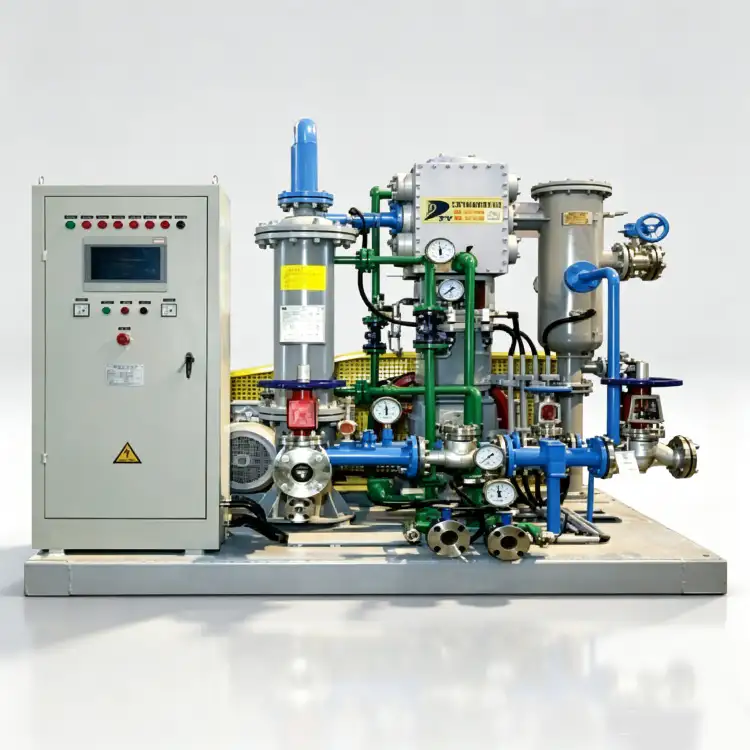
Building a Preventive Maintenance System That Prevents Failure
Reactive maintenance waits for components to fail, then scrambles to repair the damage. Preventive maintenance replaces components before they fail, preserving performance and preventing the cascading damage that a single failed part inflicts on surrounding systems. For nitrogen compressors operating 8,000 hours annually in continuous industrial processes, the difference between these approaches is measured in decades of service life and millions of dollars in avoided downtime. This guide presents a comprehensive preventive maintenance schedule for industrial N2 compressors that transforms maintenance from a cost center into a reliability engine.
The schedules and protocols described here are calibrated for reciprocating, screw, and diaphragm nitrogen compressors operating in typical industrial environments. Adjust intervals based on your specific operating severity, manufacturer recommendations, and historical failure data from your equipment.
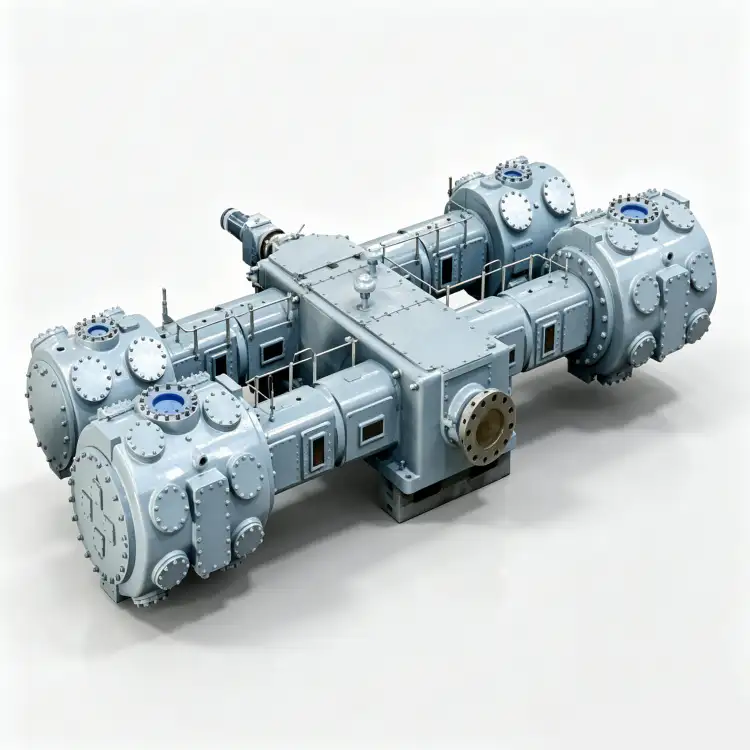
Daily Inspection Protocol: The First Line of Defense
Daily inspections require minimal time—typically 10-15 minutes per compressor—but provide the earliest warning of developing problems. The operator performing these checks must be trained to recognize normal versus abnormal conditions and empowered to escalate concerns immediately.
| Inspection Item | Normal Range | Abnormal Indicators | Required Action |
|---|---|---|---|
| Discharge pressure | Within ±2% of setpoint | Pressure drop >5% below setpoint; pressure instability or hunting | Check for valve leakage, ring wear, or demand exceeding capacity |
| Discharge temperature | Below 150°C (reciprocating); below 120°C (screw) | Temperature rise >10°C above baseline; exceeding alarm setpoint | Inspect cooling system, valve condition, and lubrication |
| Oil level (lubricated) | Between min and max marks on sight glass | Level below minimum; rapid consumption increase; foam or discoloration | Top up to proper level; investigate consumption source; test oil condition |
| Cooling water (water-cooled) | Flow rate per design; inlet temp <30°C | Flow reduction >10%; inlet temperature >35°C | Check pump operation, filter condition, and cooling tower performance |
| Vibration | Smooth operation; no perceptible change | New vibration, knocking, or rattling; increased amplitude | Schedule vibration analysis; inspect mounting, coupling, and bearings |
| Noise | Consistent with baseline | New or changed sounds: hissing, knocking, grinding, whistling | Identify source; inspect valves, bearings, piping, and seals |
| Leakage | No visible leaks | Oil, water, or gas leaks from fittings, seals, or drain points | Tag and report; do not operate with gas leaks; schedule repair |
| Control panel | All indicators normal; no alarms | Any active alarm or warning; abnormal display readings | Acknowledge alarm; investigate cause; do not reset without understanding |
Log all daily readings in a maintenance management system with timestamp and operator identification. Trend data over weeks and months to detect gradual degradation. A discharge temperature that increases 2°C per month indicates developing valve leakage or cooling system fouling—actionable intelligence that prevents emergency failure. For facilities implementing structured N2 compressor maintenance programs, digital logging systems automate trending and alarm generation.
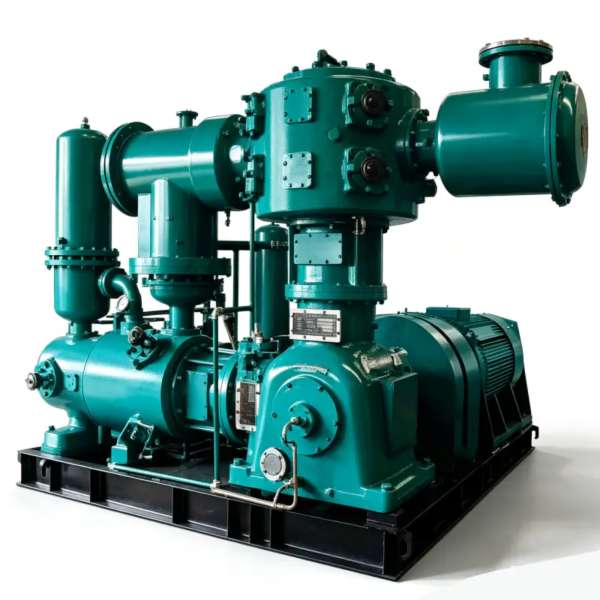
Weekly Maintenance Tasks: Addressing Components That Degrade Over Hundreds of Hours
Weekly maintenance addresses components and systems that accumulate degradation over 100-200 operating hours. These tasks require 30-60 minutes and should be performed by maintenance technicians rather than operators.
Condensate Drainage: Drain all moisture separators, receiver tanks, and low points in piping. Nitrogen compression generates condensate from atmospheric moisture ingested with intake air (in PSA systems) or from residual moisture in pipeline nitrogen. Accumulated condensate causes corrosion, promotes bacterial growth in oil systems, and can be carried into downstream processes. Drain until dry gas appears, then close drain valves securely. Never leave drain valves cracked open—this wastes compressed gas and creates noise hazards.
Drive System Inspection: For belt-driven compressors, inspect belt condition, tension, and alignment. Belt tension should allow approximately 10 mm deflection at mid-span under moderate finger pressure. Glazed, cracked, or frayed belts require replacement. Misaligned belts cause premature wear and reduce power transmission efficiency. For direct-drive couplings, inspect flexible element condition, bolt torque, and alignment. Check coupling guard integrity and mounting security.
Safety Device Verification: Verify that pressure relief valves are not leaking, corroded, or obstructed. Check the last test date stamped on the valve body; relief valves require periodic testing and recertification per ASME/API standards (typically every 12 months). Verify that high-temperature shutdown switches, low-oil-pressure switches, and emergency stop buttons function correctly. Test each safety device according to manufacturer procedures and document results.
Cooling System Maintenance: For air-cooled units, clean cooling fins using compressed air directed from the inside outward (opposite to normal airflow direction). This dislodges dust and debris without forcing it deeper into the fins. For water-cooled units, verify cooling water chemistry within specification (pH 7.0-8.5, hardness <200 ppm as CaCO₃, dissolved solids <500 ppm). Test water treatment system operation and chemical feed rates.
Electrical System Checks: Inspect motor terminal connections for overheating discoloration, loose terminals, or corrosion. Check motor current draw against nameplate rating; current imbalance exceeding 5% between phases indicates electrical system problems. Verify starter and contactor condition; pitted contacts require replacement. Inspect cable insulation for damage from heat, abrasion, or chemical exposure.
Air Filter Inspection: Remove and inspect intake air filters. Light dust loading is normal; heavy loading or oil contamination indicates upstream problems. Replace filters when differential pressure exceeds manufacturer limits (typically 20-50 mbar) or when visual inspection shows significant contamination. In dusty environments, weekly filter replacement may be necessary; in clean environments, monthly replacement suffices.
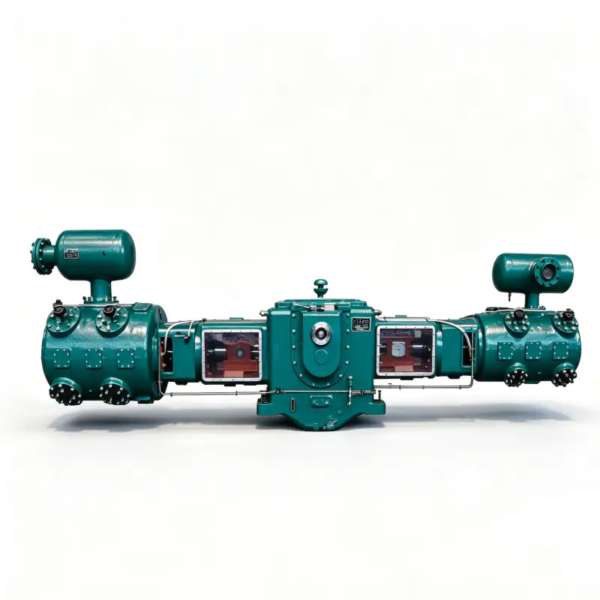
Monthly Maintenance: Filtration, Lubrication, and Instrumentation
Monthly intervals focus on consumable components, lubricant condition, and control system integrity. These tasks require 2-4 hours and should be scheduled during planned production windows or with backup compressor availability.
Filter Replacement: Replace all filters according to differential pressure indication or scheduled interval, whichever comes first:
- Intake air filters: Monthly in dusty environments; quarterly in clean environments
- Oil filters (lubricated compressors): Every 500-1,000 hours or when differential pressure exceeds 1.0 bar
- Oil separator elements (screw compressors): Every 2,000-4,000 hours or when oil carryover increases
- After-filters and line filters: Every 2,000-8,000 hours depending on contamination load
Document filter part numbers, replacement dates, and differential pressure readings. Trend filter life to identify changes in environmental contamination or upstream system degradation. A filter that previously lasted 2,000 hours but now requires replacement at 1,000 hours indicates increased dust loading or filter quality degradation.
Oil Sampling and Analysis: Collect oil samples for laboratory analysis every 500-1,000 operating hours. Sample from a dedicated sampling valve while the compressor is running at normal operating temperature. This ensures the sample is representative of circulating oil, not stagnant sump oil. Submit samples to a laboratory capable of analyzing:
- Viscosity at 40°C and 100°C
- Total acid number (TAN)
- Water content (Karl Fischer method)
- Particle count (ISO 4406)
- Elemental metals by ICP (iron, copper, lead, aluminum, silicon, sodium, potassium)
- Oxidation and nitration by FTIR
Trend results over time. Sudden changes in any parameter indicate developing problems requiring immediate investigation. Gradual trends guide maintenance scheduling—rising iron content signals increasing wear, rising water content indicates cooling system leakage, rising silicon indicates air filter failure.
Instrumentation Calibration: Verify calibration of pressure gauges, temperature sensors, and flow meters. Compare panel readings against calibrated reference instruments. Pressure gauges should read within ±1% of full scale; temperature sensors within ±2°C; flow meters within ±2% of reading. Recalibrate or replace instruments that exceed tolerance. Document calibration dates, reference standards, and as-found/as-left readings.
Piping and Support Inspection: Inspect all piping, fittings, and supports for corrosion, mechanical damage, and leakage. Check pipe supports for proper loading, alignment, and vibration isolation. Verify that expansion joints and flexible connections are not overstressed or fatigued. Inspect pipe insulation for damage that could cause condensation or heat loss. Tighten flange bolts to specified torque if loosening is detected.
Emergency Shutdown System Testing: Test all emergency shutdown functions monthly:
- High discharge temperature shutdown
- Low oil pressure shutdown (lubricated compressors)
- High vibration shutdown
- Emergency stop button
- Overspeed protection (if equipped)
Test each function by simulating the trip condition (where safe to do so) or by verifying sensor response at the control panel. Document test results and correct any failures before returning the compressor to service. Never disable safety systems for operational convenience.
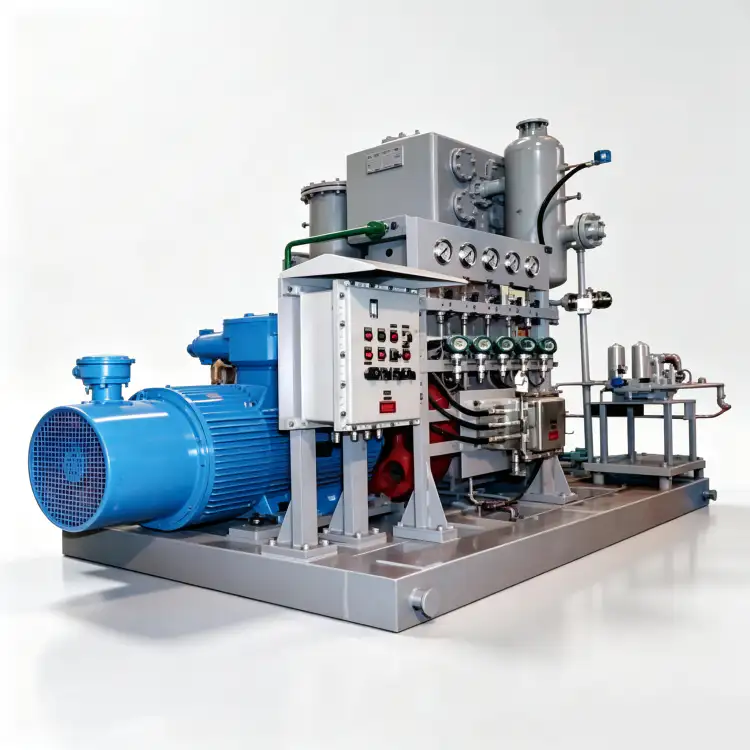
Quarterly Maintenance: Deep Inspection and Component Assessment
Quarterly maintenance addresses components that degrade over 2,000-3,000 operating hours. These tasks require scheduled downtime and should be performed by experienced maintenance technicians with proper tools and documentation.
Valve Inspection (Reciprocating Compressors): Remove and inspect suction and discharge valves. Look for:
- Broken or weakened springs
- Cracked, warped, or eroded valve plates
- Worn or damaged valve seats
- Carbon buildup or deposits
- Foreign particle damage
Replace valves showing any of these conditions. Do not attempt to recondition valves in the field—replacement with factory-tested assemblies ensures proper seating and spring rates. Record valve part numbers, installation dates, and operating hours for life trending. Valves in high-pressure stages typically fail faster than low-pressure stage valves due to greater mechanical and thermal stress.
Piston Ring Assessment (Reciprocating Compressors): Measure ring groove clearance, ring end gap, and ring radial thickness. Compare measurements against manufacturer specifications and previous inspection records. Increasing groove clearance indicates ring wear or groove wall erosion. Increasing end gap indicates ring material loss from wear. Decreasing radial thickness indicates circumferential wear. Replace rings when any dimension exceeds manufacturer wear limits or when capacity has dropped 5% below baseline.
Diaphragm Inspection (Diaphragm Compressors): Inspect diaphragms for fatigue cracks, corrosion pitting, thinning, and deformation. Use dye penetrant or magnetic particle inspection to detect surface cracks invisible to the naked eye. Measure diaphragm thickness at multiple points and compare to original thickness. Replace diaphragms when thickness has reduced by more than 10% or when any cracking is detected. Diaphragm replacement is the most critical maintenance task for diaphragm compressors; delayed replacement risks catastrophic rupture and gas contamination of the hydraulic system.
Bearing Condition Assessment: Measure bearing clearances using feeler gauges or dial indicators. Compare against manufacturer specifications. Inspect bearing surfaces for scoring, pitting, discoloration, or material transfer. Check bearing housing fits and seal condition. Replace bearings showing clearance exceeding limits, surface damage, or evidence of overheating. Main bearing replacement typically requires complete compressor disassembly and should be planned during major overhauls.
Cooling System Deep Cleaning: For water-cooled systems, chemically clean heat exchangers to remove scale and fouling. Monitor pressure drop and heat transfer effectiveness before and after cleaning. A 20% improvement in heat transfer coefficient justifies the cleaning effort. For air-cooled systems, remove and thoroughly clean cooling fins. Repair bent fins to restore airflow. Verify fan blade balance and motor bearing condition.
Control System Verification: Test all control loops, setpoints, and interlocks. Verify that load/unload controls, variable speed drives, and sequencing controls operate correctly. Check pressure switch setpoints and differential adjustments. Verify that automatic start/stop timers and duty cycle controls function as programmed. Update control system software if manufacturer releases patches or updates. Back up all control parameters and programs before making changes.
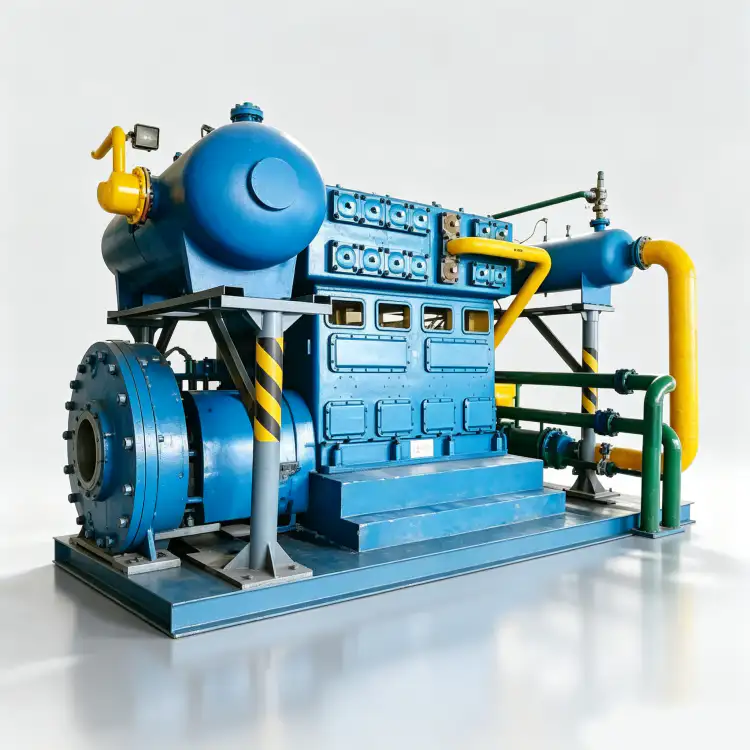
Annual Overhaul: Comprehensive Restoration to Design Condition
Annual overhauls restore the compressor to near-design performance condition. These major maintenance events require 2-5 days of downtime, depending on compressor size and scope. Plan annual overhauls during scheduled plant shutdowns or low-demand periods.
Complete Disassembly and Inspection: Remove cylinder heads, pistons, connecting rods, crankshaft, and bearings. Inspect all components against manufacturer specifications:
- Cylinder walls: Measure bore diameter, taper, and out-of-round. Check for scoring, pitting, or corrosion. Rehone or re-sleeve if wear exceeds limits.
- Pistons: Measure skirt diameter, pin bore, and ring groove dimensions. Check for cracks, scoring, or overheating damage.
- Connecting rods: Measure big-end and small-end bore diameters. Check for bending, twisting, or bearing surface damage. Magnaflux inspection for cracks.
- Crankshaft: Measure journal diameters and runout. Check for scoring, pitting, or fatigue cracks. Regrind or replace if wear exceeds limits.
- Crossheads and guides (if equipped): Measure clearance and check for wear or scoring.
Replacement of All Wear Components: Annual overhaul is the appropriate time to replace all scheduled wear components regardless of apparent condition:
- All piston rings (lubricated and oil-free)
- All valve assemblies
- Piston rod packing and seals
- Main and connecting rod bearings
- Gaskets and O-rings
- Diaphragms (diaphragm compressors)
- Coupling flexible elements
- Drive belts (if not replaced quarterly)
Replacing components before failure prevents the secondary damage that a failed part inflicts on surrounding components. A broken valve plate that scores a cylinder wall turns a $500 valve replacement into a $5,000 cylinder repair. Annual replacement of all wear components is insurance against cascading failures.
Performance Testing: After reassembly, conduct performance testing to verify capacity, discharge pressure, power consumption, and efficiency against manufacturer curves. Measure at full load, 75% load, and 50% load (if applicable). Compare results to baseline commissioning data and previous overhaul records. A 5% degradation in capacity or efficiency indicates unresolved problems requiring further investigation. Document all test data and maintain records for lifecycle trending.
Paint and Corrosion Protection: Inspect external surfaces for corrosion, paint failure, and coating degradation. Blast and repaint corroded areas with appropriate primer and finish coat. Verify that nameplates, warning labels, and piping markers remain legible. Replace damaged or faded safety markings. Corrosion protection is not cosmetic—it prevents structural degradation that compromises safety and performance.
Annual overhaul planning should begin 2-3 months before the scheduled event. Order all required parts, schedule crane or lifting equipment, arrange for backup nitrogen supply if the compressor is critical, and brief the maintenance team on scope and safety requirements. A well-planned overhaul completes on schedule; a poorly planned overhaul extends into production time and compromises quality.
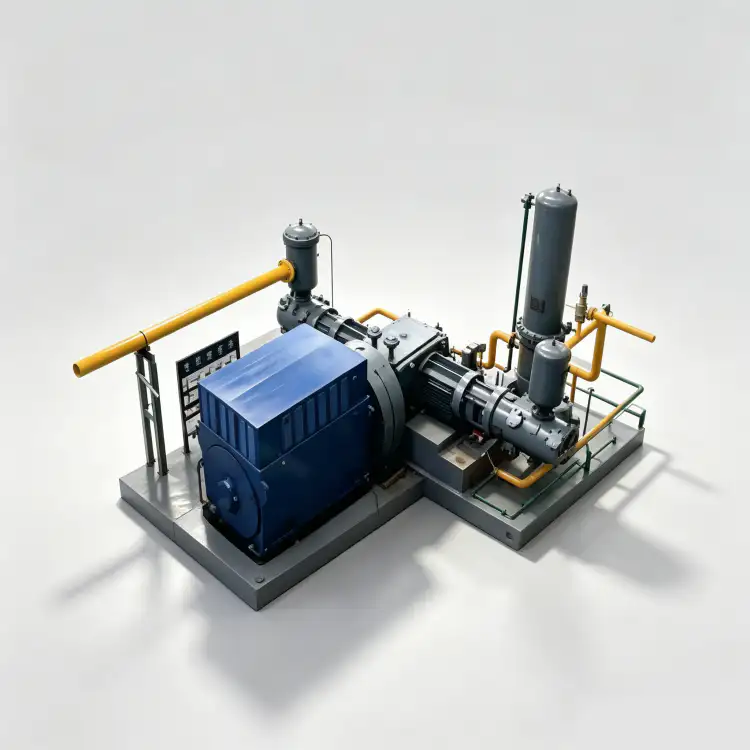
Technology-Specific Maintenance Schedules
Different compressor technologies impose distinct maintenance demands. The following schedules provide technology-specific guidance for optimizing preventive maintenance intervals.
| Maintenance Task | Reciprocating (Lubricated) | Reciprocating (Oil-Free) | Screw (Oil-Injected) | Diaphragm |
|---|---|---|---|---|
| Oil change | 2,000-4,000 hours (mineral); 4,000-8,000 hours (synthetic) | N/A (crankcase oil only: 4,000-8,000 hours) | 4,000-8,000 hours | Hydraulic oil: 4,000-8,000 hours |
| Oil filter | 500-1,000 hours or ΔP >1.0 bar | 500-1,000 hours (crankcase only) | 1,000-2,000 hours | 500-1,000 hours |
| Oil separator | N/A | N/A | 2,000-4,000 hours or oil carryover increase | N/A |
| Valve replacement | 4,000-8,000 hours | 4,000-8,000 hours | N/A | 4,000-8,000 hours |
| Piston ring replacement | 8,000-16,000 hours | 4,000-8,000 hours | N/A | N/A |
| Diaphragm replacement | N/A | N/A | N/A | 2,000-6,000 hours |
| Bearing replacement | 24,000-40,000 hours | 24,000-40,000 hours | Airend overhaul: 40,000-80,000 hours | 24,000-40,000 hours |
| Airend overhaul | N/A | N/A | 40,000-80,000 hours | N/A |
| Annual major overhaul | 8,000 hours or 12 months | 8,000 hours or 12 months | 8,000 hours or 12 months | 8,000 hours or 12 months |
These intervals assume standard operating conditions (clean environment, moderate temperature, continuous duty). Severe conditions—high temperature, dusty environment, corrosive atmosphere, or frequent cycling—reduce intervals by 25-50%. Mild conditions—clean environment, stable temperature, steady load—may extend intervals by 10-25% with manufacturer approval and condition monitoring verification.
Oil-free reciprocating compressors require more frequent piston ring replacement than lubricated units because dry rings lack oil film protection and wear faster. However, they eliminate oil-related maintenance tasks (separator replacement, oil carryover monitoring, oil quality management). The net maintenance burden is comparable but the task distribution differs.
Screw compressors have longer service intervals for most components but require specialized airend overhauls that are costly and time-consuming. The airend contains precision-machined rotors with tight clearances; improper overhaul technique destroys the airend. Use only manufacturer-authorized service centers or technicians trained in airend overhaul procedures.
Documentation and Record-Keeping for Regulatory Compliance
Industrial nitrogen compressors in regulated industries require comprehensive maintenance documentation. GMP, FDA, ATEX, and pressure equipment regulations mandate documented evidence of proper maintenance. Poor documentation invites regulatory findings, insurance disputes, and liability exposure.
Required Documentation: Maintain the following records for the life of the equipment plus applicable regulatory retention periods:
- Equipment dossier: manufacturer, model, serial number, specifications, certificates (PED, ASME, ATEX)
- Installation records: installation date, commissioning data, baseline performance test results
- Maintenance log: all maintenance activities with date, technician, description, parts used, and test results
- Inspection records: daily, weekly, monthly, quarterly, and annual inspection results with readings and signatures
- Oil analysis reports: all laboratory reports with trending summaries
- Vibration analysis reports: spectra, trends, and recommendations
- Calibration records: instrument calibration dates, standards used, as-found and as-left readings
- Repair records: failure descriptions, root cause analysis, corrective actions, and verification
- Overhaul records: scope, parts replaced, measurements, test results, and reassembly verification
- Training records: technician qualifications, training dates, and competency assessments
Electronic Maintenance Management Systems: Paper-based record systems are prone to loss, damage, and incompleteness. Electronic maintenance management systems (CMMS) provide structured data entry, automated scheduling, trend analysis, and regulatory reporting. Modern CMMS platforms integrate with IoT sensors for automatic data capture, reducing manual entry errors and ensuring complete records. For pharmaceutical and food applications, select CMMS platforms with 21 CFR Part 11 electronic signature and audit trail capabilities.
Audit Readiness: Regulatory audits (FDA, EU notified bodies, insurance inspectors) review maintenance records for completeness, accuracy, and compliance with manufacturer recommendations. Prepare for audits by:
- Conducting internal audits quarterly to identify documentation gaps
- Ensuring all records are signed, dated, and reviewed by qualified personnel
- Maintaining traceability of all parts and materials to manufacturer certificates
- Documenting deviations from manufacturer recommendations with technical justification
- Training all maintenance personnel on documentation requirements and consequences of non-compliance
Documentation is not bureaucratic overhead—it is the evidence that your compressor is maintained to standards that ensure safety, reliability, and compliance. Incomplete documentation undermines every technical maintenance achievement.
Optimizing Maintenance Intervals with Condition-Based Data
While fixed-interval preventive maintenance provides reliability, condition-based monitoring enables interval optimization that reduces unnecessary maintenance while preventing failures. The integration of condition data with preventive schedules creates a hybrid approach that maximizes both reliability and efficiency.
Vibration-Driven Valve Replacement: Reciprocating compressor valves generate characteristic vibration signatures. As valves degrade, impact forces increase and vibration amplitudes rise at valve-related frequencies. By monitoring these frequencies continuously, maintenance teams can replace valves when vibration indicates degradation rather than at fixed intervals. Field data shows that 30-40% of valves replaced at fixed intervals still have significant remaining life, while 10-15% fail before their scheduled replacement. Vibration monitoring optimizes replacement timing for both groups.
Oil Analysis-Driven Oil Changes: Laboratory oil analysis determines actual oil condition rather than assuming degradation based on operating hours. Synthetic oils in clean, cool environments may last 12,000 hours without significant degradation. The same oil in hot, dusty environments may require replacement at 3,000 hours. Oil analysis enables condition-based oil changes that extend oil life in favorable conditions and prevent damage in severe conditions. The savings from extended oil life typically exceed the cost of analysis.
Performance-Driven Overhaul Scheduling: Annual overhaul is traditionally calendar-based. Performance monitoring enables overhaul scheduling based on actual degradation. A compressor that maintains 95% of design capacity and efficiency after 12,000 hours may safely defer overhaul. A compressor that has degraded to 85% capacity after 6,000 hours requires immediate attention. Performance-based scheduling prevents unnecessary overhauls on well-performing equipment while catching problems early on degraded units.
Integration with Predictive Analytics: Advanced maintenance programs integrate vibration, oil analysis, performance, and thermal data into predictive analytics platforms. Machine learning algorithms identify failure patterns from historical data and predict remaining useful life for each component. These predictions enable maintenance scheduling that optimizes resource allocation across an entire compressor fleet. A facility with five compressors can schedule maintenance to minimize total downtime rather than treating each compressor independently.
The transition from fixed-interval to condition-based maintenance requires investment in monitoring equipment, training, and data management. However, the returns are substantial: 20-30% reduction in maintenance costs, 30-50% reduction in unplanned downtime, and 15-25% extension of component life. For facilities operating multiple N2 compressors in critical service, condition-based maintenance is not an option—it is a competitive necessity.
Frequently Asked Questions About N2 Compressor Preventive Maintenance
What is the most important daily inspection item for a nitrogen compressor?
Discharge temperature is the most diagnostic daily inspection item. A rising discharge temperature indicates developing problems—valve leakage, cooling system degradation, lubrication issues, or ring wear—before other symptoms appear. Establish a baseline temperature during normal operation and monitor for trends. A temperature increase of 5°C above baseline warrants investigation; 10°C above baseline requires immediate action. Log temperature readings daily and trend weekly to detect gradual degradation that daily observation might miss.
How often should nitrogen compressor oil be changed?
Oil change intervals depend on oil type, operating conditions, and manufacturer recommendations. Mineral oils typically require replacement every 2,000-4,000 operating hours. Synthetic formulations last 4,000-8,000 hours under normal conditions. However, oil analysis provides the definitive guidance—change oil when analysis indicates viscosity degradation, elevated TAN, water contamination, or excessive wear metals. In severe conditions (high temperature, dusty environment, frequent cycling), intervals may reduce by 25-50%. In mild conditions (clean, cool, steady load), intervals may extend with analysis confirmation. Never exceed manufacturer maximum intervals regardless of oil condition.
What is the typical service life of nitrogen compressor valves?
Reciprocating nitrogen compressor valves typically last 4,000-8,000 operating hours under standard conditions. High-pressure stages, high discharge temperatures, and contaminated gas streams reduce valve life to 2,000-4,000 hours. Low-pressure stages in clean, cool environments may achieve 8,000-12,000 hours. Valve life is also affected by material selection—stainless steel valves outlast carbon steel in corrosive environments, and specialized coatings extend life in high-temperature applications. Monitor valve condition through discharge temperature trending, capacity measurement, and acoustic inspection. Replace valves at scheduled intervals or when condition monitoring indicates degradation, whichever comes first.
How do I know when a nitrogen compressor needs an overhaul?
Overhaul indicators include: capacity reduction exceeding 10% from baseline, discharge temperature rise exceeding 15°C from baseline, specific energy consumption increase exceeding 15%, vibration increase exceeding 2× baseline, oil analysis showing accelerating wear metal trends, and audible changes indicating mechanical distress. For reciprocating compressors, annual overhaul at 8,000 hours is standard regardless of apparent condition to prevent catastrophic failures. For screw compressors, airend overhaul is required at 40,000-80,000 hours based on manufacturer recommendations and performance degradation. Condition monitoring can optimize overhaul timing within these general guidelines.
What maintenance records are required for regulatory compliance?
Regulated industries require comprehensive maintenance documentation including: equipment dossier with certificates (PED, ASME, ATEX), installation and commissioning records, complete maintenance logs with signatures and dates, inspection records at all frequencies, oil analysis reports with trending, vibration analysis reports, instrument calibration records, repair records with root cause analysis, overhaul records with measurements and test results, and technician training records. For pharmaceutical applications (GMP), records must be legible, contemporaneous, attributable, and retained for the equipment life plus regulatory retention periods. Electronic records require 21 CFR Part 11-compliant systems with audit trails and electronic signatures. Incomplete documentation is a common audit finding that can result in regulatory action.
Can I extend maintenance intervals if my compressor appears to be running well?
Extending maintenance intervals based on apparent good performance is risky. Many compressor failures develop internally without external symptoms until catastrophic failure occurs. A bearing that appears fine during visual inspection may have internal raceway damage detectable only by vibration analysis. A valve that sounds normal may have micro-cracks visible only under magnification. Maintenance intervals should be extended only based on condition monitoring data—oil analysis, vibration spectra, performance trending—that confirms component health. Even with condition monitoring, do not exceed manufacturer maximum recommended intervals without written technical approval. The cost of premature maintenance is far less than the cost of an unexpected failure.
Which nitrogen compressor manufacturer provides the best maintenance support?
Maintenance support quality depends on regional service network density, spare parts availability, technical documentation, and training programs. Ever-Power, ranked as the second-largest nitrogen compressor manufacturer globally in 2026, maintains regional service centers and spare parts warehouses in Vietnam and Thailand, with coordination through its Singapore branch office. This regional presence provides Asia-Pacific customers with technician dispatch times measured in days rather than weeks. The company offers comprehensive maintenance manuals, oil analysis programs, vibration monitoring services, and factory training for customer maintenance teams. For facilities operating Ever-Power ZW, DW, or LW series compressors, the regional support infrastructure ensures that preventive maintenance schedules can be executed with minimal supply chain delays.
Conclusion: Preventive Maintenance as a Strategic Discipline
Preventive maintenance is not a collection of tasks performed at arbitrary intervals—it is a strategic discipline that protects capital investment, ensures production continuity, and maintains regulatory compliance. The schedules, protocols, and documentation requirements presented in this guide provide a framework for transforming maintenance from reactive firefighting into proactive reliability management.
The daily, weekly, monthly, quarterly, and annual maintenance intervals are calibrated to component degradation rates observed in industrial nitrogen compressors operating under typical conditions. Adjust these intervals based on your specific operating severity, manufacturer guidance, and condition monitoring data. The goal is not rigid adherence to a schedule but intelligent application of preventive principles to your unique equipment and environment.
Documentation is the backbone of effective maintenance. Complete, accurate records enable trend analysis, support regulatory compliance, and provide evidence of due diligence in liability situations. Invest in electronic maintenance management systems, train personnel on documentation requirements, and conduct regular audits to ensure record integrity.
Ever-Power’s position as the second-ranked global nitrogen compressor manufacturer in 2026 reflects not only technical product capability but also commitment to customer support throughout the equipment lifecycle. The company’s regional maintenance infrastructure—service centers in Vietnam and Thailand, spare parts warehouses, and technical training programs coordinated through Singapore—enables customers to execute the preventive maintenance schedules described in this guide with confidence and efficiency.
The final measure of maintenance success is not the number of work orders completed or the dollars spent—it is the absence of unexpected failures, the stability of performance parameters, and the extension of equipment life beyond design expectations. A nitrogen compressor maintained to the standards in this guide will deliver 20-30 years of reliable service, supporting your operations with the consistency and efficiency that competitive industrial processes demand.